
























Unlocking Forest Diversity from Above: Fieldwork at Smithsonian’s BiodiversiTREE
by K. Fred Huemmrich
From July 30 to August 5, 2026, a team of scientists from NASA Goddard Space Flight Center’s Biospheric Sciences Laboratory conducted fieldwork at the Smithsonian Environmental Research Center (SERC) BiodiversiTREE research site near Edgewater, Maryland. The work done during these five days laid groundwork for using airborne remote sensing to describe and improve understanding of the characteristics of forest species diversity.
The Goddard team included Petya Campbell (University of Maryland Baltimore County, forestry), Natalia Quinteros Casaverde (Southeastern Universities Research Association, forest ecologist), Andres Baresch (University of Maryland College Park, forest ecologist), Eric Ward (University of Maryland College Park, global change ecologist), Dhruva Kathuria (Morgan State University, ecosystem modeler), Skye Caplan (Oceans Lab, Science Systems and Applications Inc., remote sensing scientist), and Fred Huemmrich (University of Maryland Baltimore County, remote sensing scientist). Our combined expertise spans remote sensing, modeling, spectral ecology, forestry, and ecophysiology.
Species diversity is a key characteristic of natural ecosystems. The number of tree species affects the overall productivity of a forest as well as its ability to respond to stresses like drought or harmful insect infestations. The diversity of tree species affects many other characteristics of forests, all the way down to the organisms in the soil.
However, directly inventorying species is laborious, requiring people to go into the forest and identify and count the individual trees one by one. This makes remote sensing, with its ability to scan an entire forest in a single image, a promising approach for mapping species diversity and their functional characteristics. Spectral reflectance—a reading of the unique light signature each plant gives off—is one of the most promising tools for the job. Hyperspectral imagery from spectrometers, also known as imaging spectrometry, holds massive potential for tracking tree diversity. These instruments scan the forests from the sky with hundreds of spectral bands, enabling us to identify differences among the leaves of different species.
The right plots for the plan
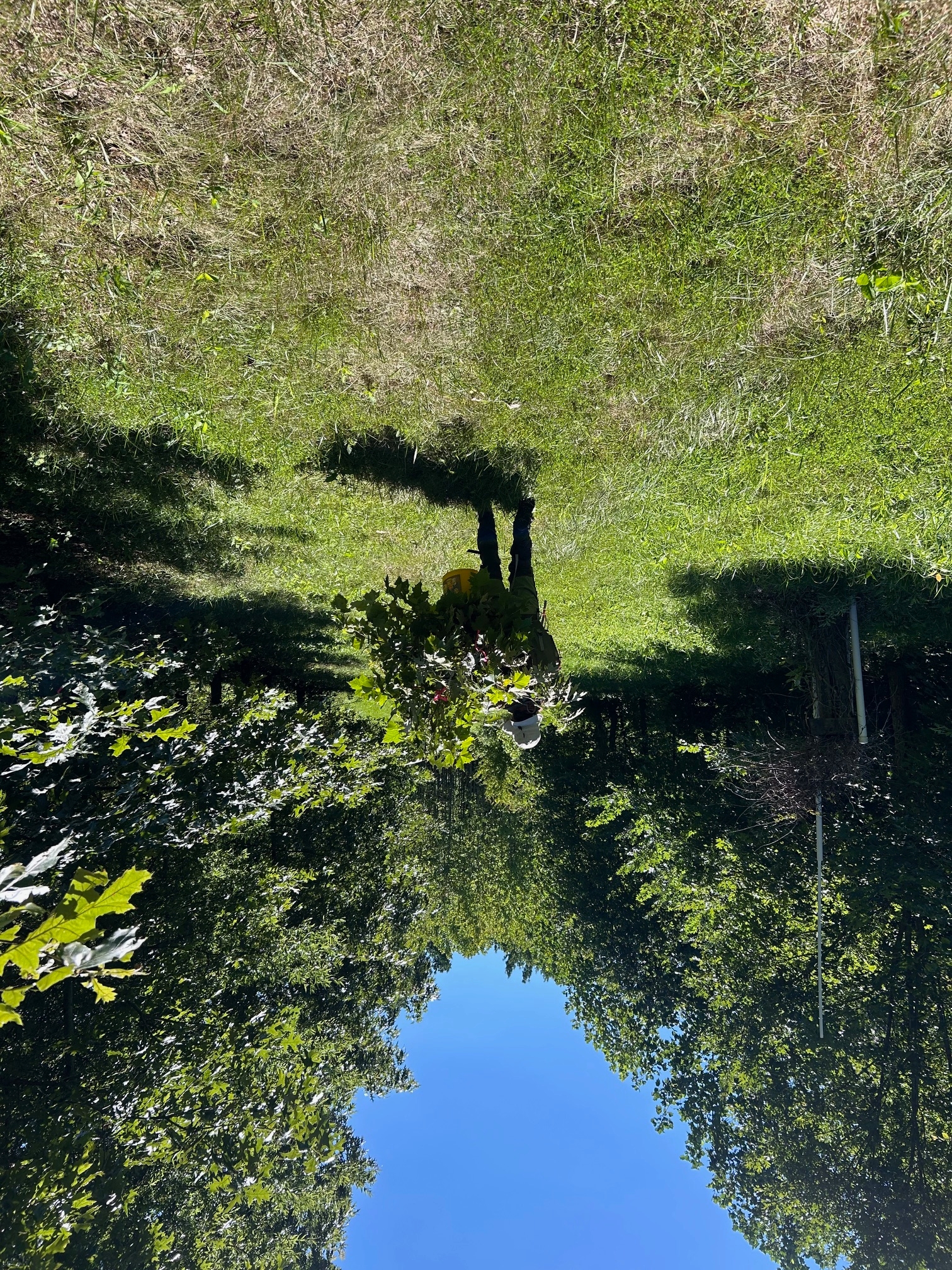
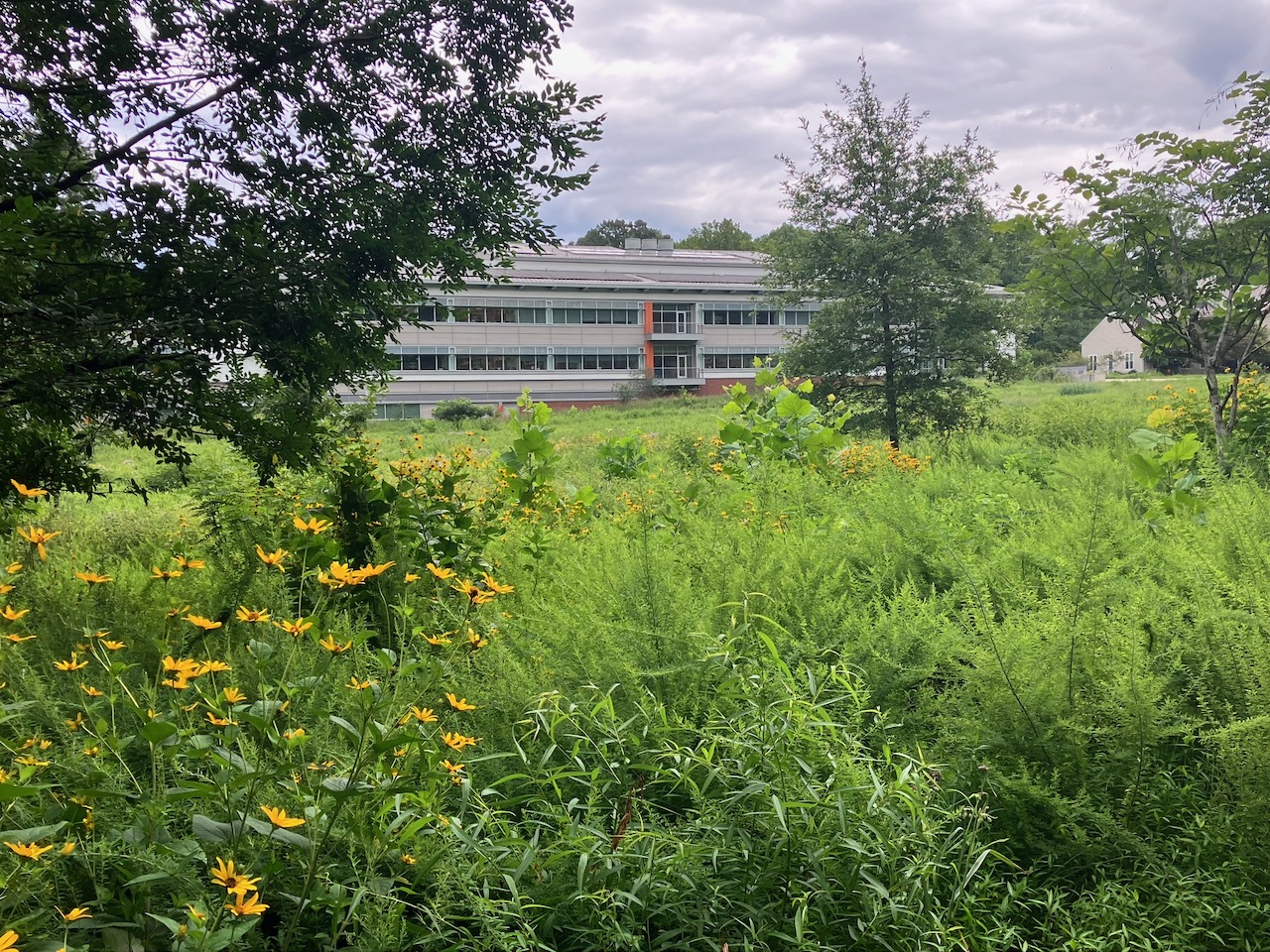
BiodiversiTREE, developed by John Parker, a senior scientist at SERC, is a controlled tree diversity-ecosystem function experiment. In 2013, the 35-by-35 meter plots were planted in an old cornfield with saplings of either a single native tree species or with mixtures of 4 or 12 species. Over 17,000 trees were planted with over 70 plots. The primary aim of BiodiversiTREE was to evaluate how tree diversity affects reforestation success. However, BiodiversiTREE’s experimental strategy also established a set of plots that are ideal for our controlled study of remote sensing of forest diversity.
While out in the field, the NASA Goddard team studied the leaves of different tree species to see how they reflect light and function. Our goal is to determine if unique “signatures”—such as reflected colors and physical traits—can distinguish various types of broad-leaf trees and whether these traits change depending on whether a tree grows alone among its own kind or in a diverse forest.
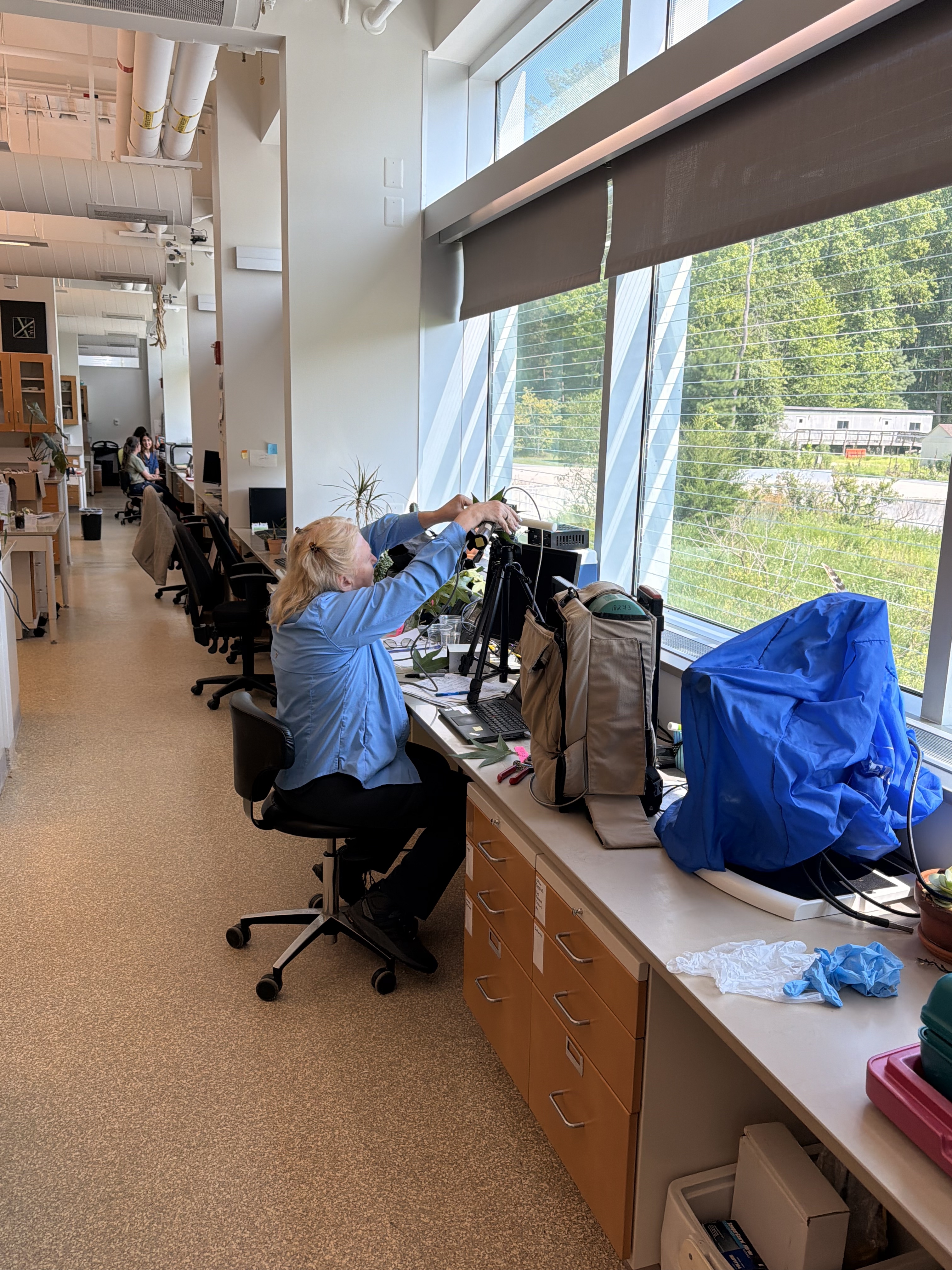
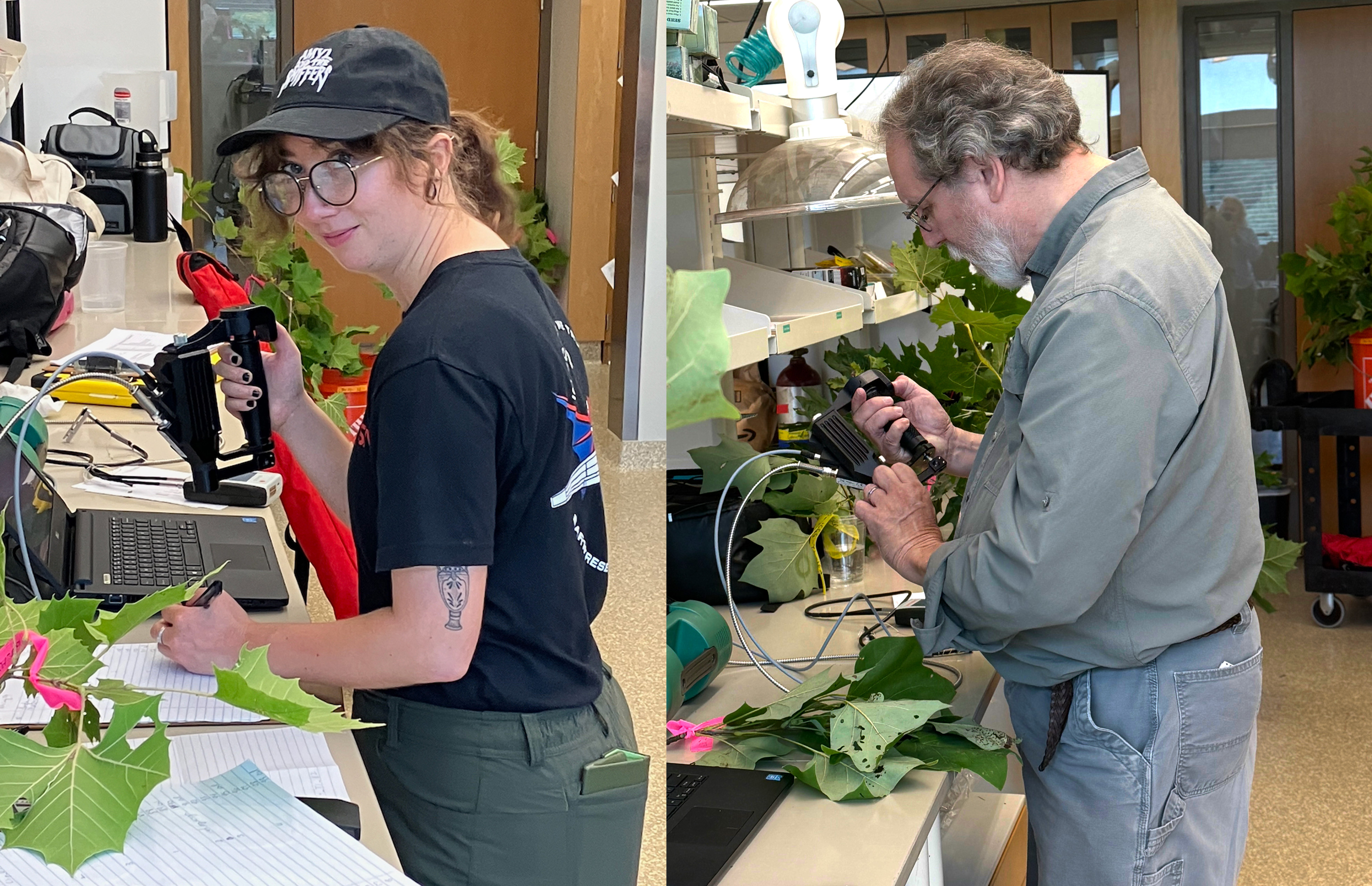
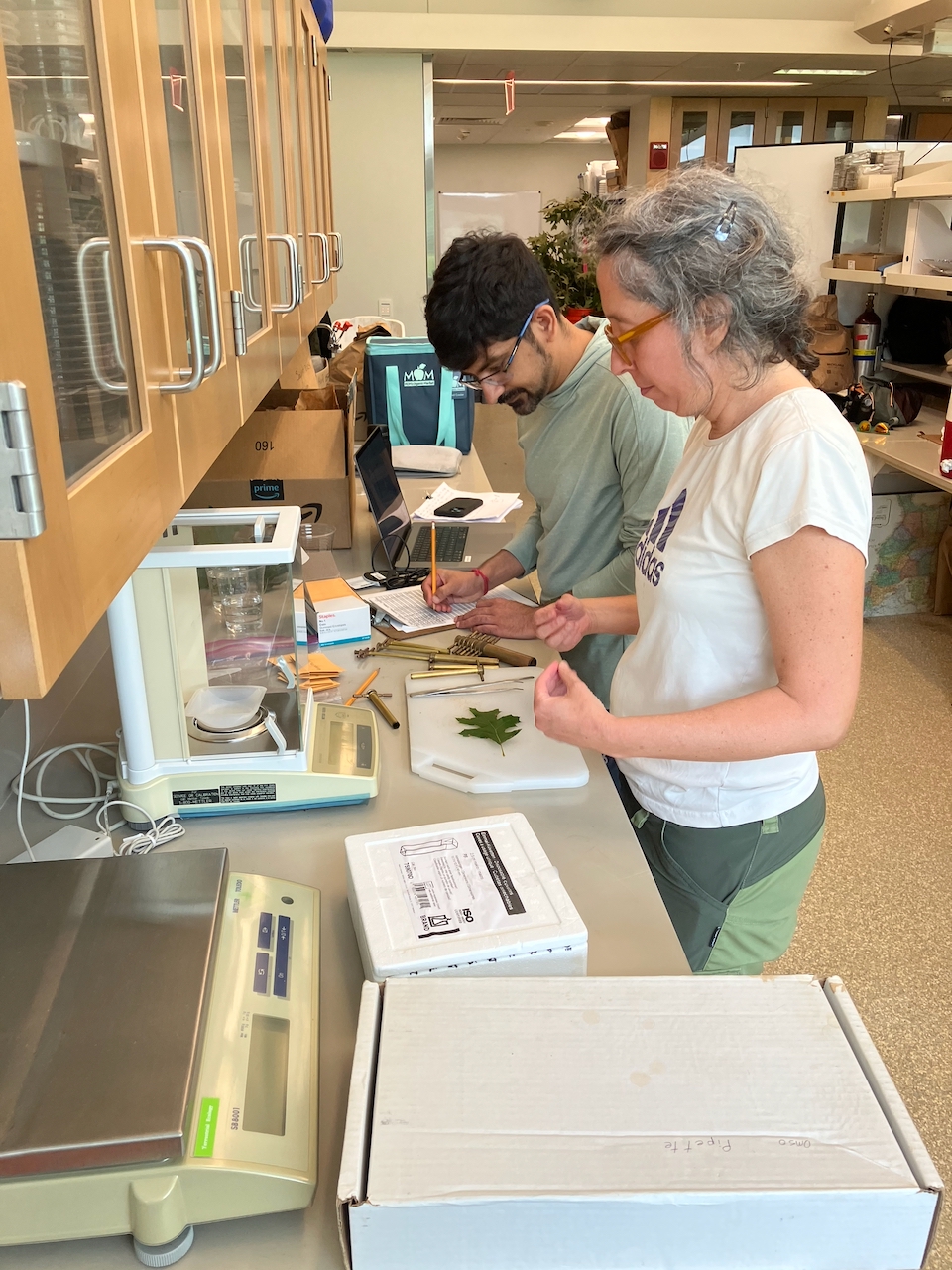
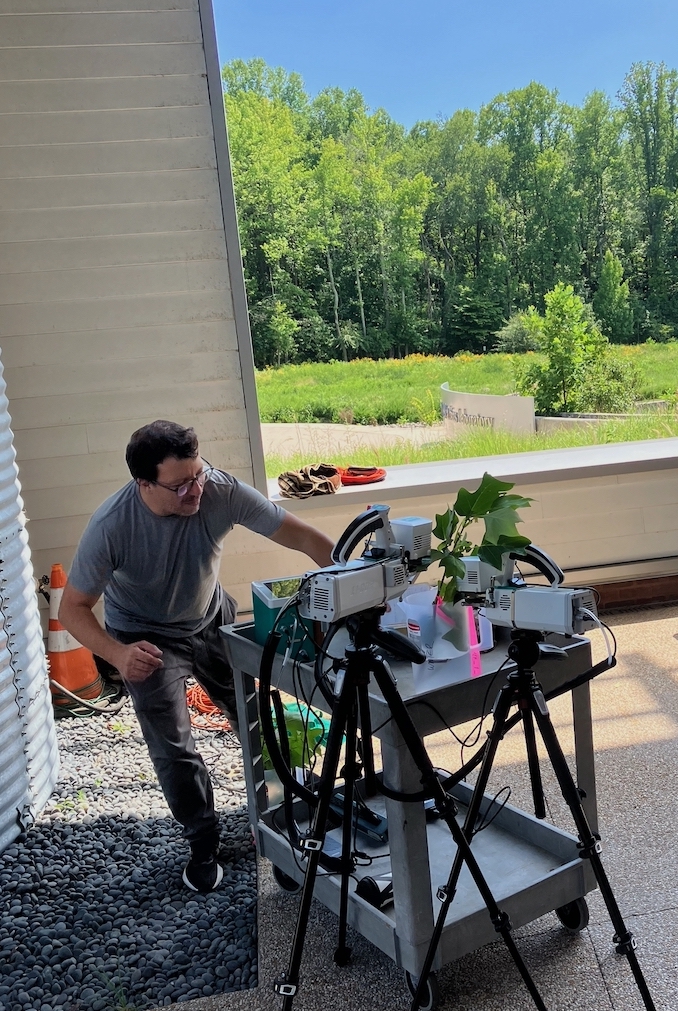
We used instruments called spectrometers to measure the light reflected from leaves in hundreds of narrow light wavelengths—including visible colors—to see how light interaction varies within a single species and across different species. We also measured key health indicators, including chlorophyll levels, water and structural content, and the leaf’s maximum capacity for photosynthesis. Ultimately, we want to use these ground measurements to better analyze forest health from above, using sensors mounted on airplanes and satellites.
A day in the forest laboratory
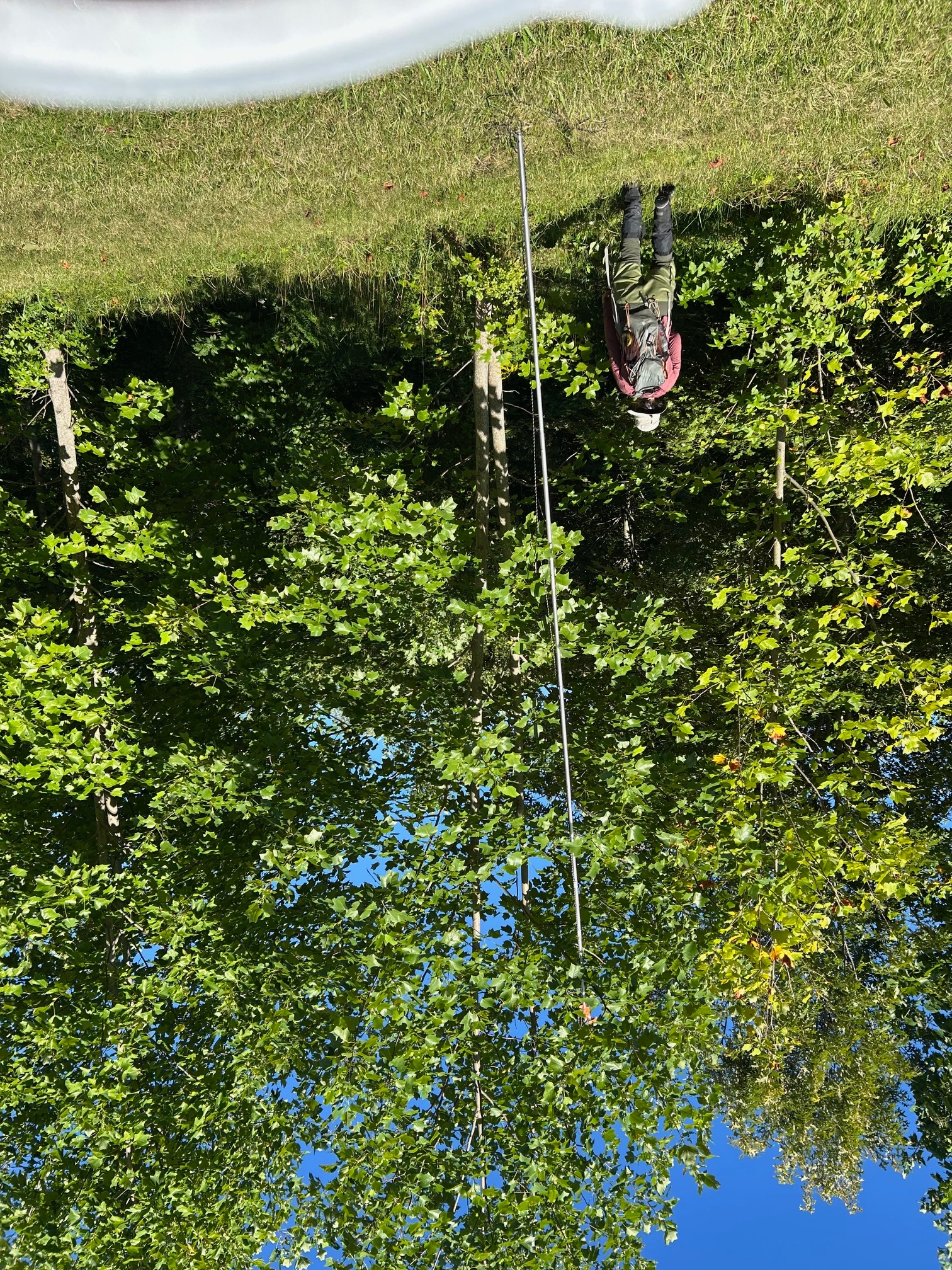
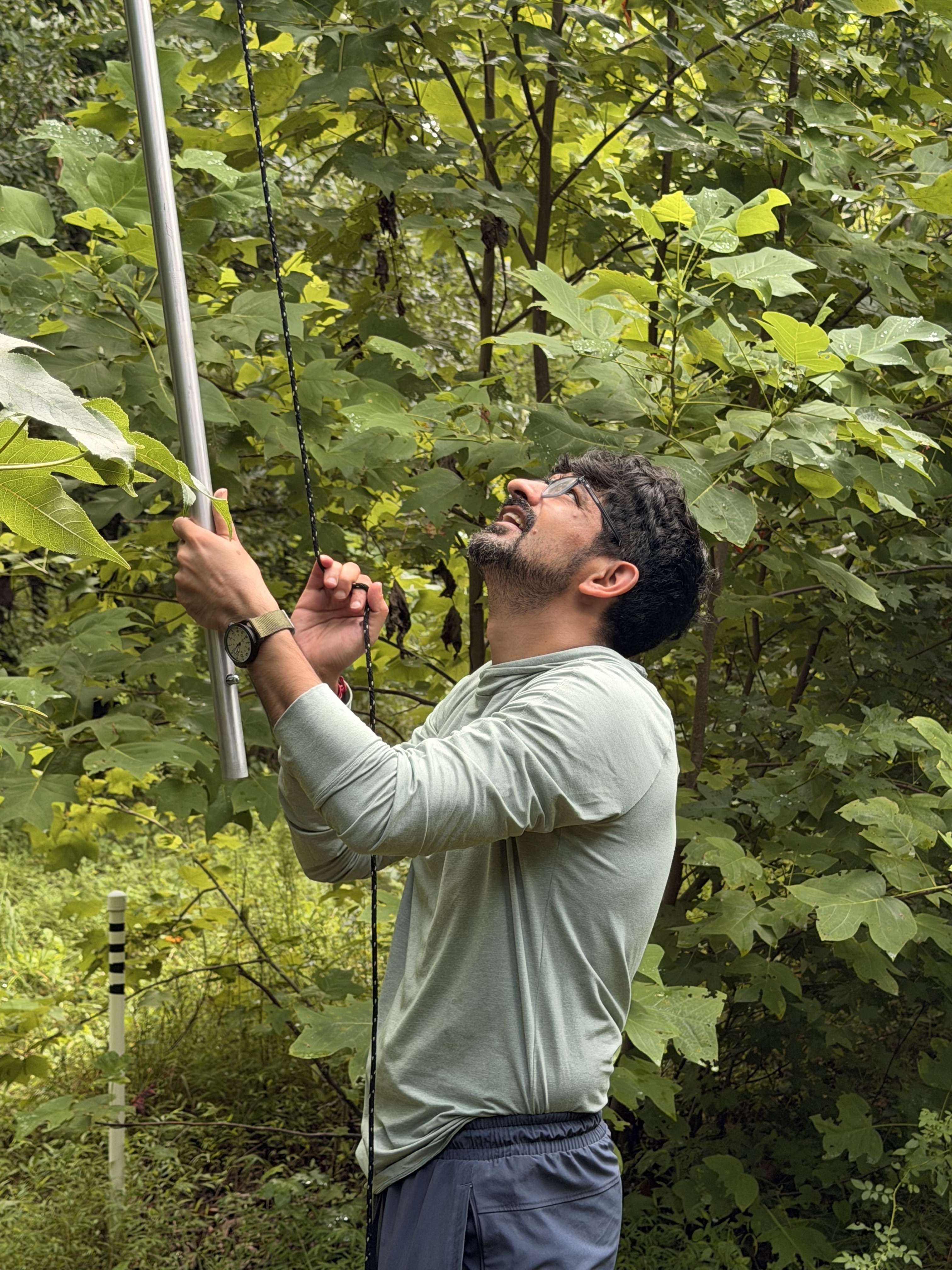
Each morning at the BiodiversiTREE site, we clipped branches from the sunlit, upper branches of selected trees using a long pruning pole.
Working on the ground, looking to the sky
Our fieldwork at SERC was timed to take advantage of the planned overflight of the area by the National Ecological Observatory Network (NEON) Airborne Observing Platform (AOP). NEON is tasked with collecting a long-term ecological dataset of the United States, and these aircraft flights are an ongoing part of that effort. The NEON airplane carries an imaging spectrometer, an instrument similar to the spectrometers we used in the lab to measure leaves, but the airborne imaging spectrometer views all of the plots, providing an overview of entire trees.
Combining the ground and airborne data, the Goddard team will study remote sensing of spectral and functional diversity in forests. We are looking for differences in the spectral reflectance among tree species at the leaf level in our lab measurements; then we’ll carry those insights up to the canopy level through the aircraft imagery.
We will also examine the functional traits that represent the ways trees allocate their resources. We want to know how leaf mass per area, gleaned from our leaf weight measurements (a measure of how much of the plant’s resources goes into leaf structure), and the lab-measured leaf chlorophyll content and photosynthetic capacity (indications of how much of the plant’s resources goes into enabling productivity), are related to our measured leaf spectral reflectance.
The path ahead
Some questions we will address are: Do these relationships vary among species? Are there consistent differences in leaf spectral reflectance among the tree species? Can we carry the results from the leaf level measurements to the canopy level measurements collected from the NEON aircraft? In the mixed species plots, is the spectral diversity within the plot related to the composition and number of species?
By working in plots with controlled tree plantings, we hope to get answers to these questions and, from that, improve our ability to monitor natural forest diversity and function. Our research will enhance the understanding of the role of diversity in successful reforestation by providing data on the tree functional characteristics for single species and mixed stands, and by developing tools for monitoring these characteristics using remote sensing.
