
NASA is streaming live coverage as it prepares for the arrival and docking of the agency’s SpaceX Crew-13 mission to the International Space Station. Watch online at:
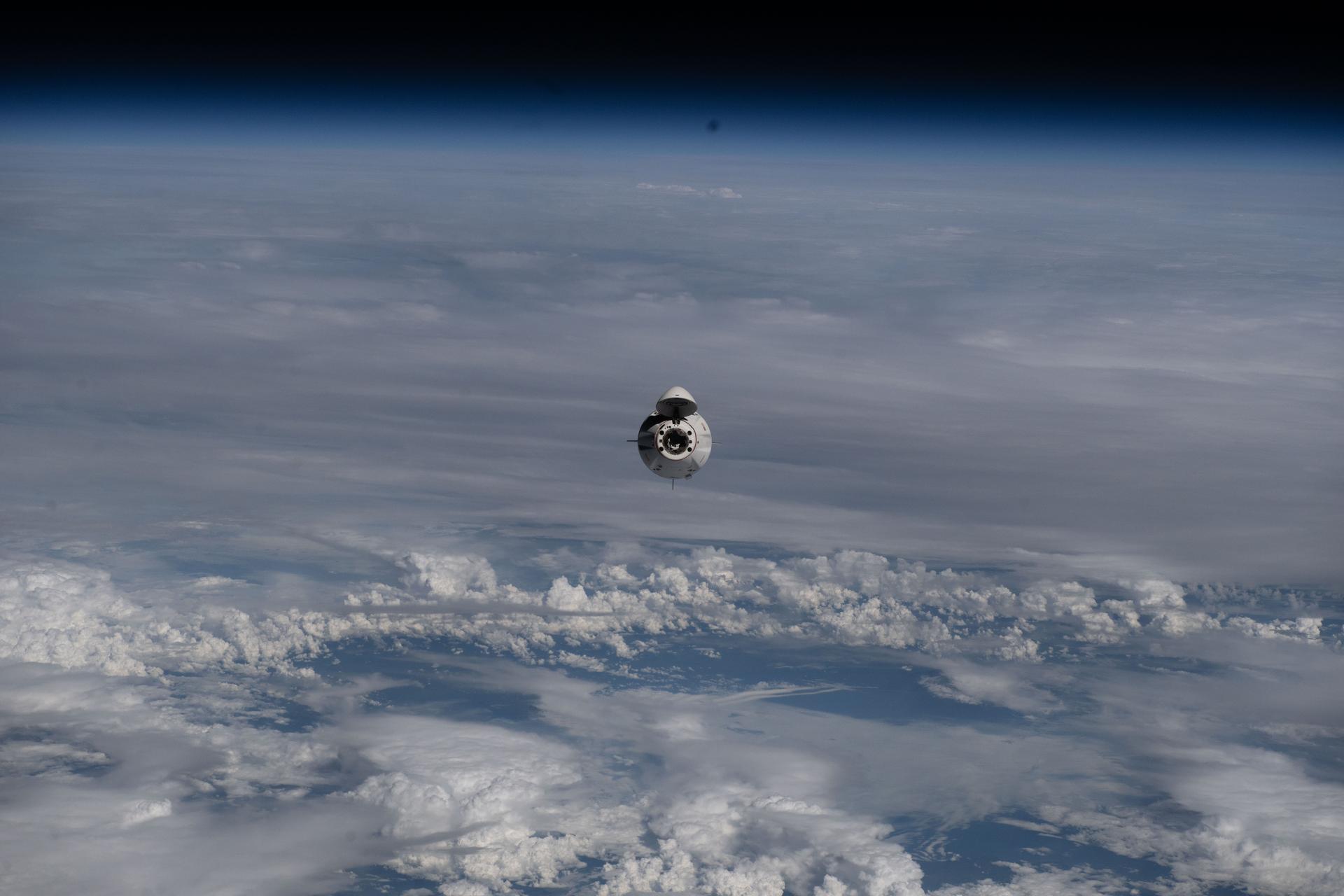
SpaceX Crew-13 Approaching Station Aboard Dragon



























NASA is streaming live coverage as it prepares for the arrival and docking of the agency’s SpaceX Crew-13 mission to the International Space Station. Watch online at:

The SpaceX Dragon spacecraft carrying NASA astronauts Jessica Watkins and Luke Delaney, CSA (Canadian Space Agency) astronaut Joshua Kutryk, and Roscosmos cosmonaut Sergey Teteryatnikov to the International Space Station has safely reached orbit, separated from the Falcon 9’s second stage, and the spacecraft’s nosecone has opened. A postlaunch news conference will be held at approximately […]
Back on Earth, the Falcon 9 rocket’s first stage completed its landing at SpaceX’s Landing Zone 40 at Cape Canaveral Space Force Station in Florida. The Falcon 9’s second stage has shut down, and soon Dragon will separate from second stage and continue its journey to the International Space Station.
The Falcon 9 rocket has reached first stage main engine cutoff, or MECO, and the first and second stages have separated. Next, the Falcon 9’s second-stage engine will ignite. After separation, the Falcon 9 first stage performs a boostback burn and begins its journey back toward Earth for a landing at SpaceX’s Landing Zone 40 […]
SpaceX’s Falcon 9 rocket has reached Max Q, or maximum dynamic pressure. Max Q marks the moment of peak aerodynamic stress on the rocket. This happens as the vehicle is accelerating and climbing through thick lower atmosphere, creating a peak in the force of air pushing against the rocket’s structure.

SpaceX’s Falcon 9 rocket and Dragon crew spacecraft rocketed into the blue Florida sky, as NASA astronauts Jessica Watkins and Luke Delaney, CSA (Canadian Space Agency) astronaut Joshua Kutryk, and Roscosmos cosmonaut Sergey Teteryatnikov began their approximately 7-hour, 50-minute journey to the International Space Station. Liftoff occurred at 11:10 a.m. EDT from Space Launch Complex […]

Liftoff of the SpaceX Falcon 9 rocket and Dragon crew spacecraft Grace, with NASA astronauts Jessica Watkins and Luke Delaney, CSA (Canadian Space Agency) astronaut Joshua Kutryk, and Roscosmos cosmonaut Sergey Teteryatnikov, is now less than five minutes away. Everything is proceeding according to schedule, and all is looking good for the launch of NASA’s […]

Fuel loading is complete on the Falcon 9 rocket’s second stage, and liquid oxygen loading has begun. Everything remains on target for the scheduled 11:10 a.m. EDT launch of NASA’s SpaceX Crew-13 mission from Cape Canaveral Space Force Station in Florida.

Confirmation that the Dragon crew spacecraft is “go” for launch came through for NASA’s SpaceX Crew-13 mission. SpaceX had begun fueling the Falcon 9 rocket. Loading of rocket-grade kerosene (RP-1) and first stage liquid oxygen loading is underway. Fueling of the second stage will begin in a few minutes. Teams continue to monitor weather at […]