




























NASA’s Roman Space Telescope: Launch Updates
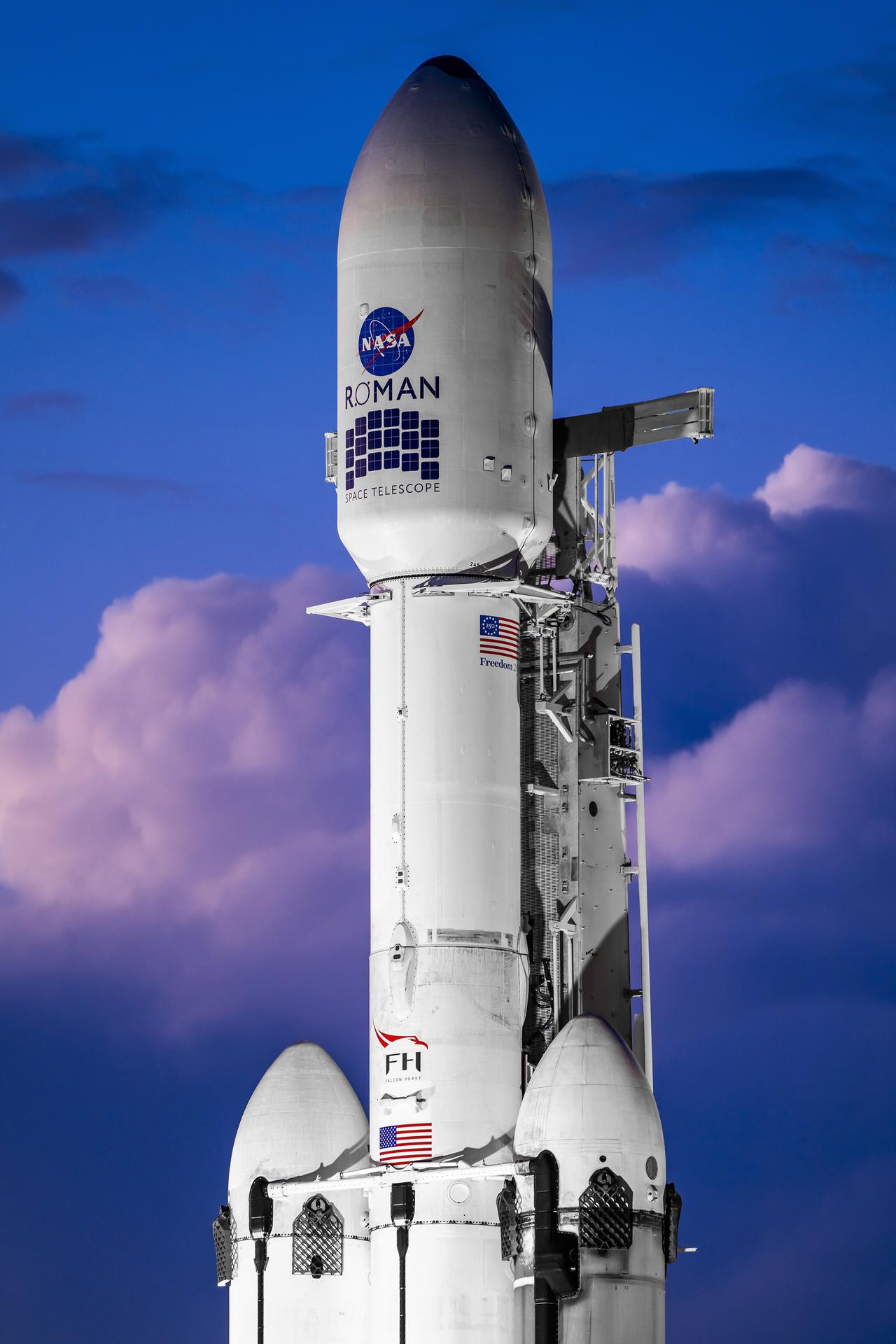
NASA’s live online coverage of the launch of the agency’s Nancy Grace Roman Space Telescope is underway. NASA and SpaceX are targeting 7:26 a.m. EDT Sunday for liftoff aboard a SpaceX Falcon Heavy rocket from Launch Complex 39A at NASA’s Kennedy Space Center in Florida.
The U.S. Space Force’s 45th Weather Squadron predicts a 50% chance of favorable weather for liftoff. The primary weather concerns are cumulus cloud rule and surface electric fields rule.
Launching nine months ahead of schedule, Roman will travel about 1 million miles from Earth to orbit around the second Sun-Earth Lagrange point, or L2. From there, Roman’s wide, crisp infrared surveys will map billions of galaxies, investigate dark energy and dark matter, and reveal planets beyond our solar system, known as exoplanets.
Roman’s surveys are expected to uncover roughly 100,000 new exoplanets while producing an enormous public archive that will support research ranging from stars and black holes to the structure and evolution of the universe.
Launch coverage will be posted on the Roman blogs along with the live broadcast beginning at 6:20 a.m. EDT on NASA+ and a variety of platforms. Learn where to watch: www.nasa.gov/live.
