
























NASA Transfers Management of Lunar Science Instruments
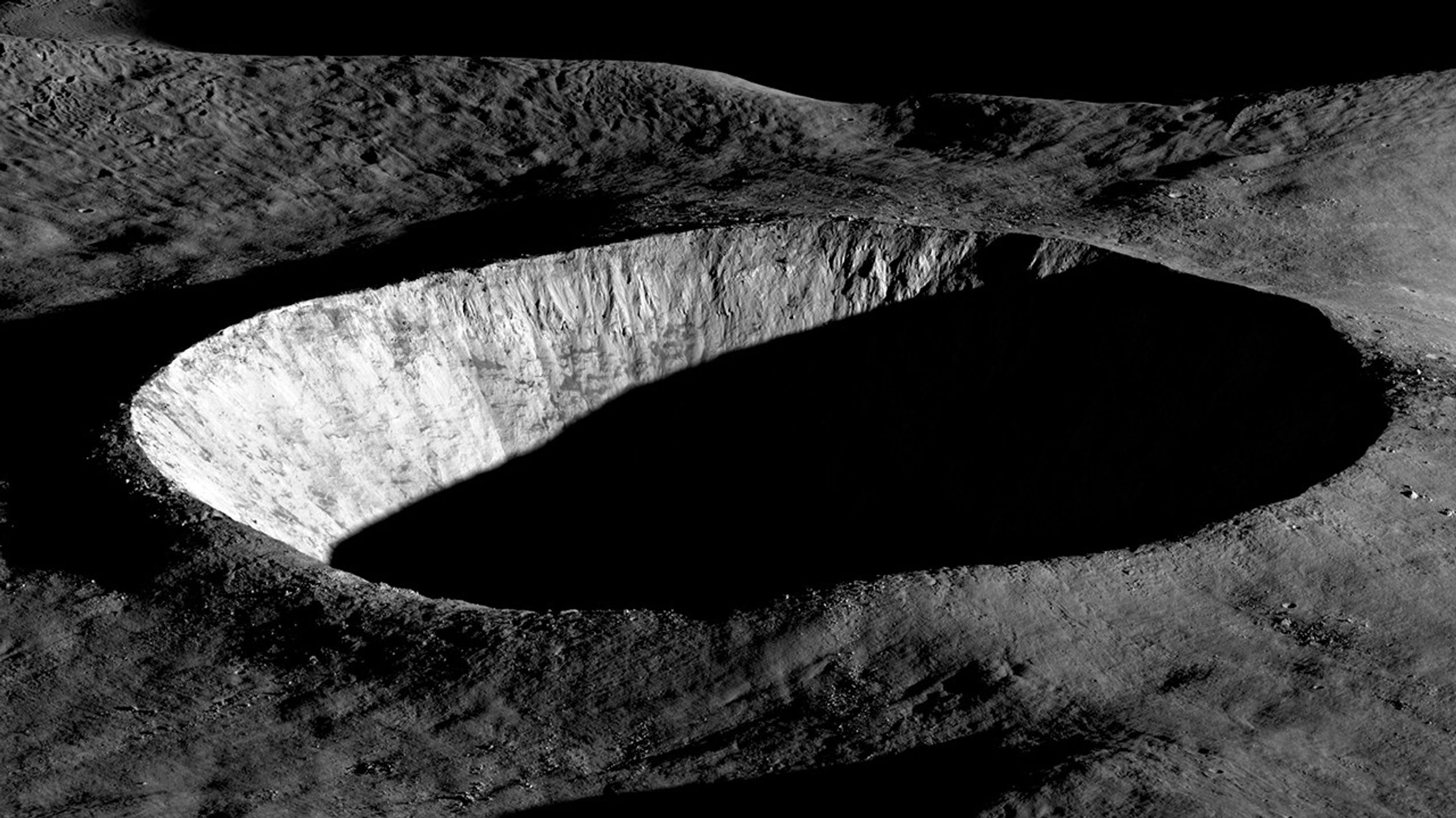
NASA has transferred management of two lunar science instruments to Intuitive Machines, due to the instruments’ principal investigators and science team members joining the company. Intuitive Machines now manages the Lunar Reconnaissance Orbiter Camera on board NASA’s Lunar Reconnaissance Orbiter (LRO) and ShadowCam, a NASA instrument on South Korea’s Danuri orbiter, also known as Korean Pathfinder Lunar Orbiter (KPLO).
Since 2009, LRO has been orbiting the Moon, gathering data on lunar topography, composition, temperature, and the radiation environment. The Lunar Reconnaissance Orbiter Camera is a system of three cameras that captures high resolution black and white images and moderate resolution multi-spectral images of the lunar surface. The camera’s more than 1.8 petabytes of acquired data are being used to plan for the agency’s Artemis landed missions. The principal investigator for the Lunar Reconnaissance Orbiter Camera is Mark Robinson of Intuitive Machines.
ShadowCam, a build-to-print copy of the Lunar Reconnaissance Orbiter Camera’s Narrow Angle Camera, is designed to capture high-resolution images of the Moon’s permanently shadowed regions – areas believed to retain ice and volatiles. The principal investigator of the instrument is Prasun Mahanti of Intuitive Machines.
Both instruments were originally built by Malin Space Science Systems of San Diego and managed by Arizona State University in Tempe.
In conjunction with these changes, the data for both instruments is now being managed by Texas A&M University in College Station and is part of NASA’s Planetary Data System.