






















NASA’s COFFIES Science Center Makes Breakthrough on Solar Enigma
Editor’s note: This post was updated on July 10,2026, to clarify details on the scientific data visualization, and on July 21, 2026, to correct the description of the illustrated graphic.
Researchers working with one of NASA’s DRIVE (Diversify, Realize, Integrate, Venture, Educate) Science Centers are closer to unraveling a long-standing solar mystery surrounding the extreme thinness of the Sun’s tachocline layer, a region critical for creating space weather.
The COFFIES (Consequences Of Fields and Flows in the Interior and Exterior of the Sun) center enabled a group of researchers to tackle a fundamental question about how the Sun works in a recent paper.
Our star consists of various layers that generate magnetic fields through a process called the solar dynamo. This magnetic engine powers solar activity, sparking solar flares and coronal mass ejections that dictate space weather cycles. Investigating these cycles is vital, as space weather can impact astronaut safety, satellite communications, and global navigation systems.
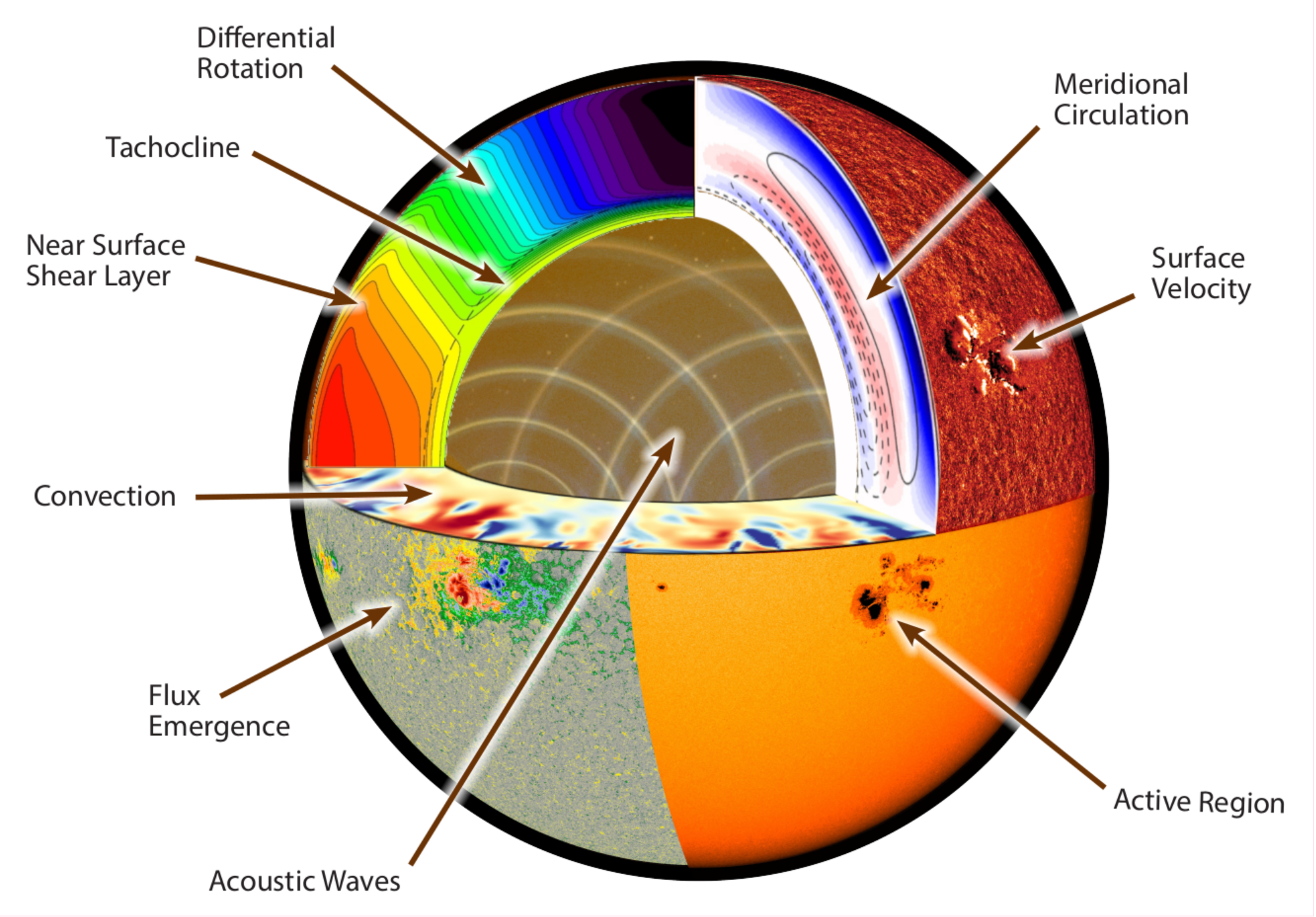
The tachocline, sandwiched between the Sun’s radiative and convective zones, is essential to these space weather cycles. The tachocline is believed to serve as the main amplifier of the magnetic field, storing, organizing, and releasing magnetic energy that eventually emerges at the solar surface as sunspots. Emerging sunspot regions trigger space weather events. Deciphering the tachocline’s formation and function enhances predictive space weather modeling.
The tachocline’s extreme thinness long remained a mystery, as earlier science models failed to replicate its unique and fluid behavior. The COFFIES team refined state-of-the-art computer models to produce a scenario where the tachocline is essential in driving the solar dynamo, while a fluctuating magnetic field is key for keeping the tachocline’s signature thinness.
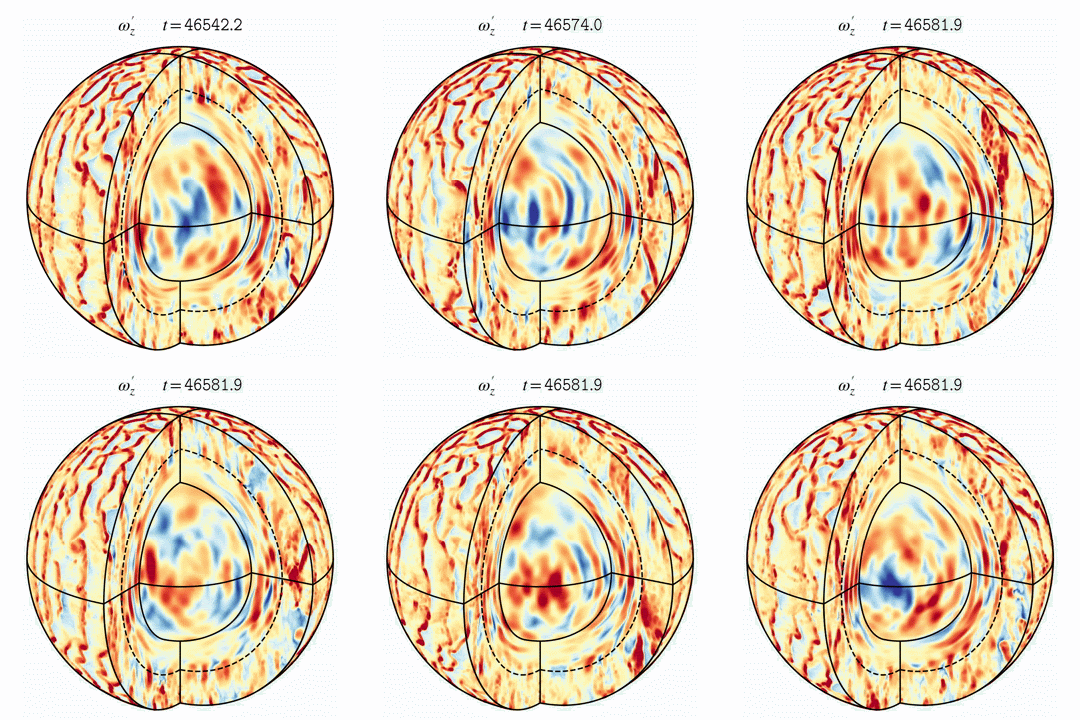
These findings and methodologies were recently published in The Astrophysical Journal.
By Desiree Apodaca
NASA’s Goddard Space Flight Center, Greenbelt, Md.
