














NASA’s Mission to Study Sunlight Completes Vacuum, Vibration Testing
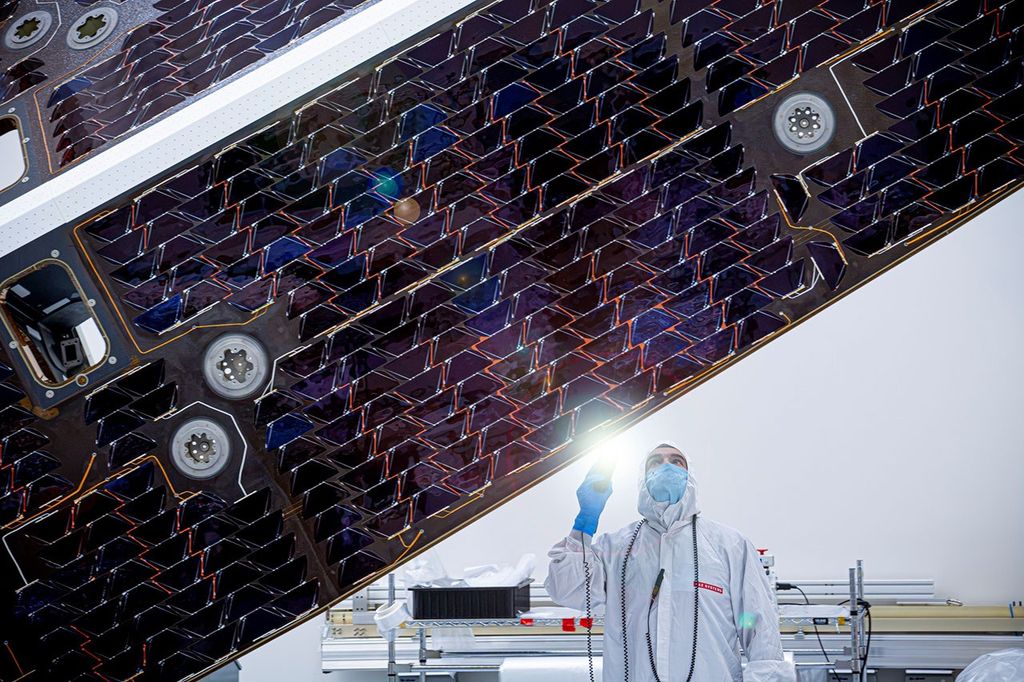
Bright white lights reflect off the metallic hardware of a satellite poised for inspection. Engineers outfitted with bunny suits traverse the clean room, past machinery and test chambers. In the middle of the clean room is the spacecraft for NASA’s upcoming sunlight-measuring mission, TSIS-2 (Total and Spectral Solar Irradiance Sensor-2).
This fall, the satellite took another step toward launch by undergoing and passing a series of tests. The team at General Atomics Electromagnetic Systems (GA-EMS) took TSIS-2 to below-freezing temperatures, vacuum-level pressures, and through shaking similar to what will be experienced during launch.
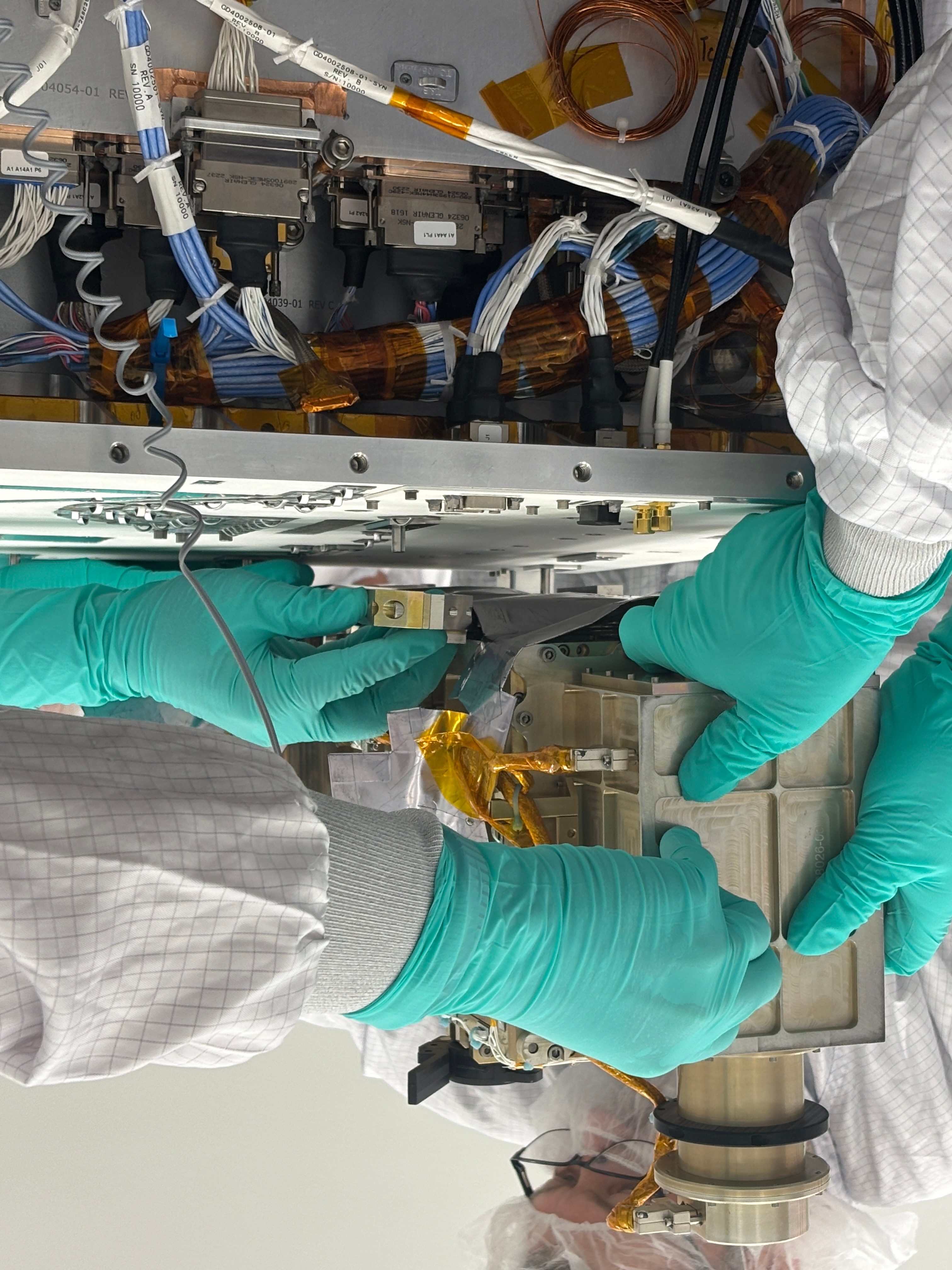
While operating in low Earth orbit, the satellite will experience a vacuum and temperatures well below freezing, which can impact the hardware and the instruments on the satellite. Testing through hot and cold conditions under vacuum demonstrates that the spacecraft and its instruments can perform as designed.
The TSIS-2 spacecraft passed the test with flying colors.
The observatory also underwent a test that measured its mass, located its center of gravity, and determined how its mass is distributed. Additionally, to verify the satellite is prepared for the rigors of launch, it underwent vibration testing, which simulated the shaking and vibrations the spacecraft will experience.
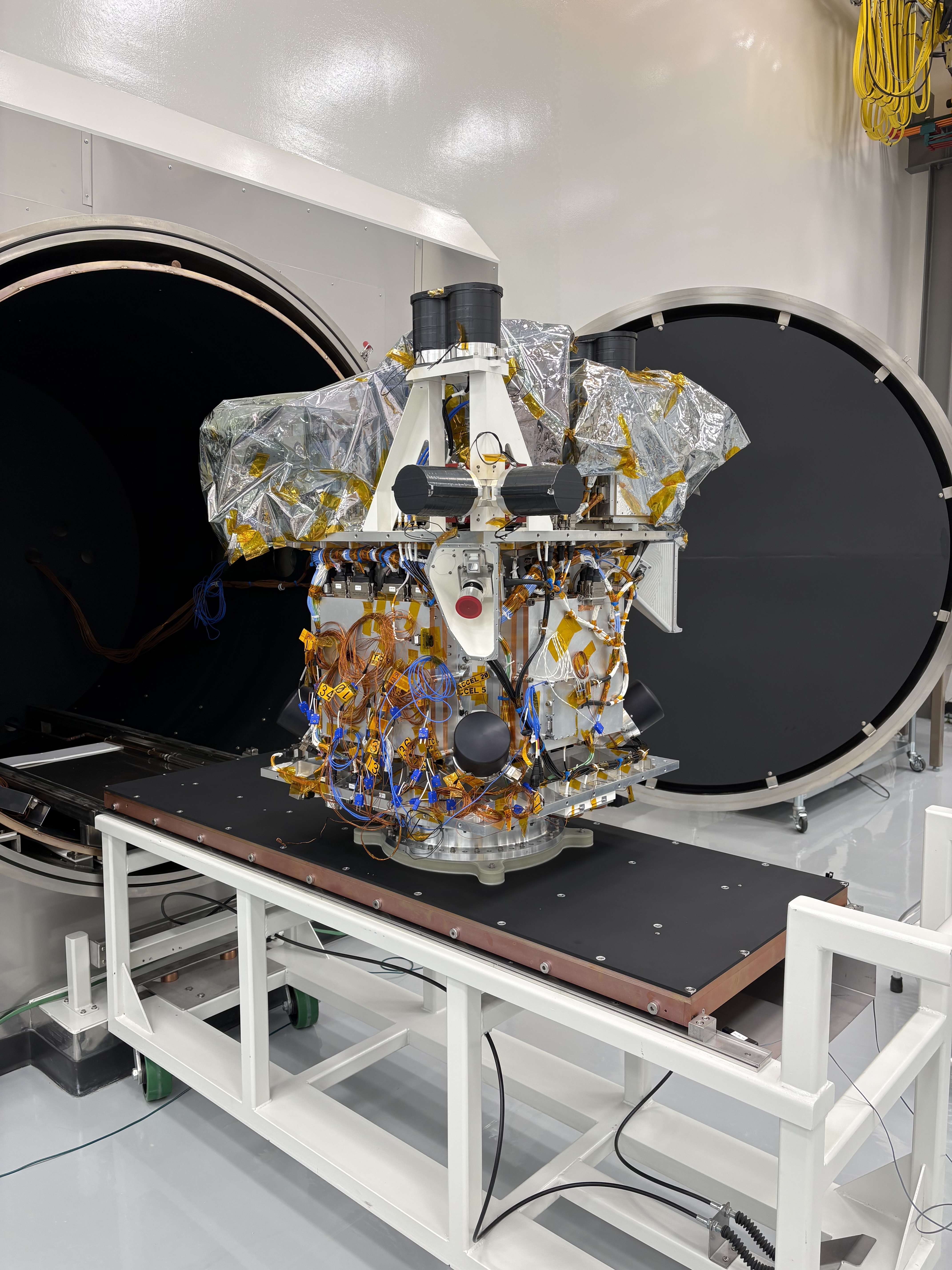
With these tests complete, TSIS-2 is closer to being packed in a custom shipping container for transport to the launch site and integration with the rocket in preparation for launch.
The spacecraft carries two instruments that measure solar irradiance, or the intensity of sunlight reaching the top of Earth’s atmosphere. The Total Irradiance Monitor measures the total amount of sunlight, while the Spectral Irradiance Monitor measures its distribution across ultraviolet, visible, and near-infrared wavelengths of light. Together, their measurements help scientists understand how changes in the Sun’s energy influence Earth.
The TSIS-2 mission will extend a continuous record of total solar irradiance measurements that began in 1978 with Jet Propulsion Laboratory’s Active Cavity Radiometer Irradiance Monitor space flight experiments. The mission will also continue a record of spectral solar irradiance measurements that began in 2003 with NASA’s Solar Radiation and Climate Experiment satellite mission. It will provide insight into minute changes to the Sun’s energy output over time and will help improve climate predictions. Launch is targeted for early 2027 in New Zealand aboard Rocket Lab’s Electron rocket.
The TSIS-2 mission is led by NASA. Partners include GA-EMS and the University of Colorado’s Laboratory for Atmospheric and Space Physics (LASP). The LASP team developed the instruments and supports on-orbit operations including processing the TSIS-2 scientific data. The spacecraft was designed and manufactured by GA-EMS, who will also operate the observatory through its Satellite Mission Observatory Center.
To learn more about TSIS-2, visit:
https://science.nasa.gov/mission/tsis-2/
