











before
after

Ice in the Beaufort Sea, off the Arctic Ocean, suffered significant fracturing and breakup by mid-April in 2016, considerably earlier than the late-May period when this usually happens. NASA ice specialists attribute the change to unusually warm air temperatures during the first months of the year and to strong winds caused by a stalled high-pressure system over the area. The thicker, multi-year ice that once covered the region has largely given way to seasonal, first-year ice that is thinner, weaker and more easily broken up by strong winds.

Ice in the Beaufort Sea, off the Arctic Ocean, suffered significant fracturing and breakup by mid-April in 2016, considerably earlier than the late-May period when this usually happens. NASA ice specialists attribute the change to unusually warm air temperatures during the first months of the year and to strong winds caused by a stalled high-pressure system over the area. The thicker, multi-year ice that once covered the region has largely given way to seasonal, first-year ice that is thinner, weaker and more easily broken up by strong winds.
Ice in the Beaufort Sea, off the Arctic Ocean, suffered significant fracturing and breakup by mid-April in 2016, considerably earlier than the late-May period when this usually happens. NASA ice specialists attribute the change to unusually warm air temperatures during the first months of the year and to strong winds caused by a stalled high-pressure system over the area. The thicker, multi-year ice that once covered the region has largely given way to seasonal, first-year ice that is thinner, weaker and more easily broken up by strong winds.
Ice in the Beaufort Sea, off the Arctic Ocean, suffered significant fracturing and breakup by mid-April in 2016, considerably earlier than the late-May period when this usually happens. NASA ice specialists attribute the change to unusually warm air temperatures during the first months of the year and to strong winds caused by a stalled high-pressure system over the area. The thicker, multi-year ice that once covered the region has largely given way to seasonal, first-year ice that is thinner, weaker and more easily broken up by strong winds.
before
after
Before and After
Early sea-ice breakup in Beaufort Sea, Arctic
April 13, 2015 - April 15, 2016
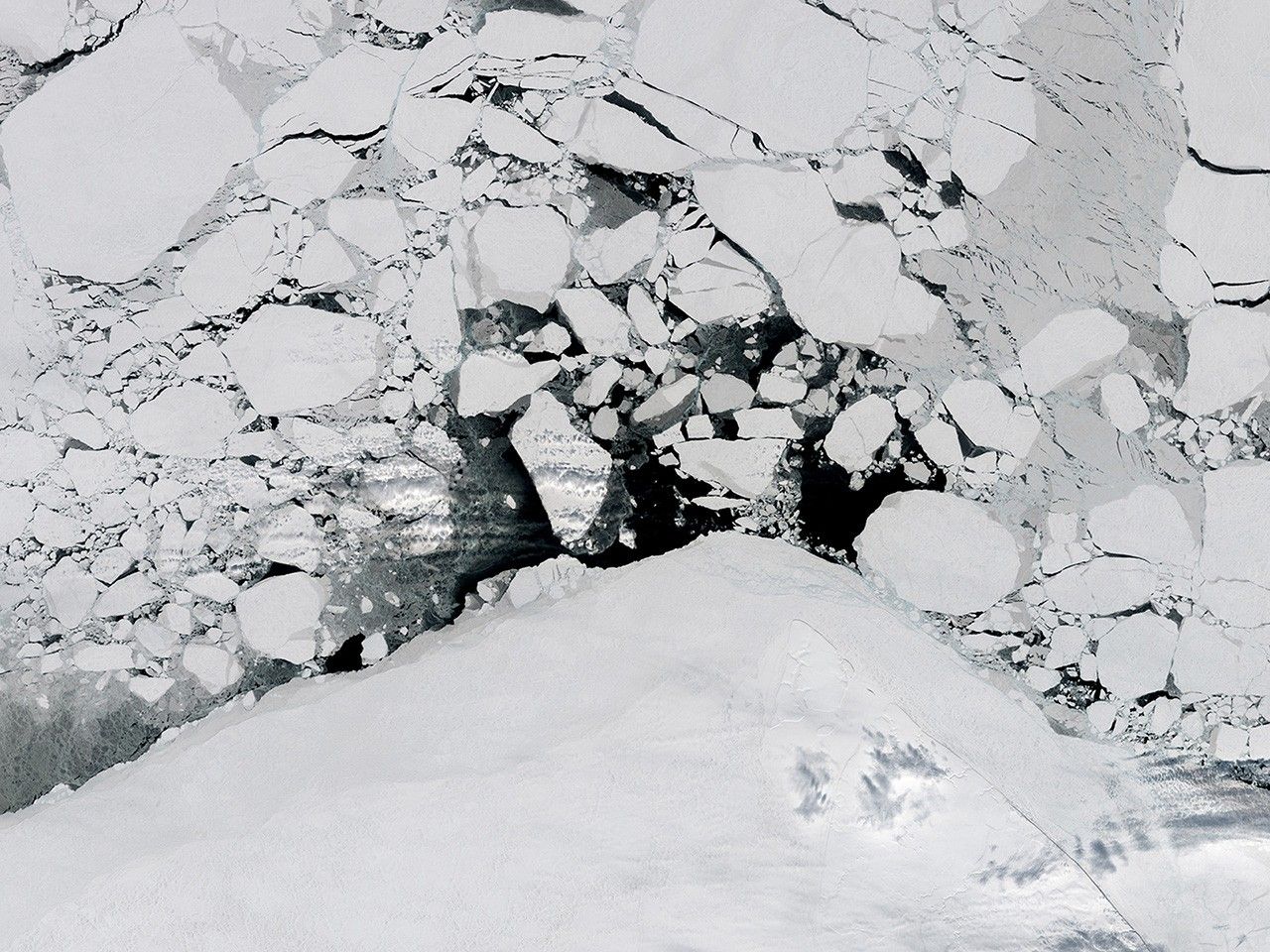
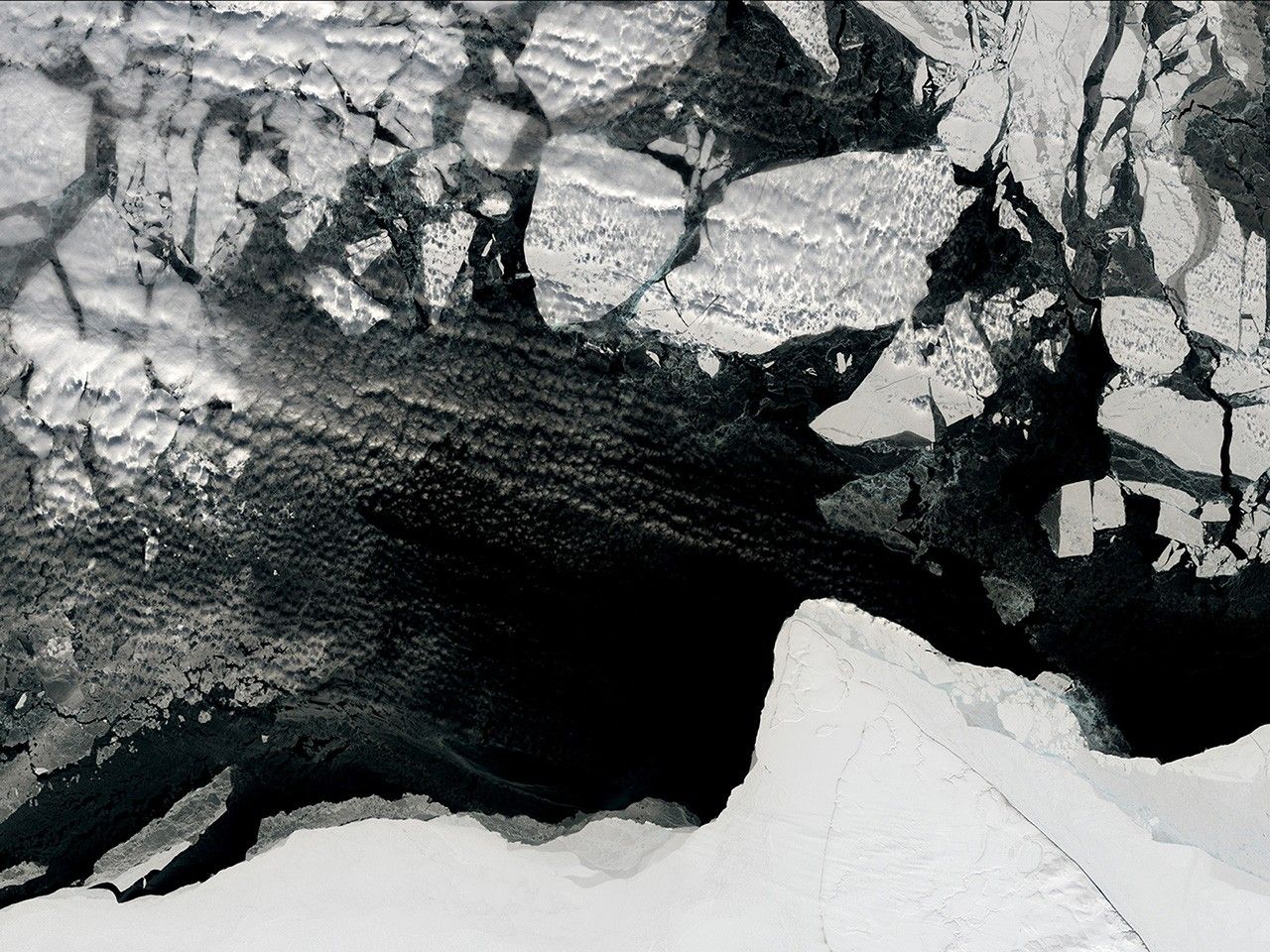
Ice in the Beaufort Sea, off the Arctic Ocean, suffered significant fracturing and breakup by mid-April in 2016, considerably earlier than the late-May period when this usually happens. NASA ice specialists attribute the change to unusually warm air temperatures during the first months of the year and to strong winds caused by a stalled high-pressure system over the area. The thicker, multi-year ice that once covered the region has largely given way to seasonal, first-year ice that is thinner, weaker and more easily broken up by strong winds. Images taken by the Operational Land Imager onboard Landsat 8. Source: U.S. Geological Survey (USGS) Landsat Missions Gallery; “Beaufort Sea Ice Experiences Unusually Early Breakup”; U.S. Department of the Interior / USGS and NASA.