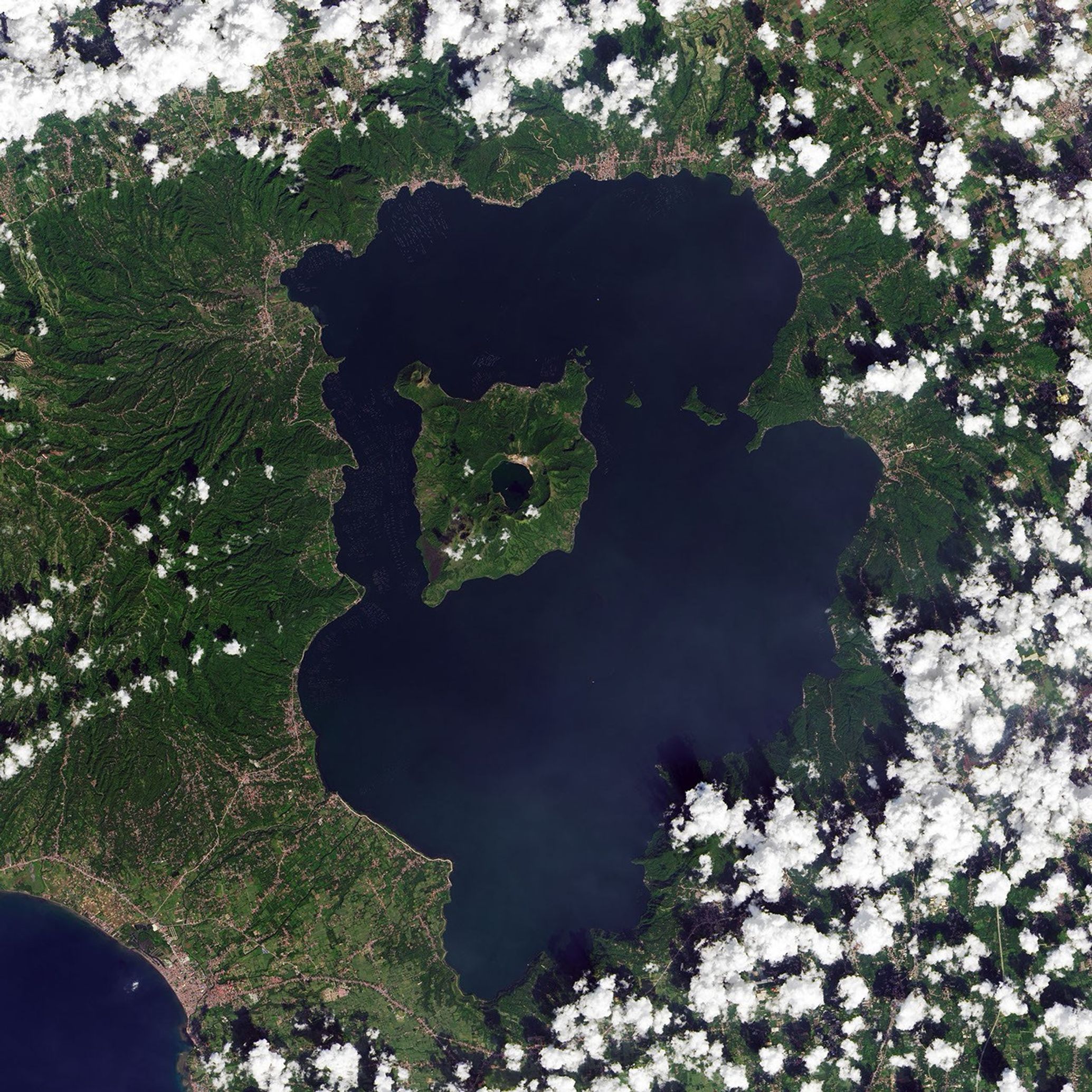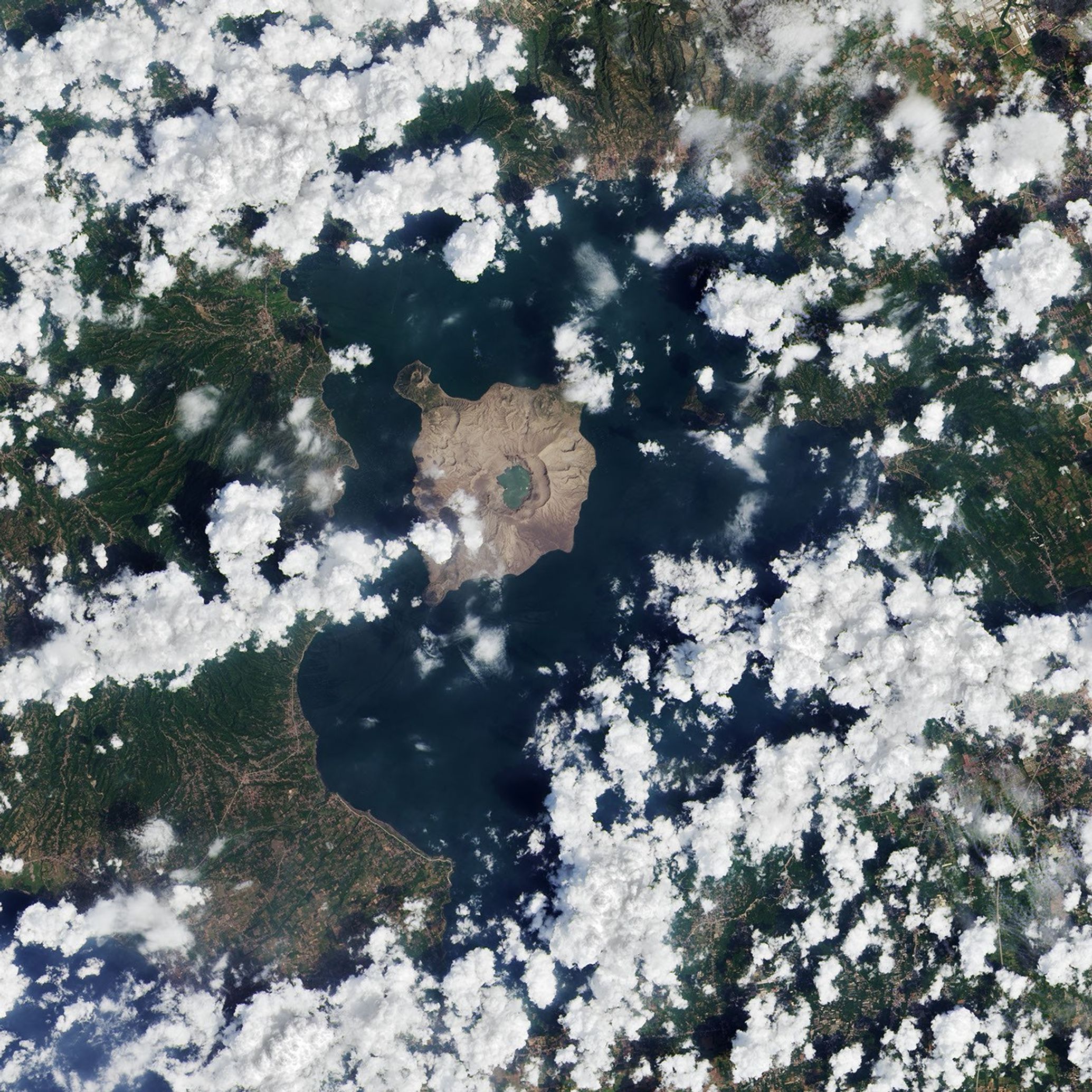


























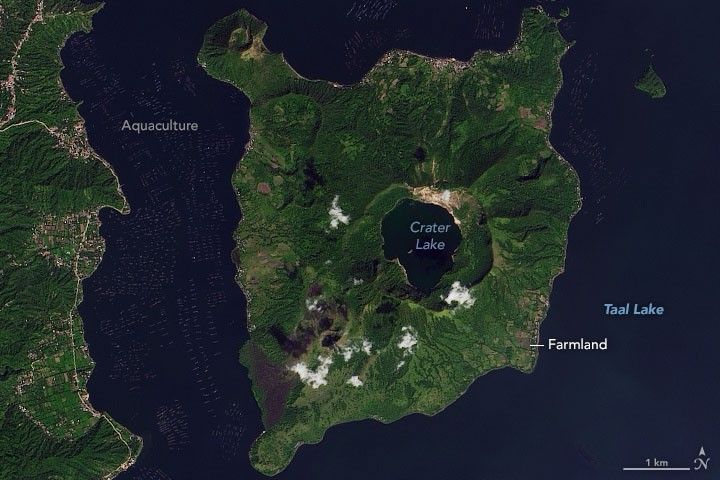
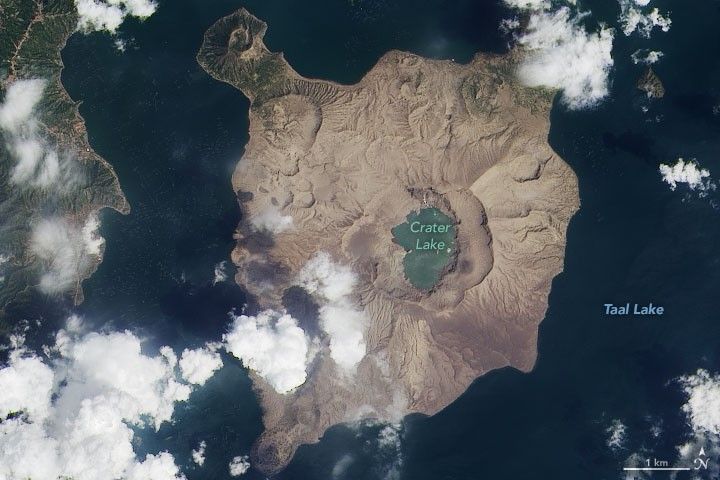
On January 12, 2020, the Taal Volcano in the Philippines awoke from 43 years of quiet and began to spew gases, ash, and lava into the air. In the days and weeks that followed, the eruption dropped a layer of unusually wet, heavy ash on the surrounding landscape, withering vegetation and turning the lush fields and forests of Volcano Island a ghostly gray.
Two months later, the ash-damaged landscape still looks more like the Moon than the tropics. On March 11, 2020, the Operational Land Imager (OLI) on Landsat 8 acquired an image of Taal that underscores the consequences of the ashfall. For comparison, the other image shows the same area on December 6, 2019.
Aside from a few green promontories on the north side of the island, ash has altered much of the landscape, including several villages along the coasts. “Most of the ash has likely washed away by now, but signs of it will persist for millennia in the rock record,” explained Erik Klemetti, a volcanologist at Denison University. “Most of the ash that fell within the caldera is in the process of getting concentrated into gullies and streams or deposited into the lake.”
Volcanic ash is nothing like the soft fluffy material that forms when wood, leaves, or paper burn. Rather, it is made up of small jagged pieces of rock and glass that are hard, abrasive, mildly corrosive, and do not dissolve in water. Thick blankets of volcanic ash can have big consequences for plants, animals, and people. As shown in the Landsat images, most of the vegetation was killed or stripped of leaves. In Taal’s case, the ash was particularly problematic because it grew wet enough to achieve the texture of mud, before drying and hardening into something like cement.
Coffee, rice, corn, cacao, and banana crops were damaged, according to news reports. In one estimate, damages to plants and animals totaled 577 million Philippine pesos, or $11 million. Despite the widespread effects, plants will eventually recover or re-colonize the island—and the layer of new ash will help keep the soil fertile.
The damage extended beyond plant life. Dozens of people perished during the eruption. Large numbers of livestock and pets were also left behind when tens of thousands of people evacuated. Ash even affected the fish—mainly tilapia and milkfish—being raised in thousands of aquaculture pens in Taal Lake. According to the Taal Lake Aquaculture Alliance, Inc., about 30 percent of the fish cages in the lake were destroyed during the eruption. To keep the remaining fish alive, farmers appealed to authorities to allow them to feed and harvest the fish despite lockdowns that prevent people from getting near the still-active volcano.
Water has returned to Taal’s main crater lake, which mostly evaporated or drained during the eruption.
References & Resources
- ANC (2020, February 1) How the farmers of Taal are dusting off the ashes and making the first steps to recovery. Accessed March 17, 2020.
- Atlas Obscura (2020, January 15) Ash From the Taal Eruption Will Stick Around âPretty Much Foreverâ. Accessed March 17, 2020.
- Amusing Planet (2016, December 30) The Island in a Lake on an Island in a Lake on an Island. Accessed March 17, 2020.
- Buzzfeed (2020, January 14) A Volcano Has Blanketed Parts Of The Philippines In A Thick Layer Of Toxic Ash. Accessed March 17, 2020.
- CNN Philippines (2020, January 14) Agriculture Dept.: Initial crop, livestock damage from Taal eruption pegged at â±577M. Accessed March 17, 2020.
- CNN (2020, January 15) Desolate images from Taal volcano show horses and cows buried in ash. Accessed March 17, 2020.
- Discover (2020, January 12) New Eruption from Taal, One of the Most Dangerous Volcanoes in the Philippines. Accessed March 17, 2020.
- DROMIC (2020, March 11) DSWD DROMIC Report #68 on the Taal Volcano Eruption. Accessed March 17, 2020.
- Philippine News Agency (2020, February 5) DA OKs feeding of fish in Taal as water quality improves. Accessed March 12, 2020.
- Philippine Institute of Volcanology and Seismology (2020) Volcano Bulletin. Accessed March 17, 2020.
- Rappler (2020, January 14) Agricultural damage from Taal Volcano eruption hits P577 million. Accessed March 17, 2020.
- Reliefweb (2020, March 11) Philippines: Taal Volcano. Accessed March 17, 2020.
- Reuters (2020, January 15) Gray pineapples: Volcano devastates Philippines farm. Accessed March 17, 2020.
- Slowfood (2020, February 4) Ashes Smoldered Farmers after Taal Eruption in Philippines Accessed March 17, 2020.
- The Philippine Star (2020, February 27) Taal Volcano unrest. Accessed March 17, 2020.
- The Atlantic (2020, January 21) The Colorless Landscape Around Taal Volcano. Accessed March 17, 2020.
- The Washington Post (2020, January 17) Taal volcanoâs crater lake is nearly empty. Accessed March 17, 2020.
NASA Earth Observatory images by Joshua Stevens, using Landsat data from the U.S. Geological Survey. Story by Adam Voiland.