










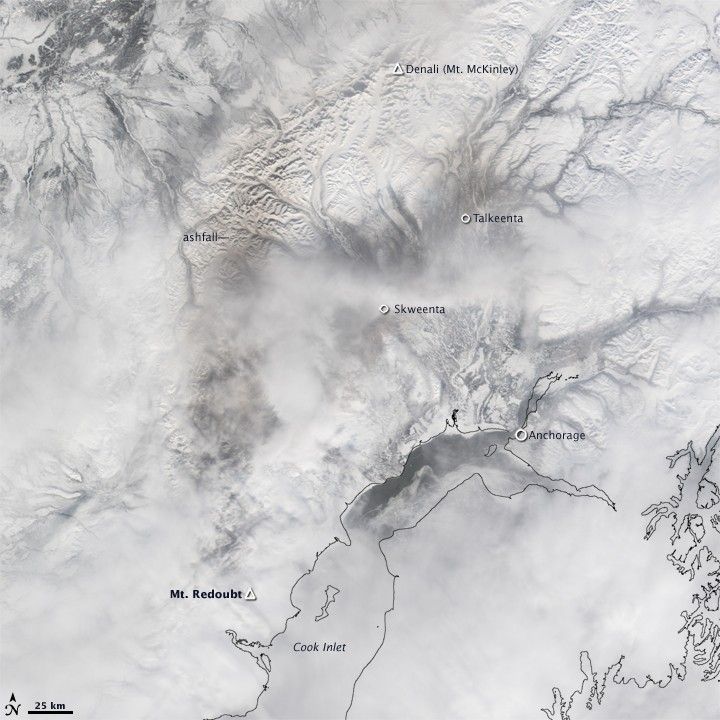
After keeping volcanologists waiting for weeks, Mount Redoubt erupted five times in one night, beginning on March 22, 2009. The volcano followed up with another eruption on the evening of March 23. Located west of Alaska’s Cook Inlet, Mount Redoubt is not far from Anchorage, but that city emerged from the event unscathed, according to the Anchorage Daily News. Settlements north of the volcano, however, were in the path of the ashfall.
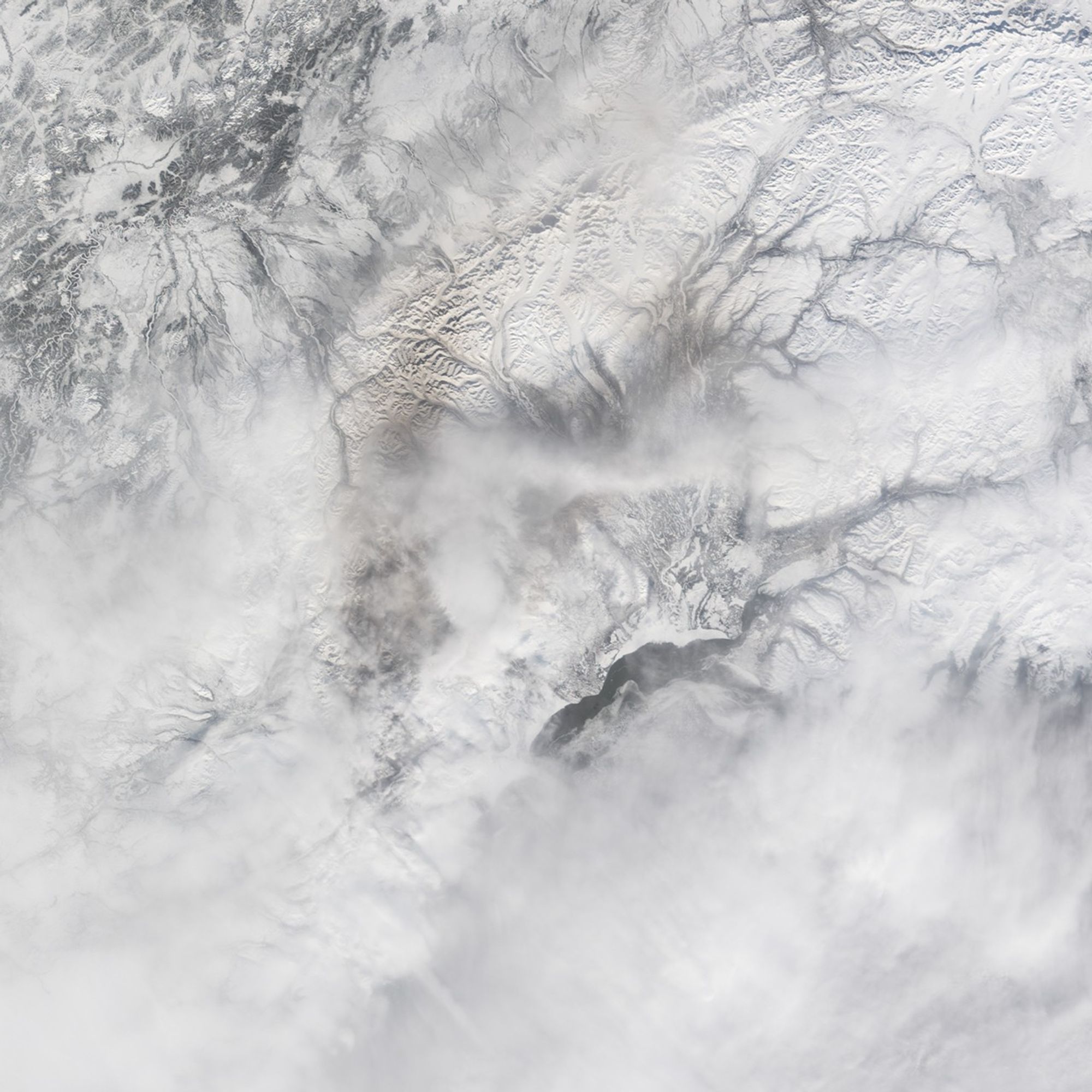
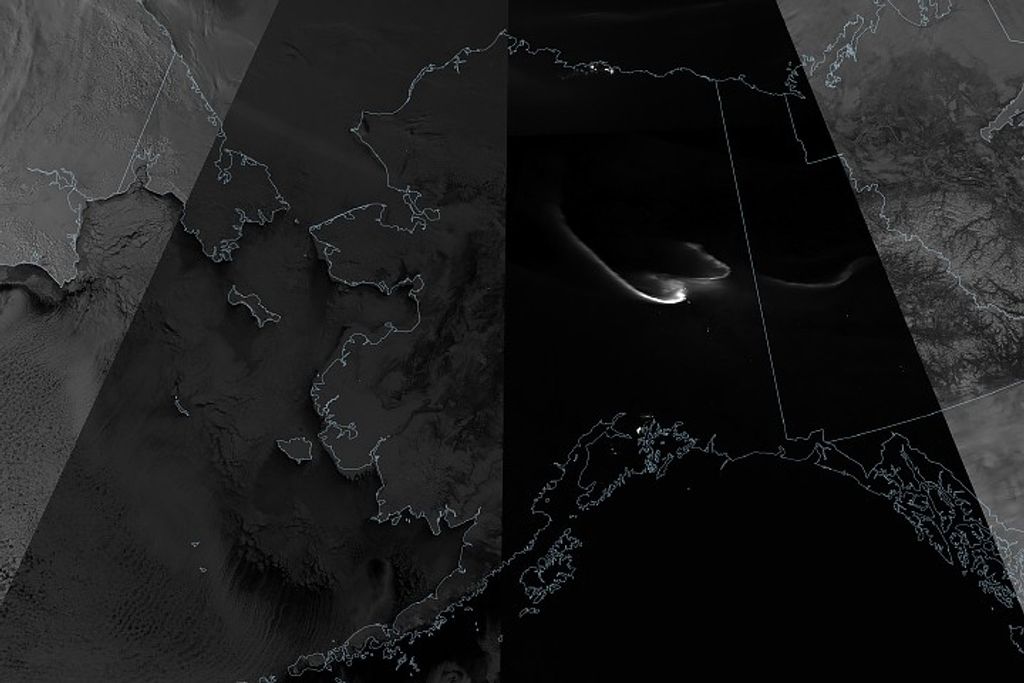
The Moderate Resolution Imaging Spectroradiometer (MODIS) on NASA’s Terra satellite captured this image of Mount Redoubt and the region to the north on March 23, 2009. Although clouds obscure much of the land surface, ashfall can still be seen north of the volcano. The ash appears as a dull gray-brown. According to the Anchorage Daily News, the hardest-hit area was a remote settlement of Skwentna, some 113 kilometers (70 miles) northwest of Anchorage. Residents of the riverfront town reported 0.635 centimeters (0.25 inches) of volcanic ash on the ground, as well as the characteristic rotten-egg smell of sulfur.
Unlike the soft ash that results from burned vegetation, volcanic ash consists of tiny shards of glassy material. It is abrasive and corrosive and can even lead to power outages because of its ability to conduct electricity when moist. The U.S. National Weather Surface advised affected residents to protect electronic equipment, seal windows and doors, and cover machinery.
Although Ted Stevens Anchorage International Airport remained open, many flights were canceled or diverted. Sending ash and steam roughly 19 kilometers (12 miles) above Cook Inlet, Mount Redoubt posed a hazard to air traffic. In 1989, an airplane flying through a cloud of volcanic ash from Mount Redoubt clogged its engines with corrosive ash. Although the plane landed safely, repairing the aircraft cost $80 million.
Links
- Alaska Volcano Observatory. Redoubt. Accessed March 24, 2009.
- Bryson, G. (2009, March 24). Redoubt ash goes north. Anchorage Daily News. Accessed March 24, 2009.
- Hollander, Z., Komarnitsky, S.J. (2009, March 24). Skwentna bears brunt from volcano Anchorage Daily News. Accessed March 24, 2009.
- Holmes, H. (2001). The Secret Life of Dust. John Wiley and Sons, Inc., Hoboken, New Jersey.
- U.S. Geological Survey. (2009, February 3). Volcanic Ash. Accessed March 24, 2009.
References & Resources
NASA image created by Jesse Allen, using data provided courtesy of the MODIS Rapid Response team. Caption by Michon Scott.