














For several decades, measurements of the West Antarctic Ice Sheet showed it to be retreating rapidly. But new data derived from satellite-borne radar sensors show the ice sheet to be growing. Changing Antarctic ice sheets remains an area of high scientific interest, particularly in light of recent global warming concerns.
These new findings are significant because scientists estimate that sea level would rise 5–6 meters (16–20 feet) if the ice sheet collapsed into the sea. Do these new measurements signal the end of the ice sheet’s 10,000-year retreat? Or, are these new satellite data simply much more accurate than the sparse ice core and surface measurements that produced the previous estimates? Another possibility is that the ice accumulation may simply indicate that the ice sheet naturally expands and retreats in regular cycles. Cryologists will grapple with these questions, and many others, as they examine the new data.
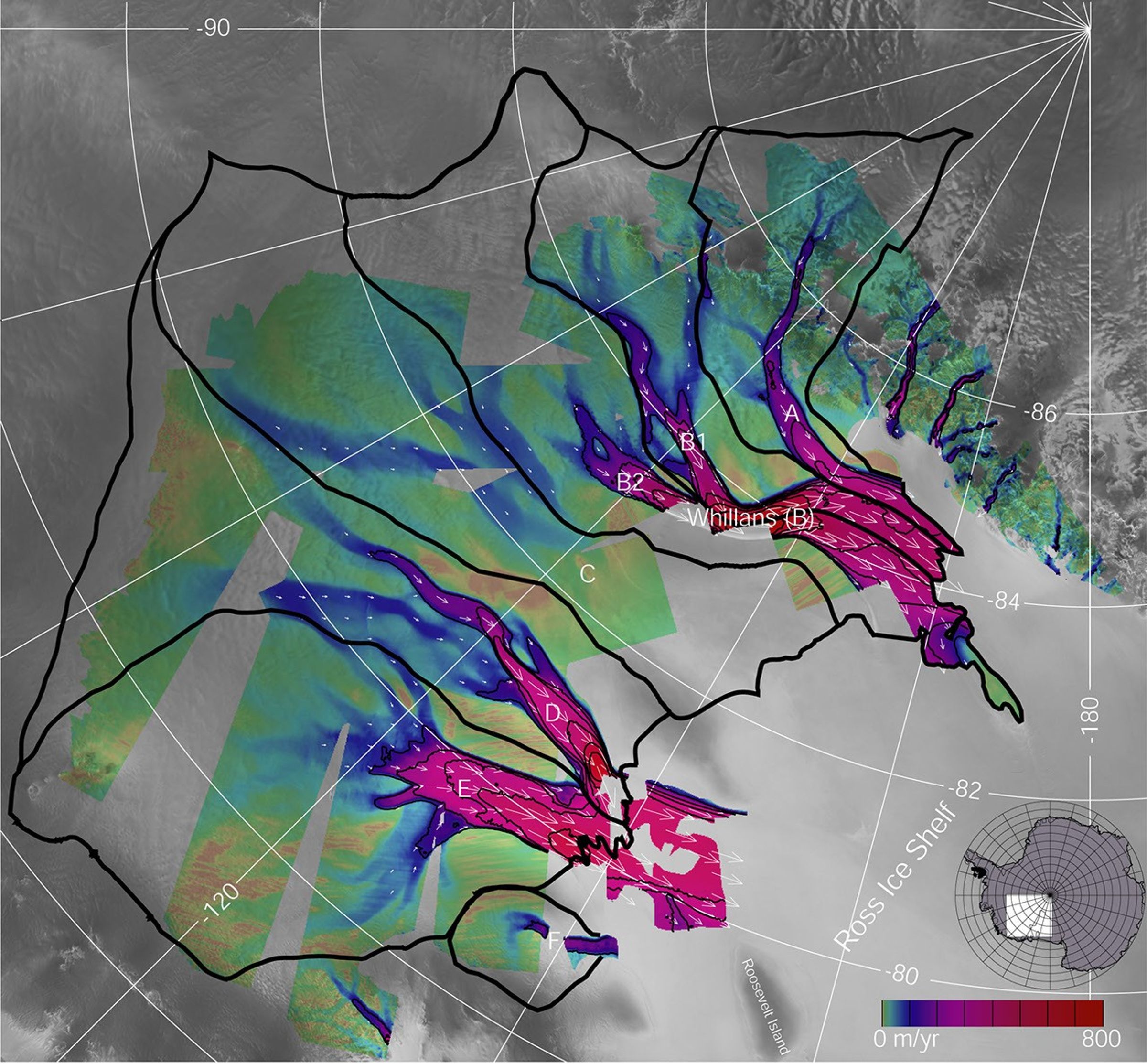
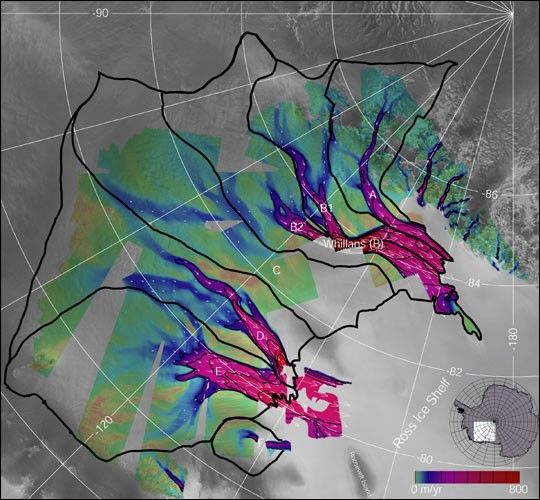
The image above depicts the region of West Antarctica where scientists measured ice speed. The fast-moving central ice streams are shown in red. Slower tributaries feeding the ice streams are shown in blue. Green areas depictslow-moving, stable areas. Thick black lines depict the areas that collect snowfall to feed their respective ice streams.
References & Resources
- Ian Joughin and Slawek Tulaczyk Science Jan 18 2002: 476-480.
Image courtesy RADARSAT Antarctic Mapping Project