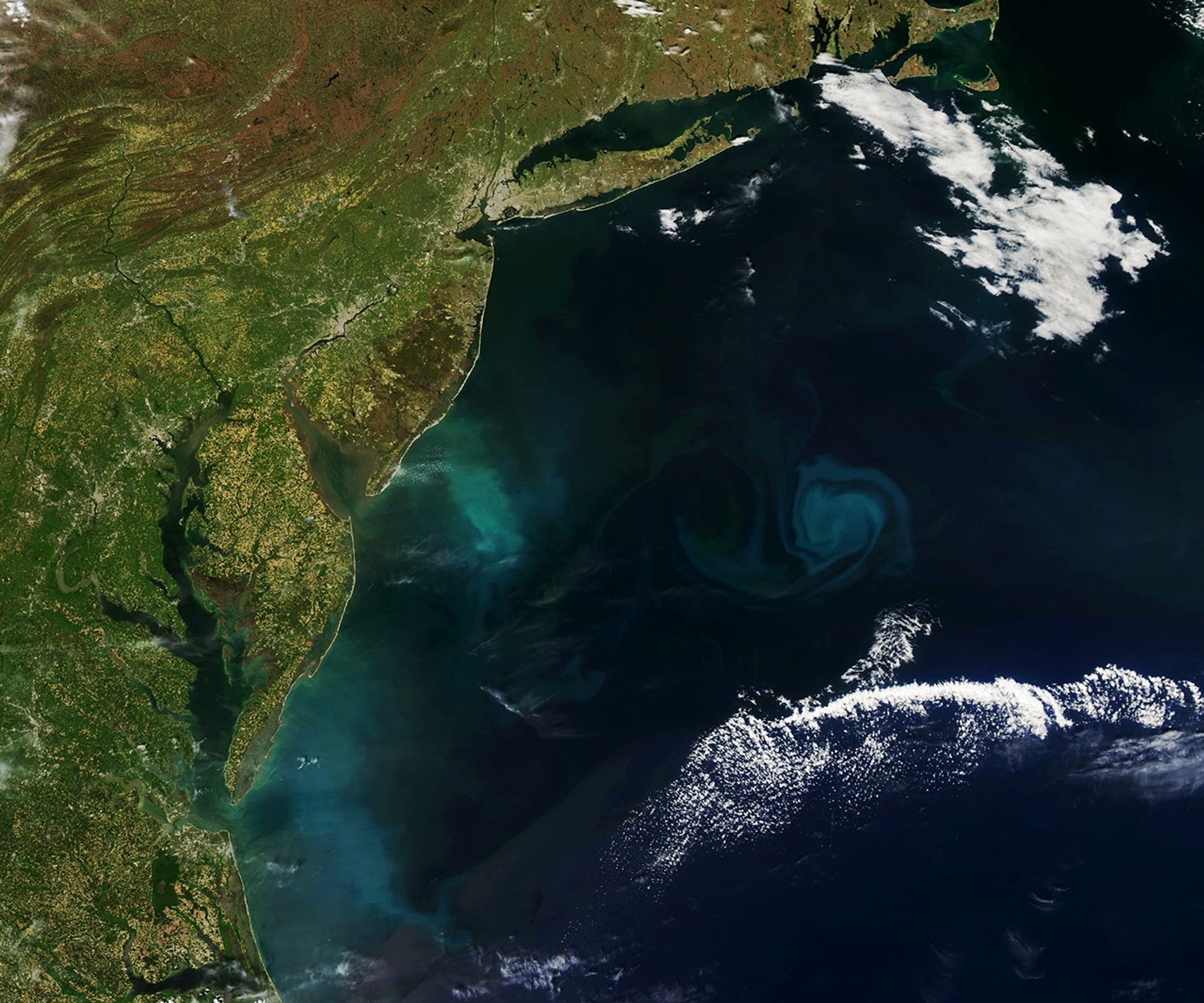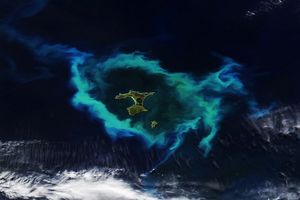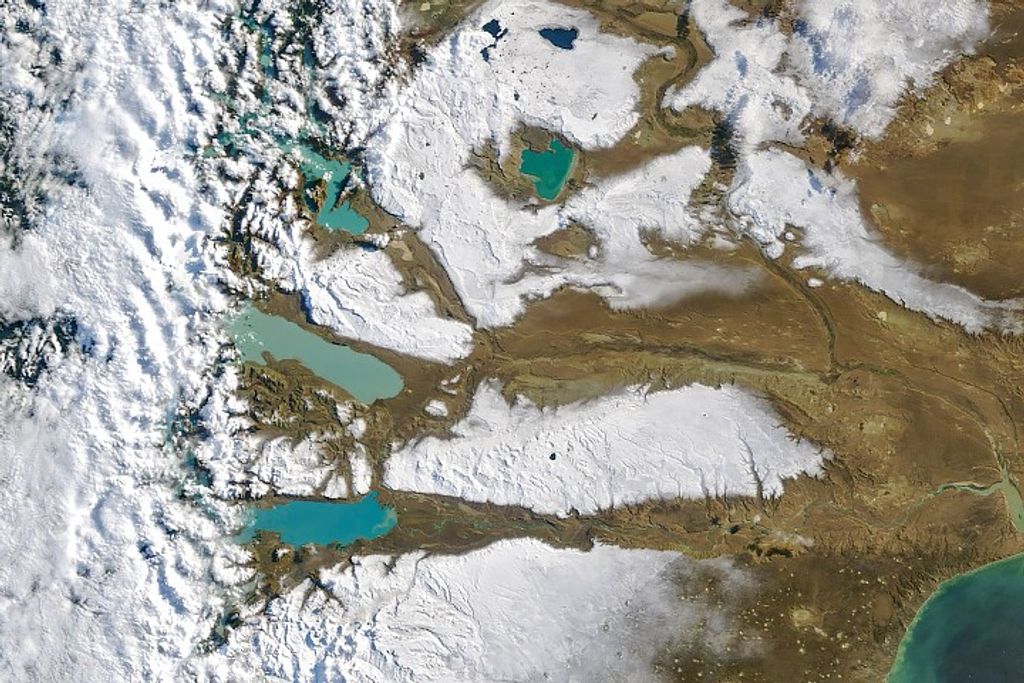
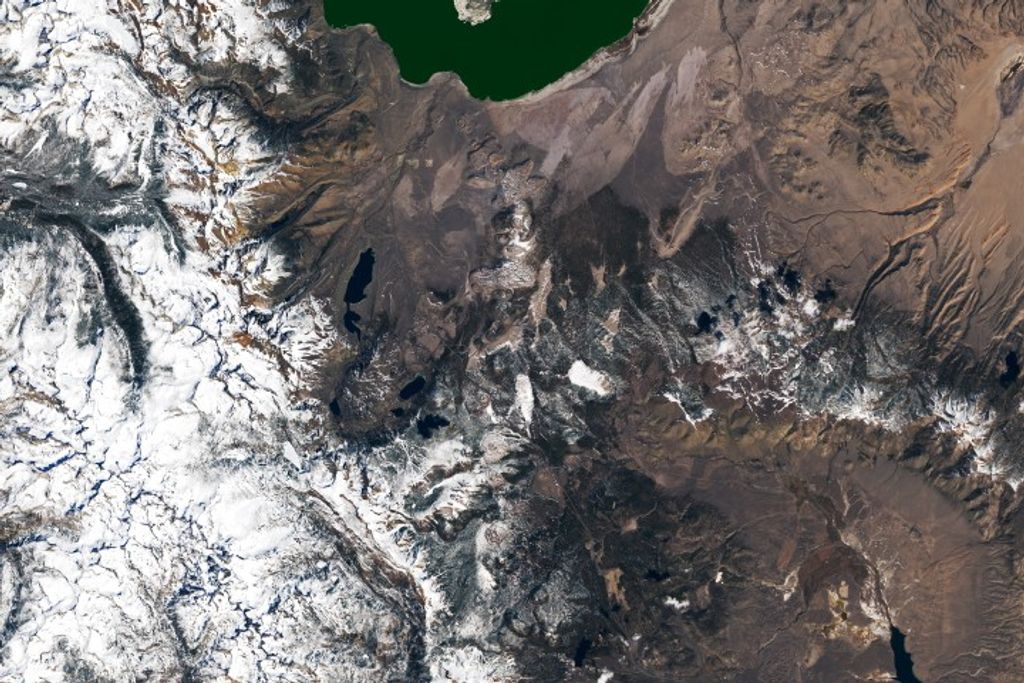
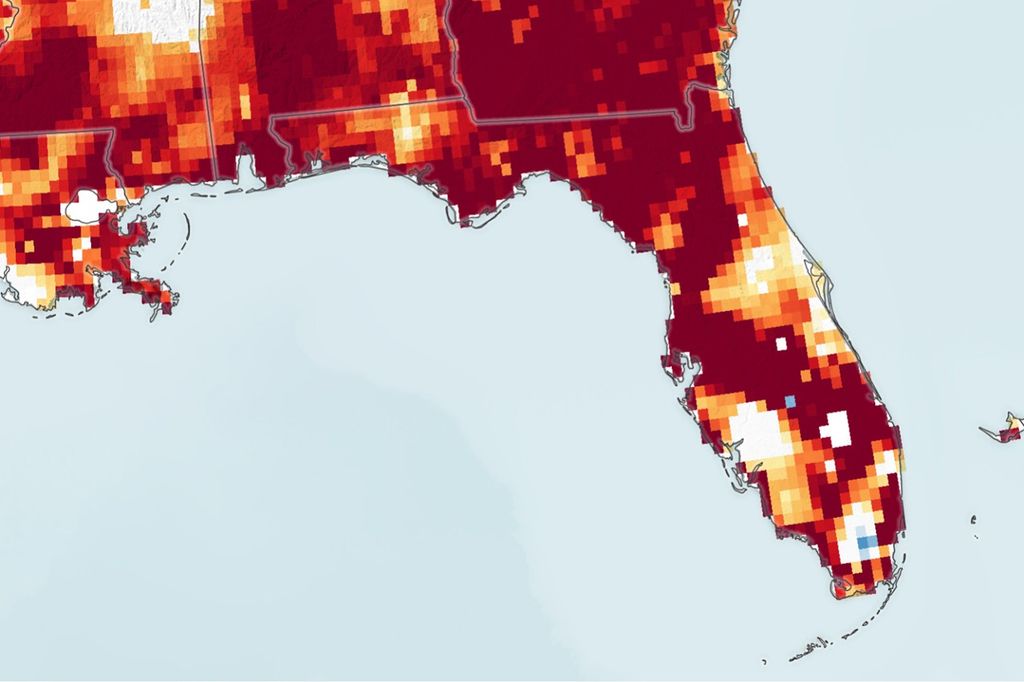


















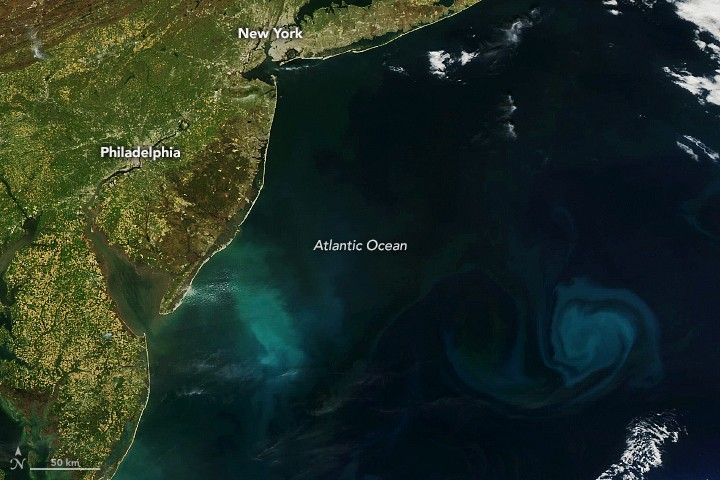
For several weeks in April 2023, swirls of green and turquoise grew more vibrant in the waters off the Mid-Atlantic coast of the United States. Some of the color is due to an abundance of phytoplankton. Though each of these floating plant-like organisms is microscopic, large groups of them are visible to satellites.
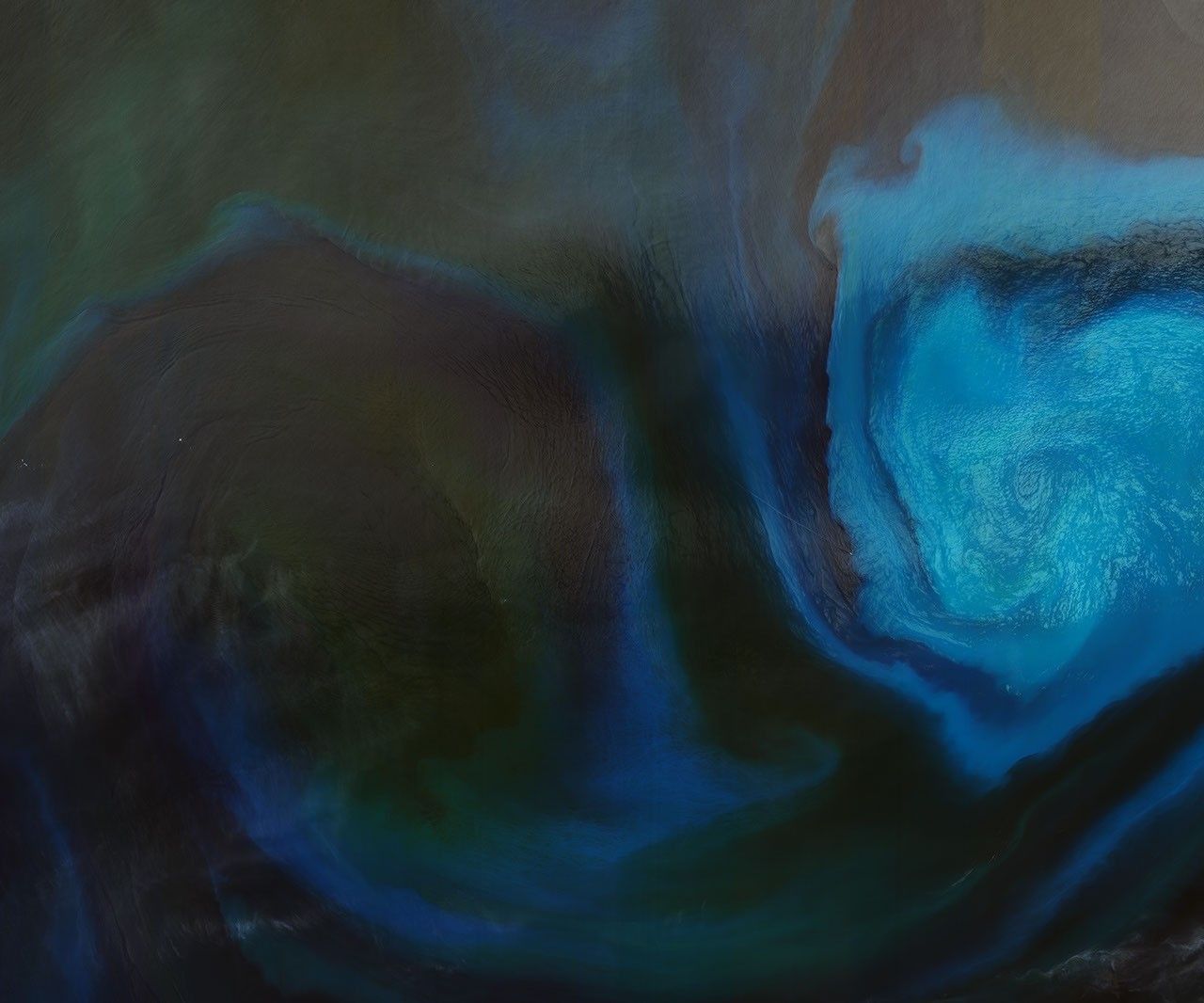
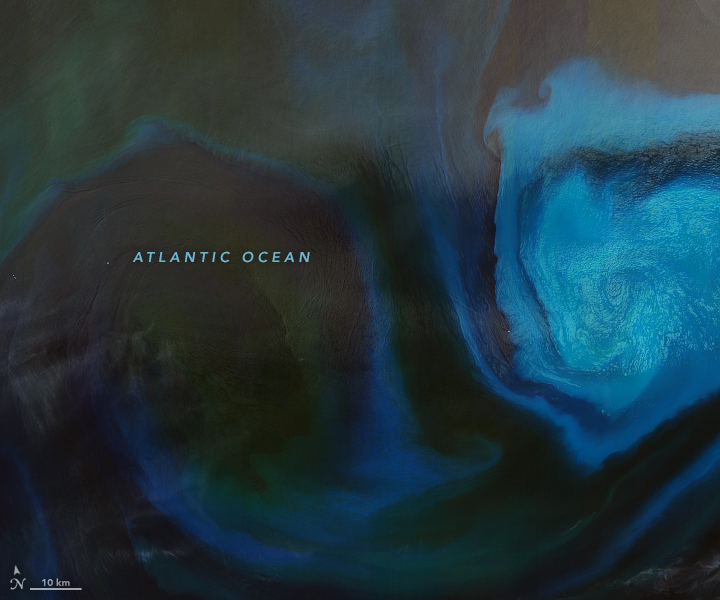
A phytoplankton bloom was under way on April 20, 2023, when the Moderate Resolution Imaging Spectroradiometer (MODIS) on NASA’s Aqua satellite acquired this image (top). The detailed image below was acquired the same day with the Operational Land Imager-2 (OLI-2) on Landsat 9.
Phytoplankton are responsible for nearly half of Earth’s primary production. They turn carbon dioxide, sunlight, and nutrients into the food that feeds almost all other life in the sea, from zooplankton to finfish to whales.
The type of phytoplankton present in the bloom cannot be definitively identified based on these natural-color images. But assessments of past blooms in the area have turned up a mix of diatoms and coccolithophores. Diatoms, a microscopic form of algae, have silica shells and plenty of chlorophyll that can make the water appear green. Coccolithophores have chalky calcium carbonate plates (coccoliths) that reflect light and can make the water appear bright blue.
Color can also come from other sources, such as sediment or colored dissolved organic matter (CDOM) that have mixed in the water. Discharge from the Delaware River delivers sediment and CDOM to the coastal waters in this region. It can also supply nutrients—contained in the runoff from farms and urban and suburban areas—that help to fuel large blooms.
Similar blooms have occurred in recent years, in both 2021 and 2022. Those blooms, however, developed their most striking colors almost one month later, around mid-May.
References & Resources
- NASA Earth Observatory (2022, May 22) Stirring Up a Mid-Atlantic Bloom. Accessed April 27, 2023.
- NASA Earth Observatory (2021, May 22) The Blooming Mid-Atlantic. Accessed April 27, 2023.
NASA Earth Observatory images by Lauren Dauphin, using MODIS data from NASA EOSDIS LANCE and GIBS/Worldview and Landsat data from the U.S. Geological Survey . Story by Kathryn Hansen .