









Suggested Searches

1 min read

Bushfire in Pilliga Forest

Instruments:
Topics:
January 22, 2018
January 22, 2018
False-color images can reveal details that are typically invisible to the naked eye.
NASA image by Jeff Schmaltz, LANCE/EOSDIS Rapid Response. Caption by Adam Voiland.
False-color images can reveal details that are typically invisible to the naked eye.
NASA image by Jeff Schmaltz, LANCE/EOSDIS Rapid Response. Caption by Adam Voiland.
False-color images can reveal details that are typically invisible to the naked eye.
NASA image by Jeff Schmaltz, LANCE/EOSDIS Rapid Response. Caption by Adam Voiland.
False-color images can reveal details that are typically invisible to the naked eye.
NASA image by Jeff Schmaltz, LANCE/EOSDIS Rapid Response. Caption by Adam Voiland.
January 22, 2018
January 22, 2018

January 22, 2018

Bushfire in Pilliga Forest

False-color images can reveal details that are typically invisible to the naked eye.
Bushfire in Pilliga Forest
False-color images can reveal details that are typically invisible to the naked eye.
NASA image by Jeff Schmaltz, LANCE/EOSDIS Rapid Response. Caption by Adam Voiland.
Bushfire in Pilliga Forest
False-color images can reveal details that are typically invisible to the naked eye.
NASA image by Jeff Schmaltz, LANCE/EOSDIS Rapid Response. Caption by Adam Voiland.

A bushfire burning through Pilliga Forest in New South Wales, Australia, has burned nearly 594 square kilometers (229 square miles). The Moderate Resolution Imaging Spectroradiometer (MODIS) on NASA’s Terra satellite acquired this image of the fire on January 22, 2018.

The natural-color image shows two smoke plumes spreading southeast. The false-color image (bands 7-2-1) makes use of portions of the electromagnetic spectrum that are typically invisible to the naked eye. Including information from the infrared makes it easier to distinguish the burn scar and reveals hot spots caused by active fires underneath the smoke. Turn on the image comparison tool to see the differences between the two images.

Common tree species in Pillaga Forest include cypress-pine and sheoak.

References & Resources

NASA image by Jeff Schmaltz, LANCE/EOSDIS Rapid Response. Caption by Adam Voiland.

None
You may also be interested in:

Stay up-to-date with the latest content from NASA as we explore the universe and discover more about our home planet.

Fires on the Rise in the Far North
3 min read

Satellite-based maps show northern wildland fires becoming more frequent and widespread as temperatures rise and lightning reaches higher latitudes.

Article
Smoke Rises Over Big Cypress National Preserve
2 min read

The National fire has burned tens of thousands of acres within the Florida preserve, fueled by vegetation dried by prolonged…

Article
Fires Erupt in South-Central Chile 
2 min read

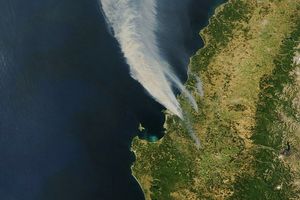
Tens of thousands of people fled to safety as blazes spread throughout the country’s Biobío and Ñuble regions.

Article