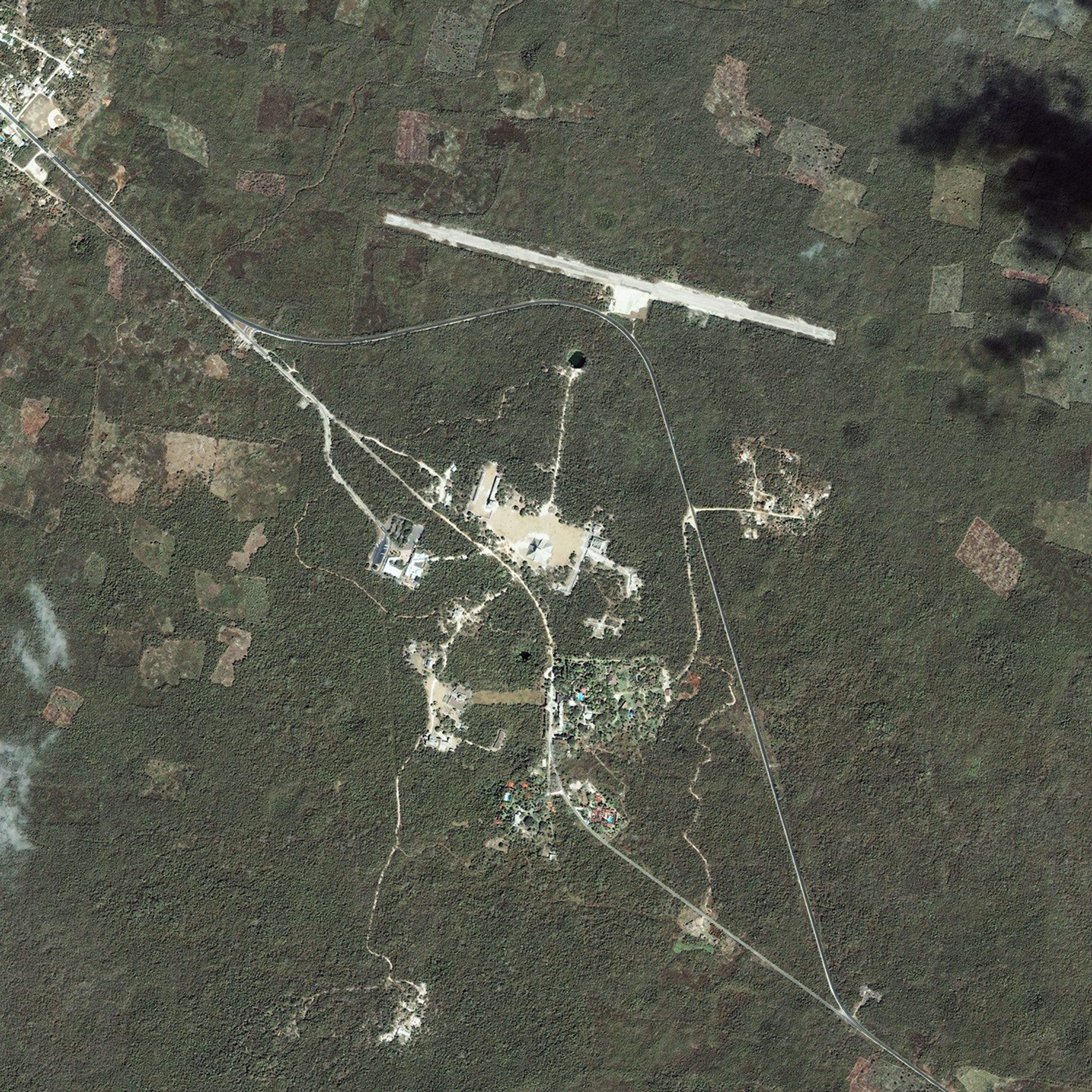















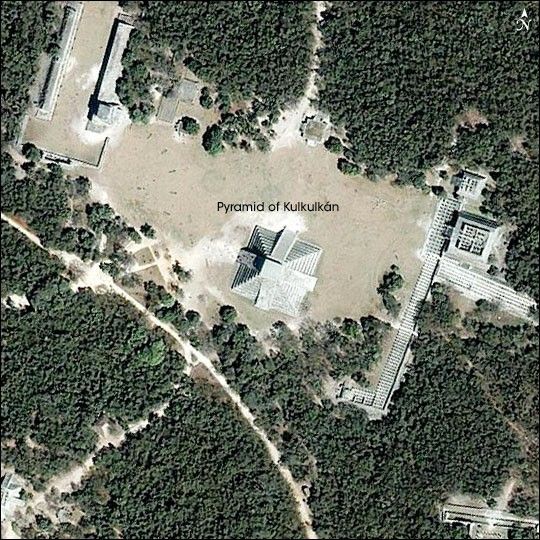
Deep in the northern Yucatan jungle lies one of the Northern Hemisphere’s oldest solar observatories. At the ruins of an ancient city called Chíchén Itzá (“the mouth of the well”), a well-preserved collection of buildings and plazas reveals the sophisticated astronomical and architectural knowledge possessed by the Maya more than a thousand years ago.
The 75-foot pyramid in the center of the site is the Pyramid of Kulkulkán, the Feathered Serpent God of the Maya. The Maya were obviously careful observers of the apparent change in the location of the Sun in the sky throughout the year; different parts of the pyramid are aligned with different seasonal solar occurrences, including the rising and setting of the Sun on the longest and shortest days of the year (solstices).
But the pyramid’s special show is reserved for the equinoxes. The Maya positioned and designed the structure of the pyramid so that on the spring and autumn equinoxes, the setting Sun falls precisely on the edges of the pyramid’s stepped terraces, casting a series of interlocking, triangular shadows that slither down the pyramid’s sacred staircase northern of the pyramid like a giant snake. As the Sun sets, the shadow connects with a stone serpent head at the base of the sacred stairway, and then vanishes until the autumn equinox. In 2005, this brief, fascinating phenomenon will occur on March 20.
March 20, 2005, NASA’s Sun-Earth Connection Education Forum is celebrating its annual Sun-Earth Day. The ruins of Chíchén Itzá are only one of many ancient sites across the world with structures that ancient humans built to align with the Sun on the equinoxes or solstices. For more on this theme of Ancient Observatories, including information on a live Webcast from the ruins of Chíchén Itzá, visit NASA’s Sun-Earth Day Webpage.
This image was acquired on March 5, 2001 by Space Imaging’s IKONOS satellite.
References & Resources
© All Rights Reserved: Use of IKONOS, GeoEye, QuickBird and WorldView imagery must be coordinated with Maxar.
Image copyright DigitalGlobe © All Rights Reserved: Use of IKONOS, GeoEye, QuickBird, WorldView, and Digital Globe imagery must be coordinated with Maxar .