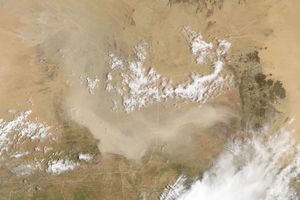





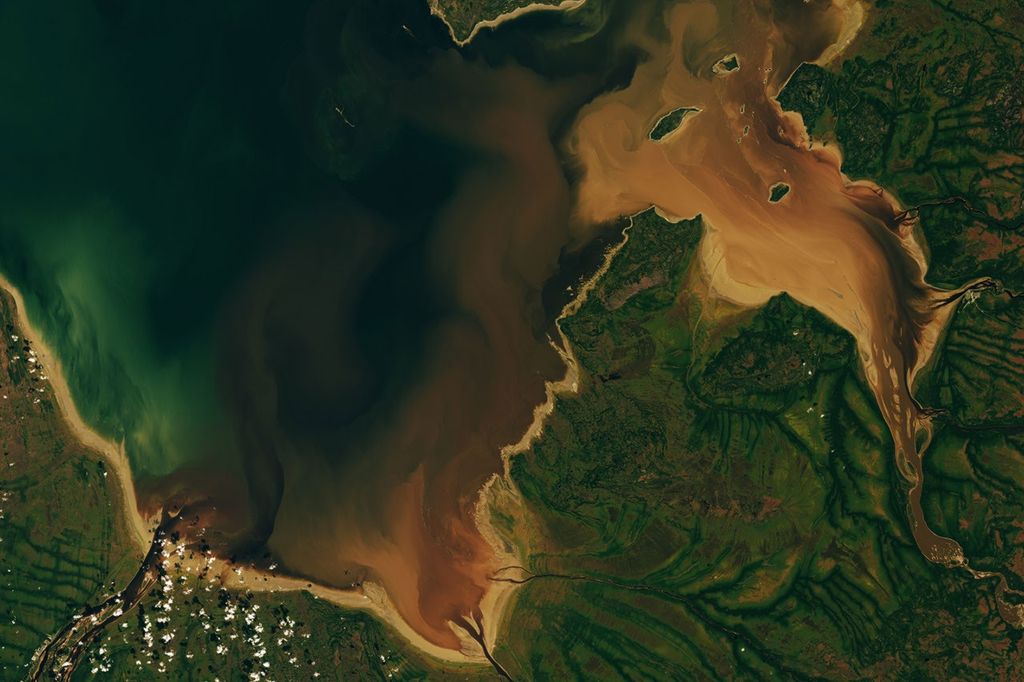

















Dust plumes lined the northern edge of the Taklimakan Desert on September 17, 2007. The Moderate Resolution Imaging Spectroradiometer (MODIS) on NASA’s Terra satellite took this picture the same day, catching pale beige dust plumes contrasting with the dark tan desert floor.
Lying in the Tarim Basin, between the Tien Shan Mountains to the north and Kunlun Mountains to the south, the Taklimakan (or Takla Makan) Desert is one of the world’s largest sandy deserts. Home to little plant life, the Taklimakan sees a wide range in temperatures, characteristic of such deserts. Summertime temperatures can soar to 38 degrees Celsius (100 degrees Fahrenheit), especially along the desert’s eastern edge. The dearth of vegetation and extreme heat create conditions in the lower atmosphere that increase the likelihood of dust storms.
You can download a 250-meter-resolution KMZ file of the Taklimakan Desert suitable for use with Google Earth.
References & Resources
NASA image created by Jesse Allen, using data provided courtesy of the MODIS Rapid Response team.