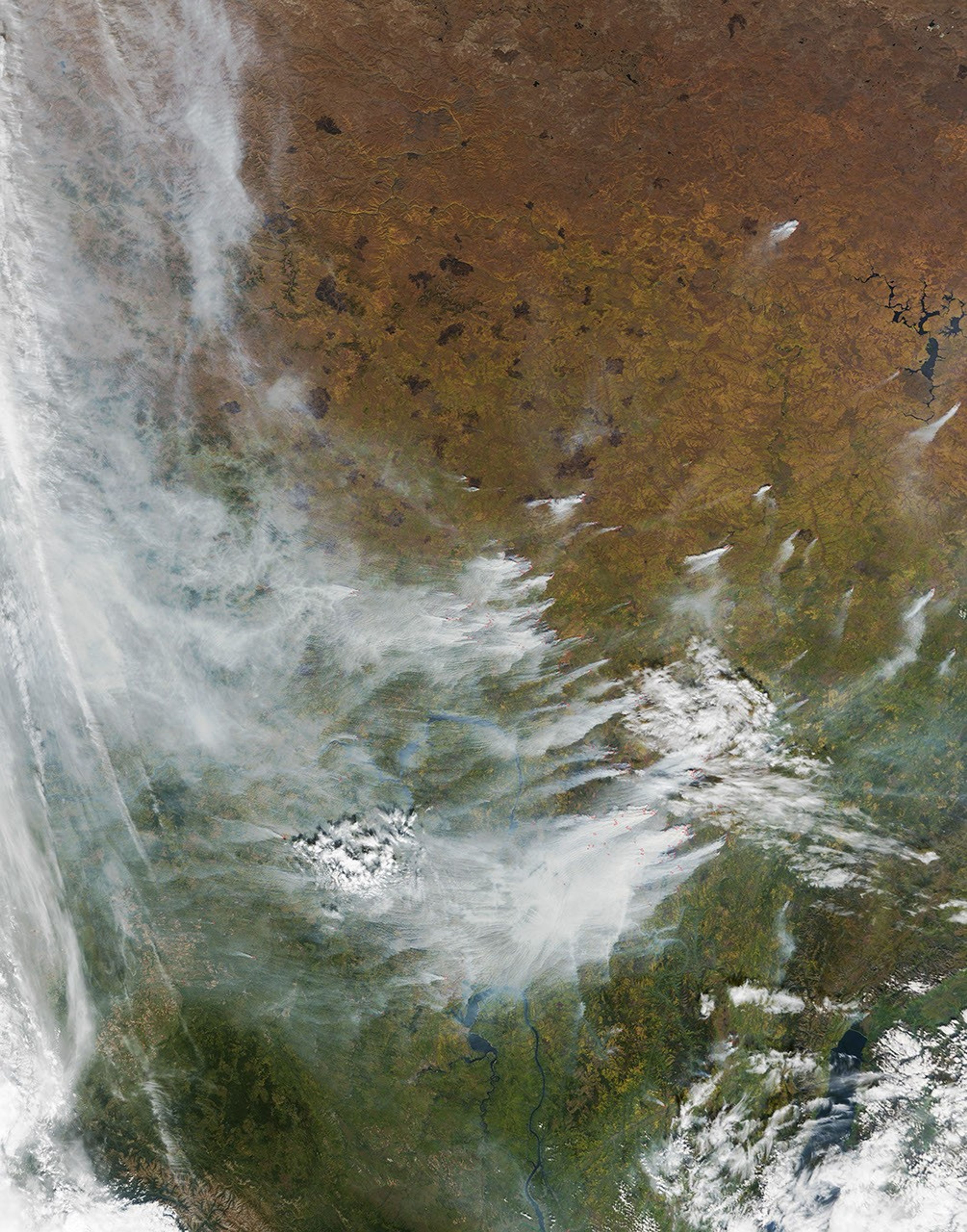
















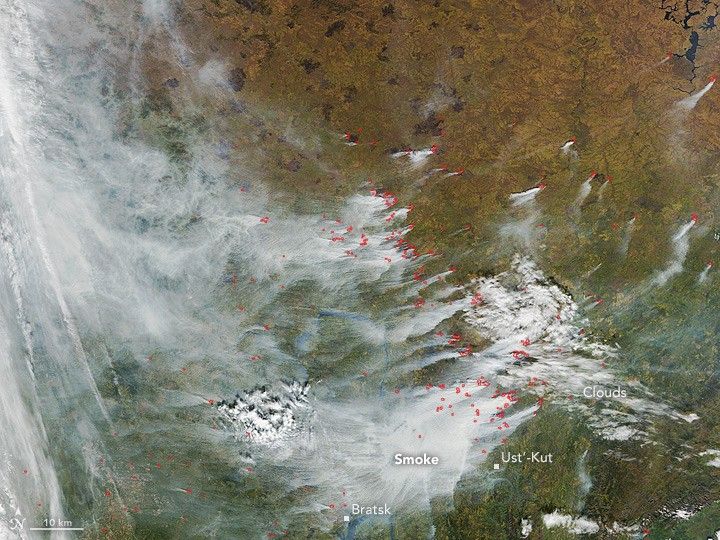
Wildfires continue to burn, even as summer turns to fall in Siberia. 2016 has been active for fires in the region.
This natural-color image was acquired by the Moderate Resolution Imaging Spectroradiometer (MODIS) on NASA’s Terra satellite on September 15, 2016. Red outlines show warm land surface temperatures—a sign of fire.
Smoke plumes to the lower right indicate burning north of Ust’-Kut, Russia, which also saw wildfires earlier this year. On September 9, dense smoke covered the Siberian city of Bratsk, Russian media reported.
These fires are the latest in an active fire season. In late June 2016, satellites showed wildfires between the Russian cities of Miryuga and Koyumba, roughly 100 miles (160 kilometers) east of the current flames.
Summer days are fast waning in Siberia. Nighttime temperatures in the region have dropped to around 1.6 degrees Celsius (35 degrees Fahrenheit). The fall cooling appears in the landscape, which has turned yellow as the trees begin to change color.
References & Resources
NASA image by Jeff Schmaltz, LANCE/EOSDIS Rapid Response. Caption by Pola Lem.