











On November 27, 2012, almost 36 years after its last eruption, Russia’s Tolbachik began erupting again. Emerging from two fissures, the eruption produced ash explosions and very fluid lava flows, according to reports from the Kamchatka Volcanic Eruption Response Team (KVERT). Tolbachik remained restless in early March 2013. A KVERT report issued March 10 described volcanic tremors and a thermal anomaly in satellite imagery.
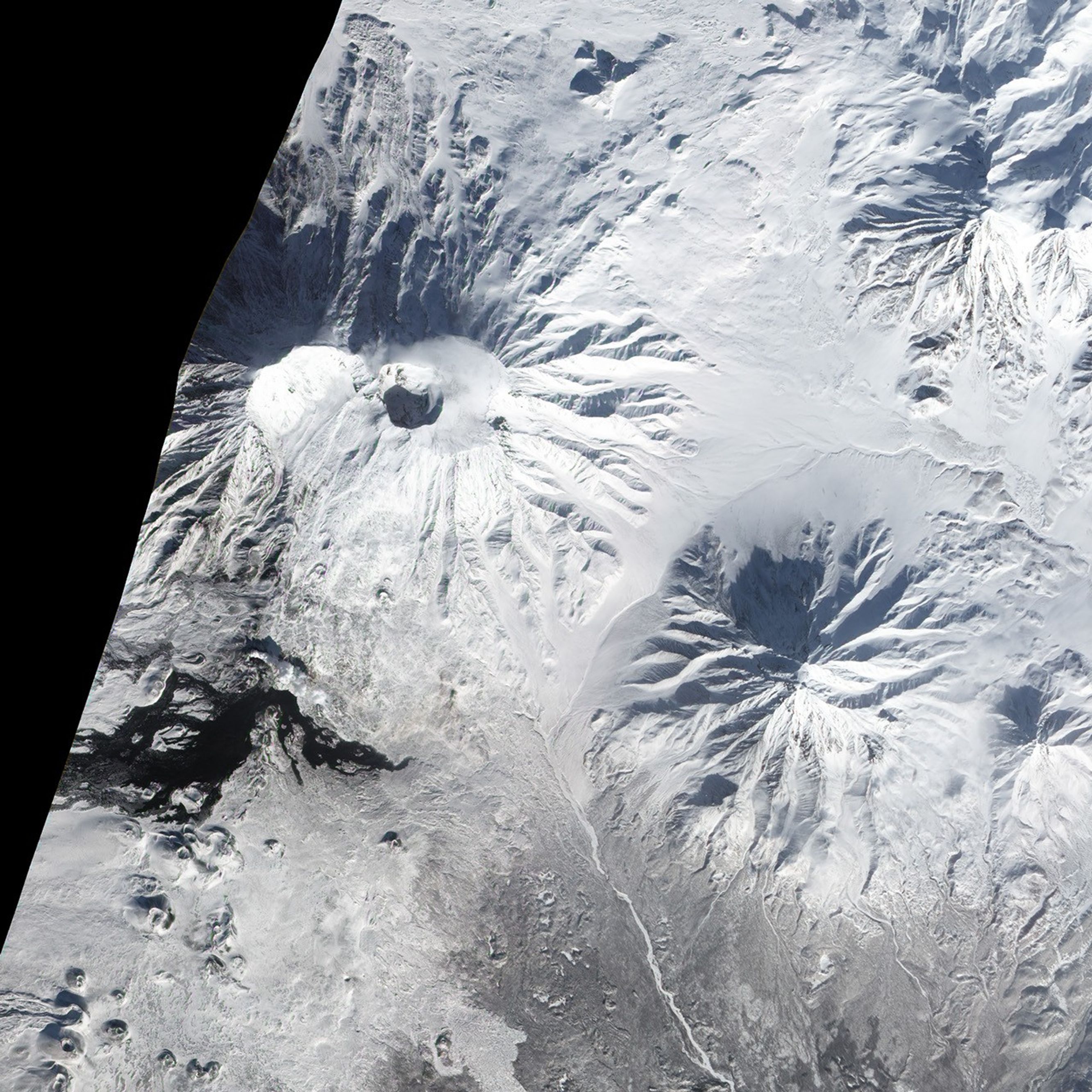
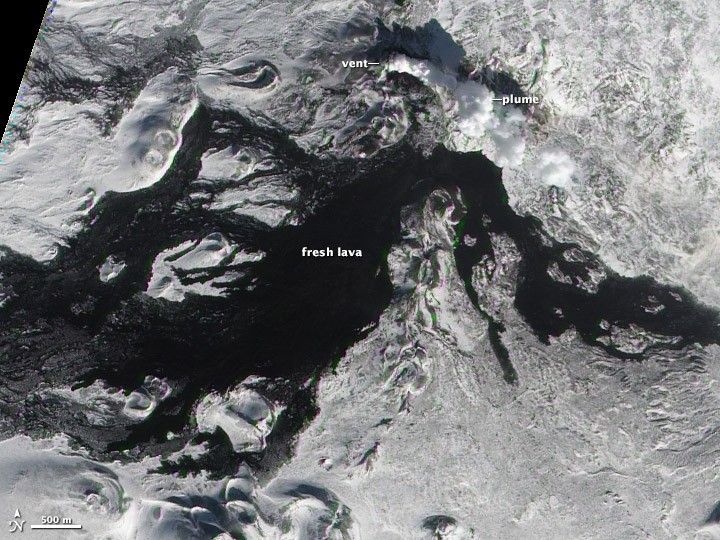
Fresh lava rested on the surface of Tolbachik when the Advanced Land Imager (ALI) on NASA’s Earth Observing-1 (EO-1) satellite captured this image, on March 6, 2013. The lava flow kept the same general configuration that it showed the previous month. Just north of the lava flow, a plume rose above the volcano surface.
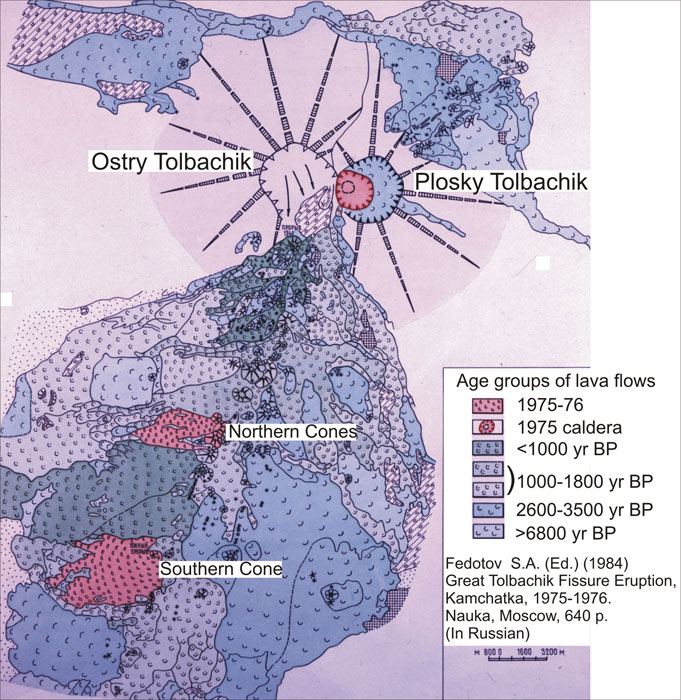
Tolbachik Volcano has a complicated configuration. The eastern half is a shield volcano—a low, broad structure resembling an ancient warrior shield—with nested summit calderas. The western half is a tall stratovolcano composed of alternating layers of ash, lava, and rocks from earlier eruptions.
References & Resources
- Global Volcanism Program Tolbachik Summary and Monthly Reports. Smithsonian Institution. Accessed March 12, 2013.
- Kamchatka Volcanic Eruption Response Team (2013, March 10) VONA/KVERT Daily Report Accessed March 12, 2013.
NASA Earth Observatory image created by Jesse Allen and Robert Simmon, using Advanced Land Imager data from the NASA EO-1 team. Caption by Michon Scott.