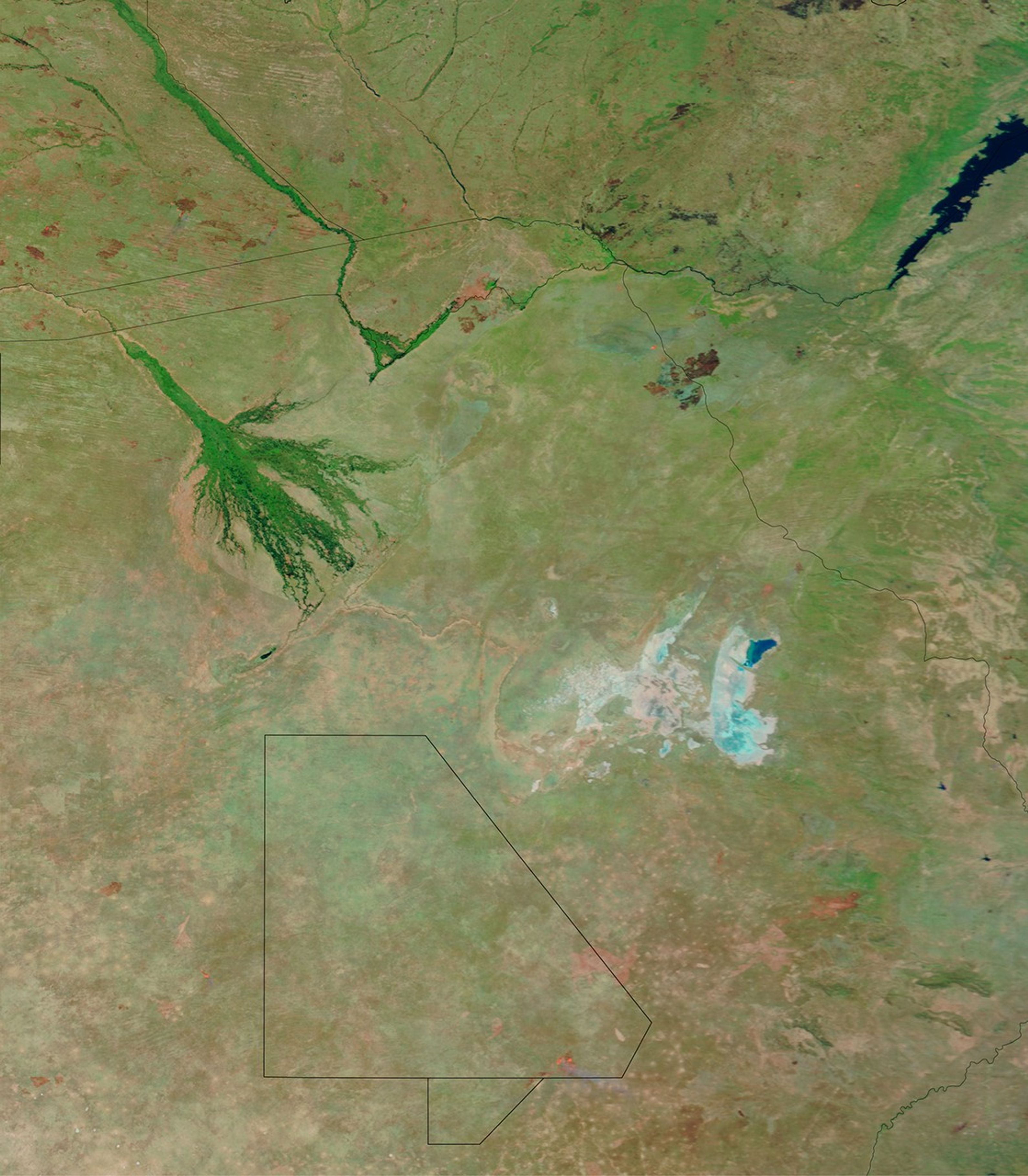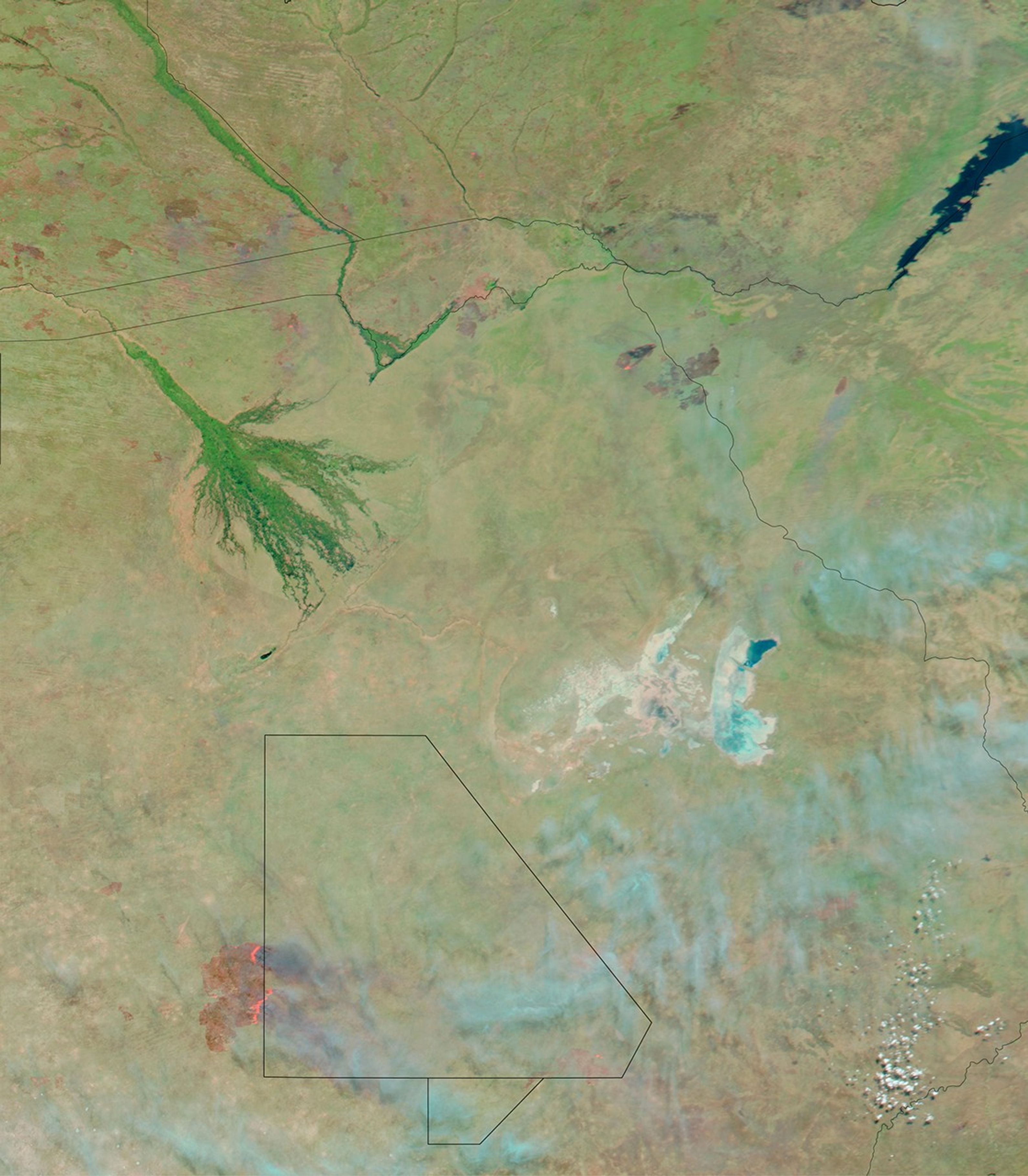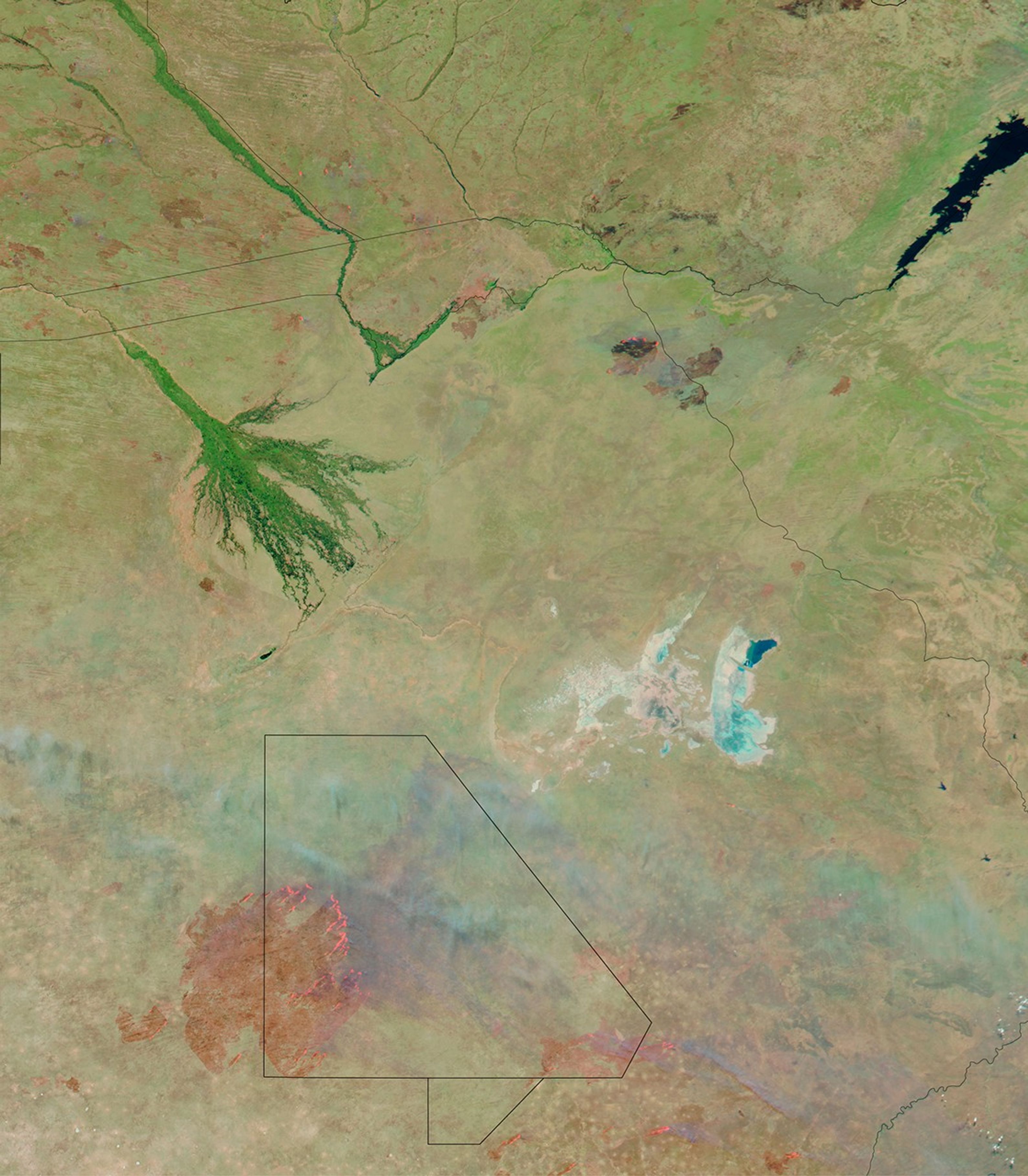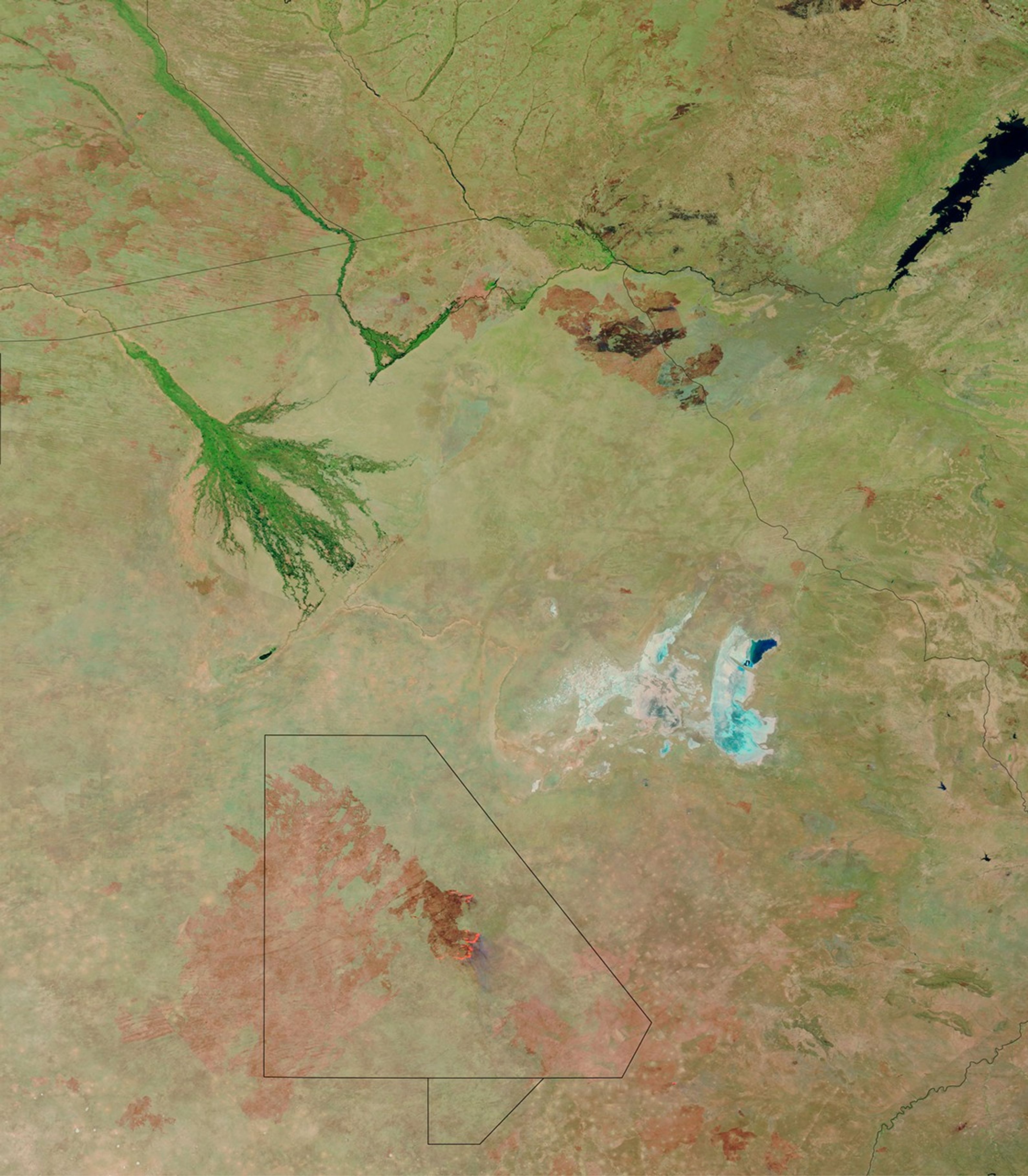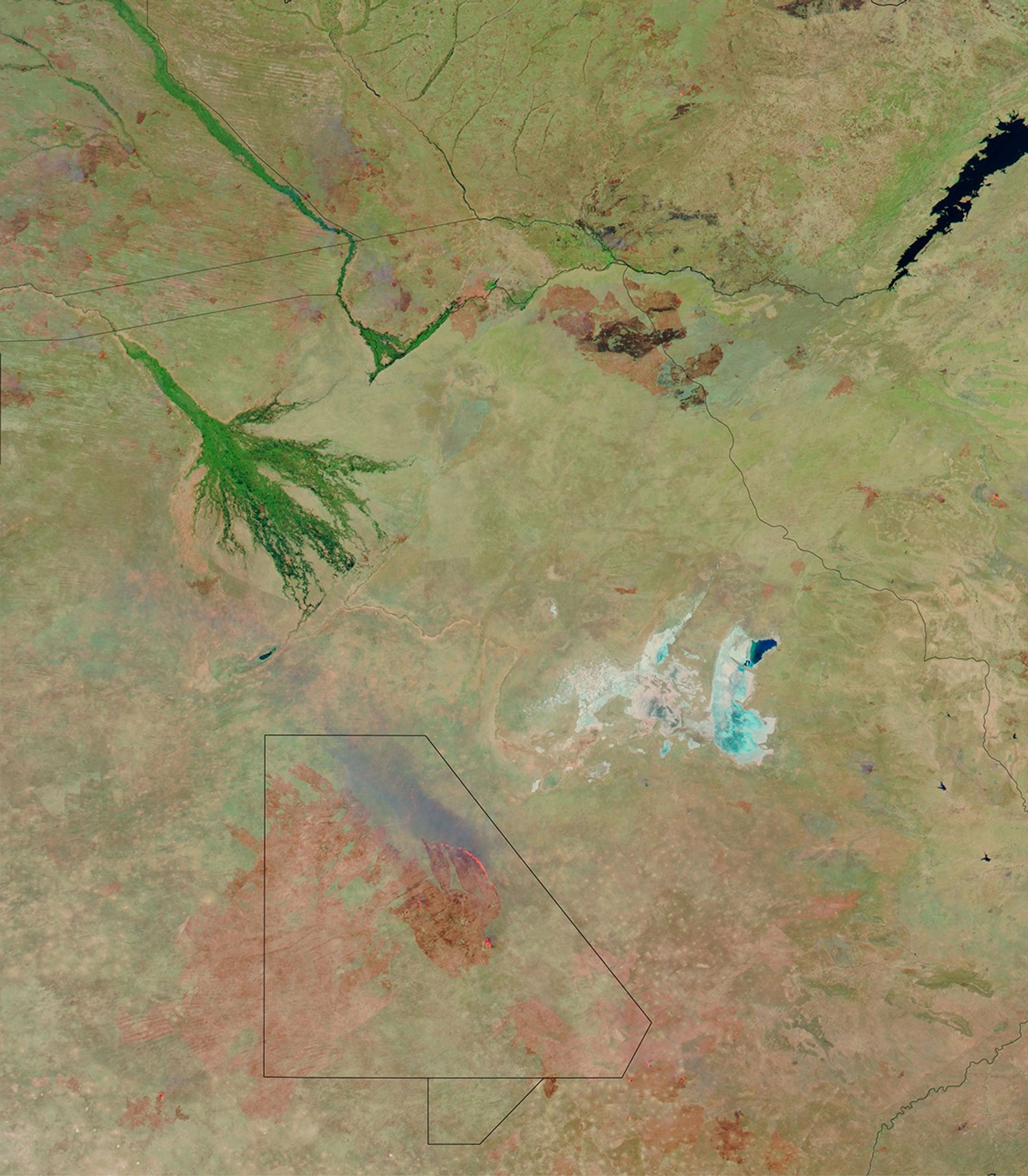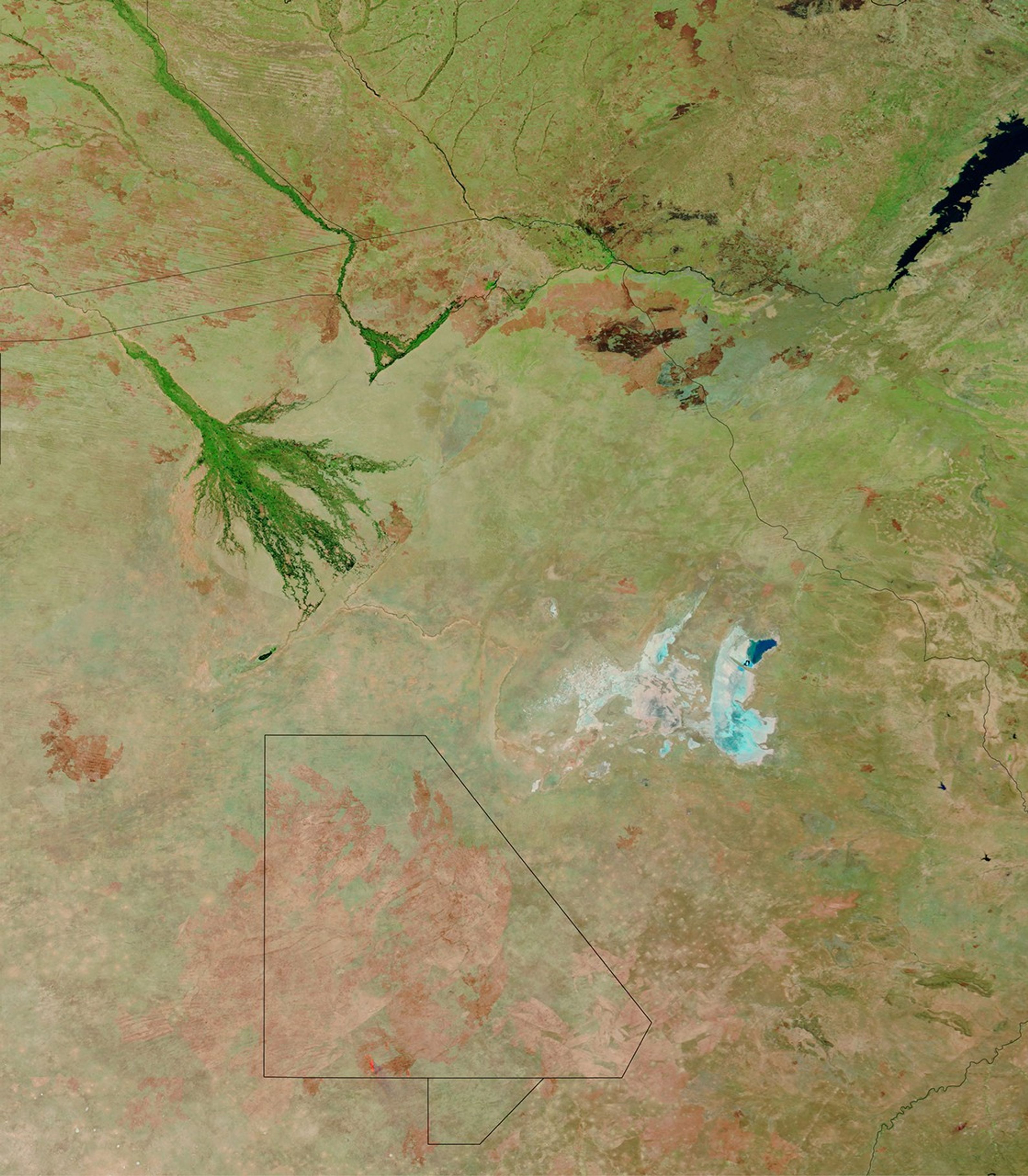














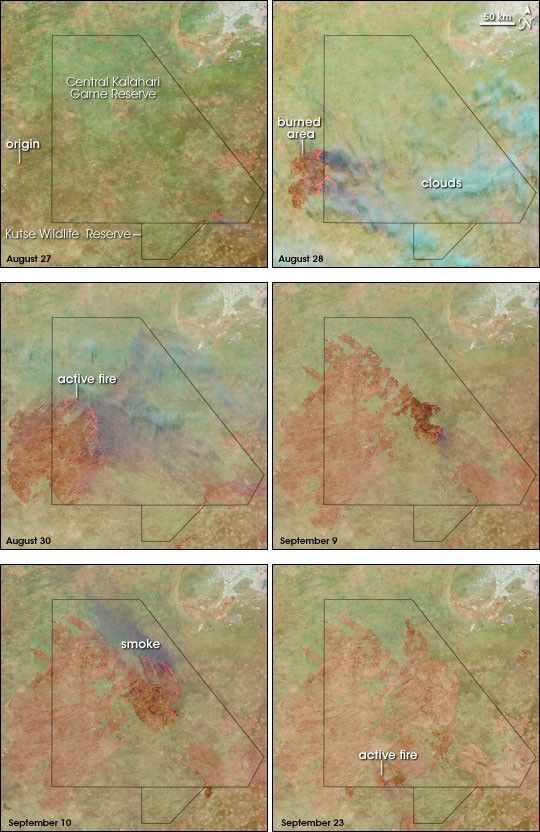
Beginning in late August 2008, fire broke out near the western border of Botswana’s Central Kalahari Game Reserve, a dry savanna landscape dominated by grassland and scattered shrubs and trees. By late September, some 40,000 square kilometers (about 15,500 square miles) had burned, scorching roughly 80 percent of the park, according to news reports. The last major fire was finally contained in late September. No human or wildlife casualties had been reported by that time, but the fires were expected to exact a toll on the park’s vegetation.
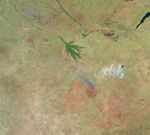
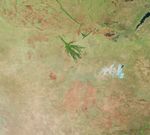
The Moderate Resolution Imaging Spectroradiometer (MODIS) on NASA’s Terra and Aqua satellites captured these images of the park and its surroundings between August 27 and September 23, 2008. These false-color images give prominence to active fires, which appear fluorescent red-orange; and burn scars, which range in color from red- to pink-brown. Vegetation—even sparse vegetation—appears bright green, and clouds appear sky blue. Smoke appears blue-gray.
The fire originated west of the Central Kalahari Game Reserve on August 27. (A fire in the southeast corner of the reserve is also apparent in the image from August 27.) By the following day, flames had already engulfed a substantial area, both inside and outside the park. On August 30, the fires continued burning, moving toward the north and east. The fires remained active on September 9 and 10, and by September 23, most of the once-green park was pink-brown A fire continued to burn near the park’s southern margin. The animation shows the fire’s progression day by day.
An official with Botswana’s Ministry of Environment described the 2008 wildfires as the worst in years, according to a report in The Guardian. Record precipitation in the previous rainy season had produced lush vegetation that, once dry, became fuel for the fires. Animals—the reserve is home to giraffes, cheetahs, leopards, lions, antelopes, and wildebeest, among others—had escaped the blaze, and human settlements had been spared. The fire’s full impact on vegetation, however, was unclear as of late September 2008. One plant expected to be affected was a species of wild melon that provides water to the indigenous Basarwa people, who live in and near the reserve, during the region’s dry season.
References & Resources
- References
- Agence France-Presse. (2008, September 18). Botswana reserve ruined by fire. The Times. Accessed September 25, 2008.
- Smith, A.D. (2008, September 21). New blow to “lost souls” of Kalahari as bush fires rage. The Guardian. Accessed September 25, 2008.
NASA images and animation by Jesse Allen and Rebecca Lindsey based on data courtesy MODIS Rapid Response Team, Goddard Space Flight Center. Caption by Michon Scott and Rebecca Lindsey.