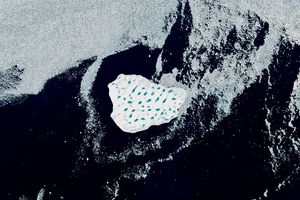




















In March 2000, an iceberg calved off the Ross Ice Shelf in Antarctica. Named B-15, it measured roughly 275 by 40 kilometers (170 by 25 miles). The iceberg subsequently broke into pieces, the largest of which was named B-15A. In October 2003, the new iceberg, B-15J broke off from B-15A.
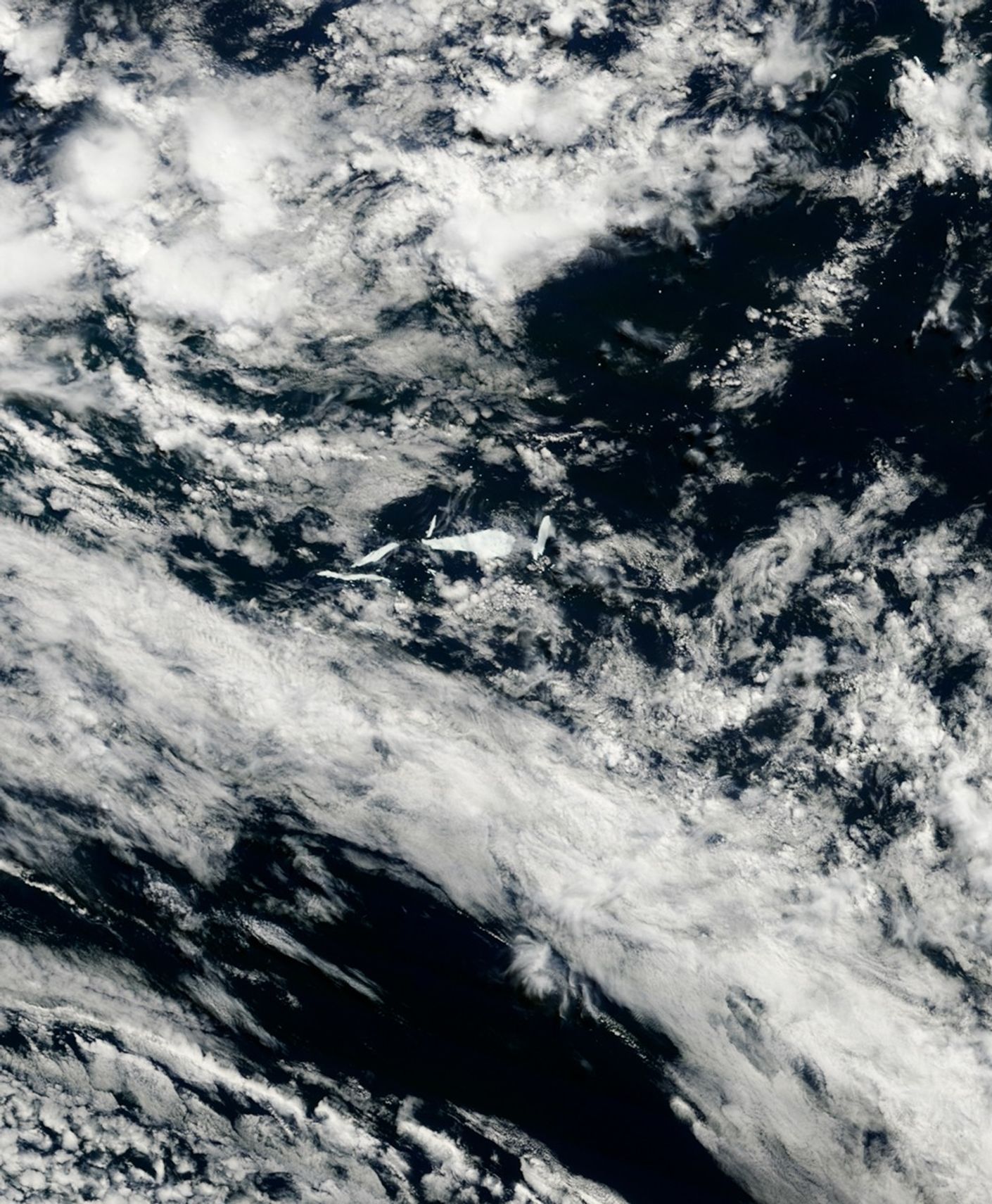
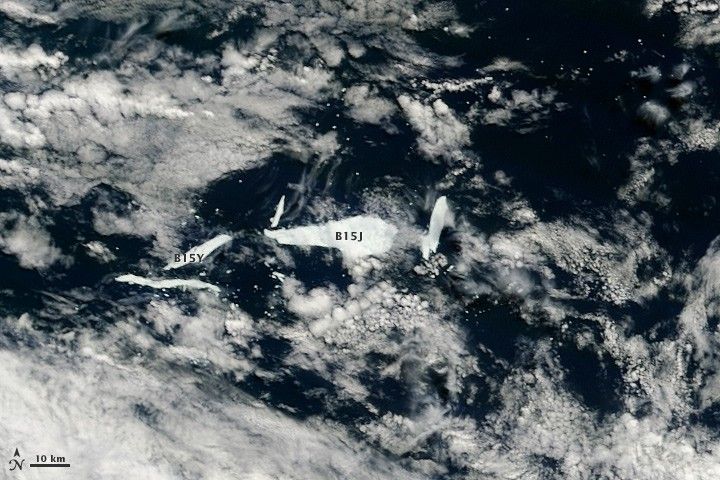
Although a fraction of the size of the original Connecticut-sized iceberg, B-15J still measured roughly 35 kilometers (22 miles) long in mid-November 2011. By then, it was floating in the southern Pacific Ocean, about 2,400 kilometers (1,500 miles) east-southeast of New Zealand. On November 25, 2011, the Moderate Resolution Imaging Spectroradiometer (MODIS) on NASA’s Terra satellite captured this natural-color image of B-15J and a smaller iceberg, B-15Y.
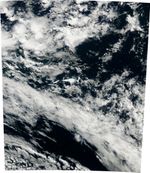
Smaller icebergs, many of them shaped like slivers, float around B-15J and B-15Y on November 25. The MODIS image acquired 11 days earlier shows B-15J and B-15Y still together in one mass, but also shows crevasses, or cracks, along which the icebergs would split.
References & Resources
- National Ice Center. (n.d.). Current Antarctic Iceberg Positions. Accessed November 30, 2011.
- National Ice Center. (2011, November 23). Antarctic Icebergs, Ross Sea East, B15J, B15Y. Accessed November 30, 2011.
NASA Earth Observatory image created by Jesse Allen, using data provided courtesy of the LANCE/EOSDIS Rapid Response team. Caption by Michon Scott.