











August 18-27, 2023
Melting on Humboldt Glacier
Every year from around May to early September, melting takes place atop the vast sheet of ice covering Greenland. Toward the end of August 2023, unseasonably warm weather led to several days of widespread melting. The unusual late-season event peaked island-wide on August 22, when melting spanned nearly 730,000 square kilometers (282,000 square miles), or about 45 percent of the ice sheet’s surface, according to the National Snow and Ice Data Center.
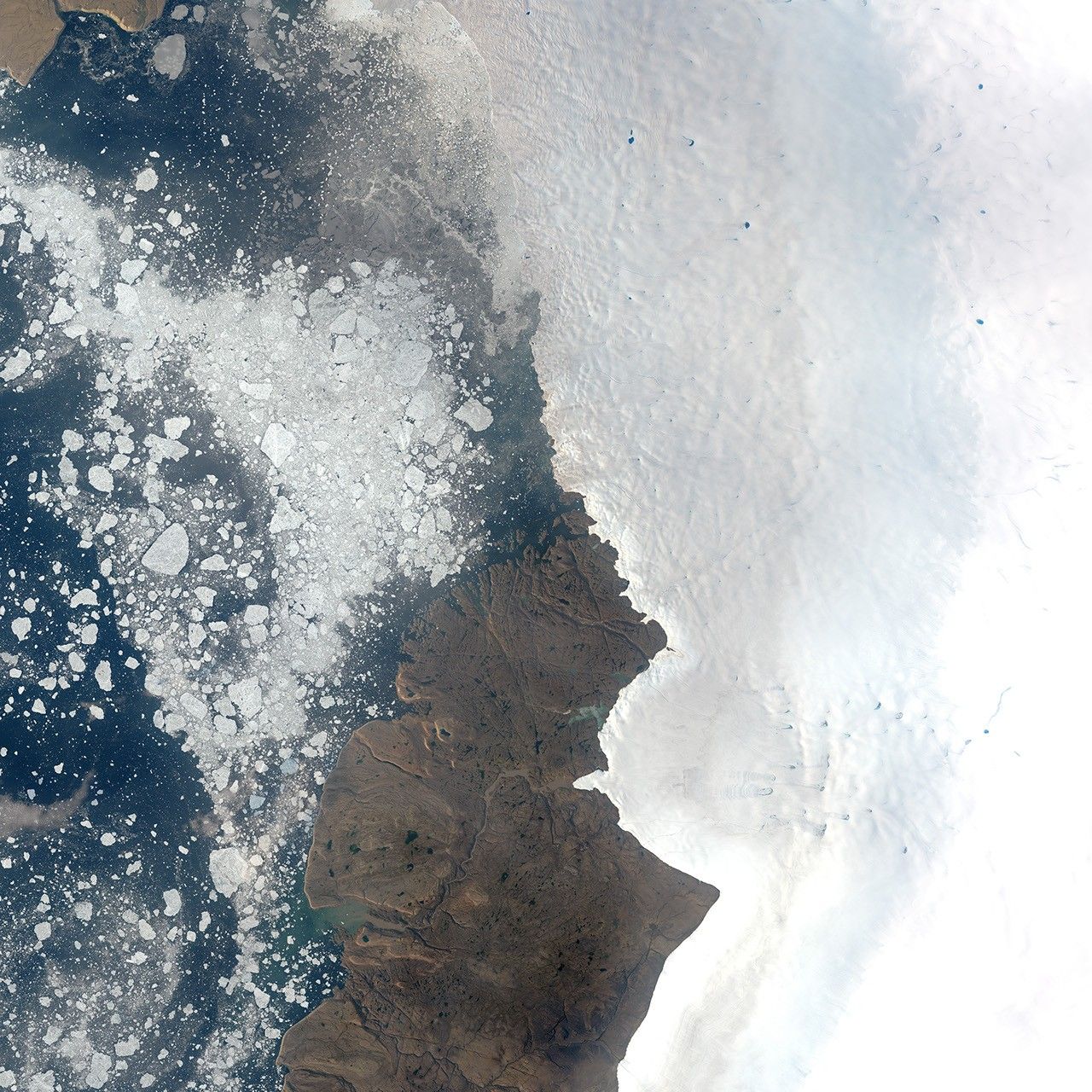
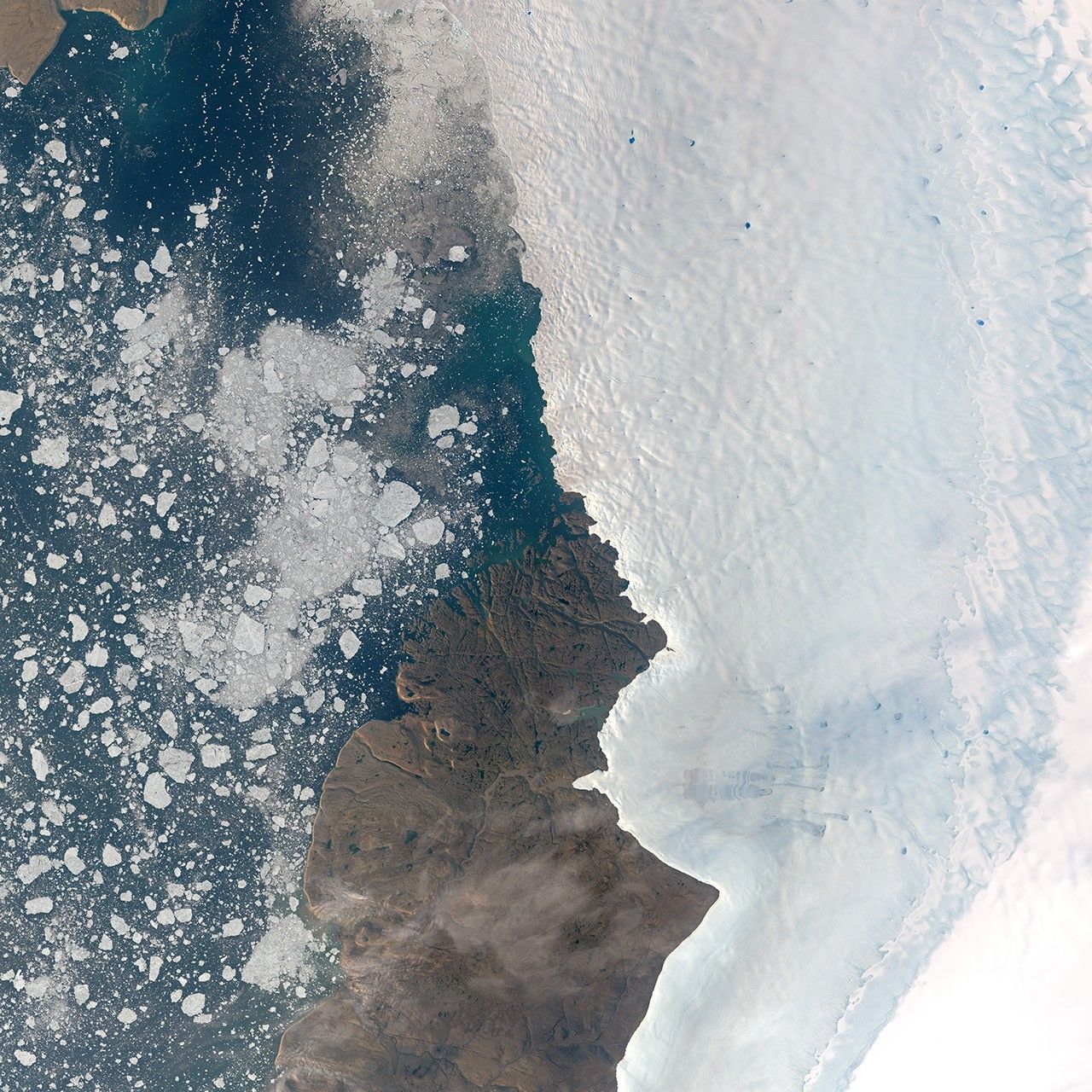
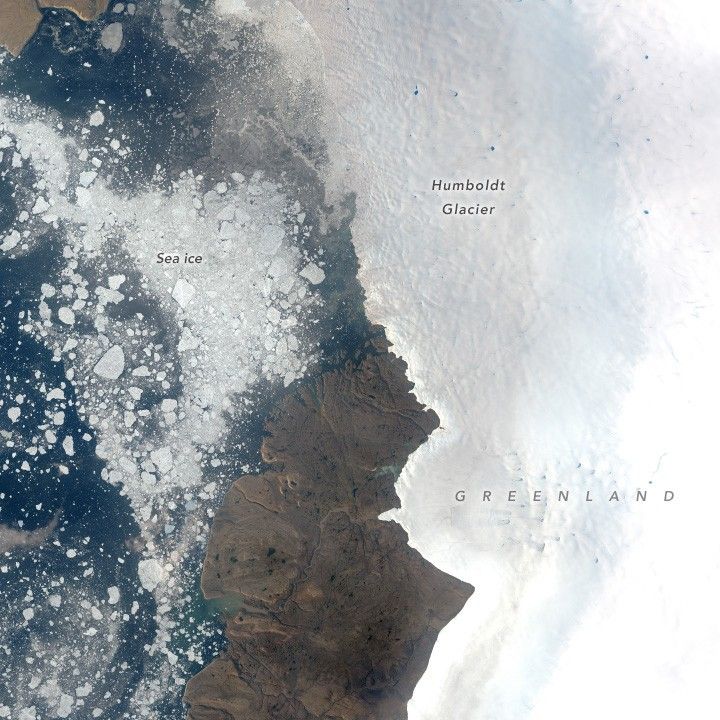
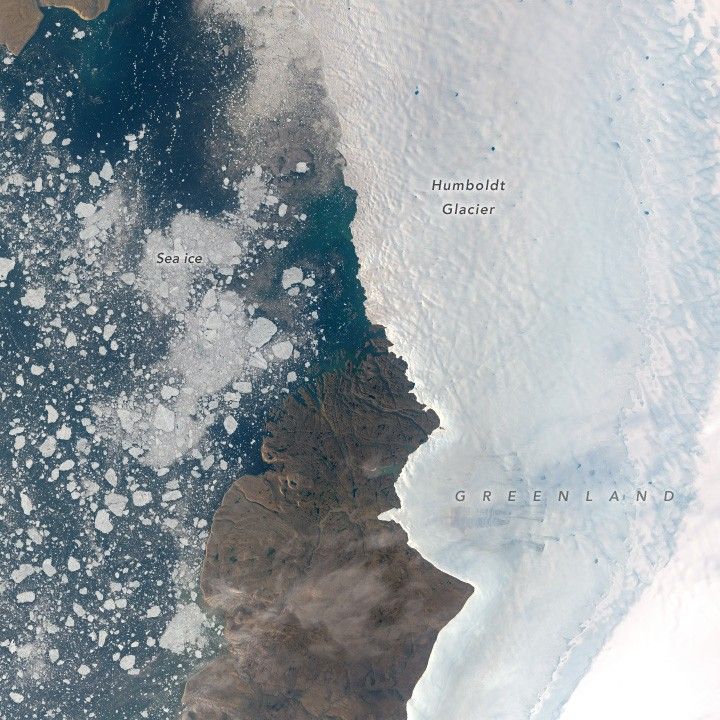
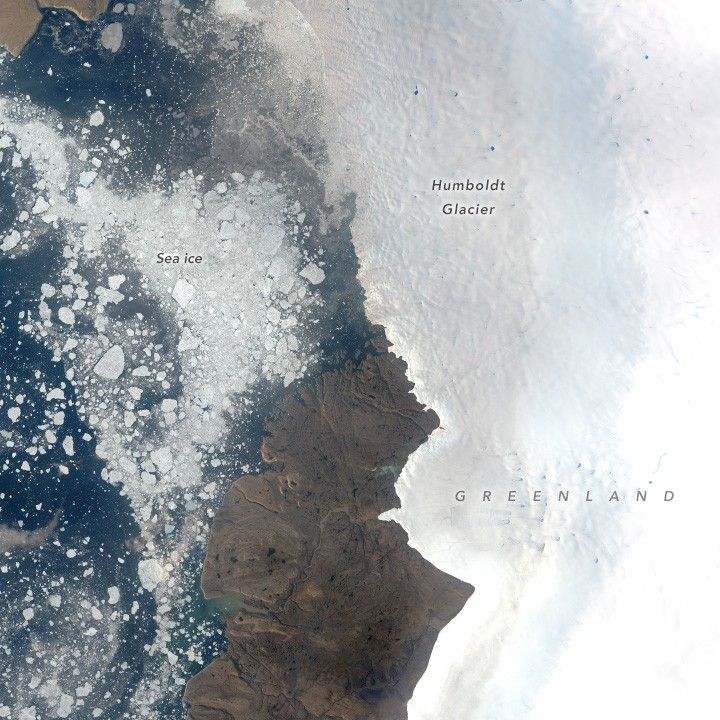
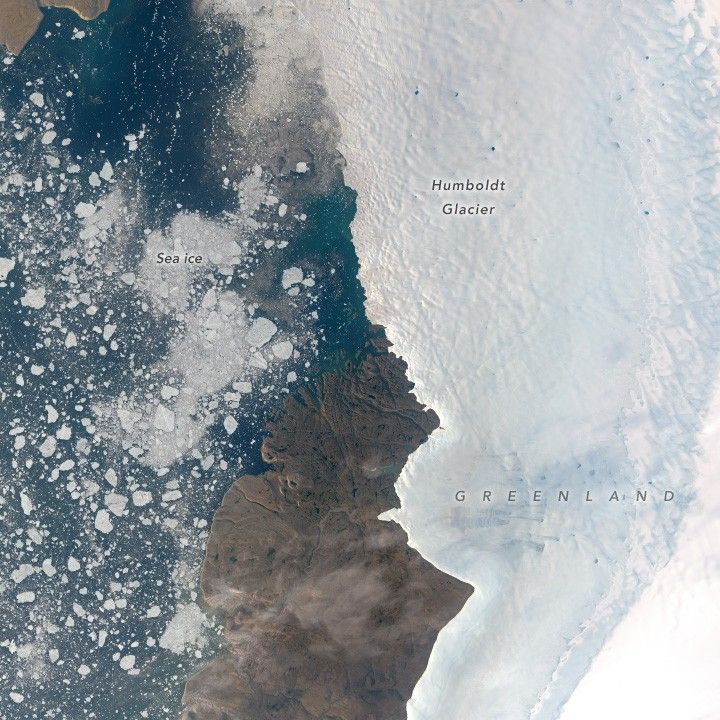
This pair of images shows the front of Humboldt Glacier in northwest Greenland before and after melting peaked. The images were acquired on August 18 (left) and August 27 (right) by the Operational Land Imager (OLI) on Landsat 8.
Notice that by August 27, recent snow and the underlying compressed snow, or firn, (white) has retreated, exposing more dirt-stained ice (gray and brown). The darkest blue areas farther inland are saturated firn, melt ponds, and possibly some ephemeral streams. Areas in between could be slushy wet firn mixed with areas where water has drained away or refrozen. Besides contributing directly to sea level rise, meltwater can flow to the base of the ice sheet via crevasses and moulins, accelerating the flow of ice toward the ocean.
Christopher Shuman, a University of Maryland, Baltimore County, glaciologist based at NASA’s Goddard Space Flight Center, identified and analyzed the two satellite images. Overall, “the area is a mishmash of ice, firn, melt, and dirt,” he said.
June and July saw steady, higher-than-average melting that kept the season on par with several other high melt seasons in recent decades. But the spike in late August pushed the cumulative melt area even higher, and the month ended with the second-largest cumulative melt area in the 45-year satellite record, trailing only 2012.
There have been other late-season melt events, notably in September 2010. That event pushed the season toward a larger amount of cumulative melting compared to the 2023 season so far (as of the start of September).
Late-season melting adds to the cumulative losses within a season, but it can also affect future melt seasons. A longer melt season delays the accumulation of surface snow, which in turn can affect the intensity of melting at the start of the next season.
References & Resources
- NASA Earth Observatory (2023, July 29) Wasting Away (Again) in Greenland. Accessed September 15, 2023.
- National Snow and Ice Data Center (2023, September 5) Late-season melt spike. Accessed September 15, 2023.
NASA Earth Observatory images by Wanmei Liang , using Landsat data from the U.S. Geological Survey . Story by Kathryn Hansen .