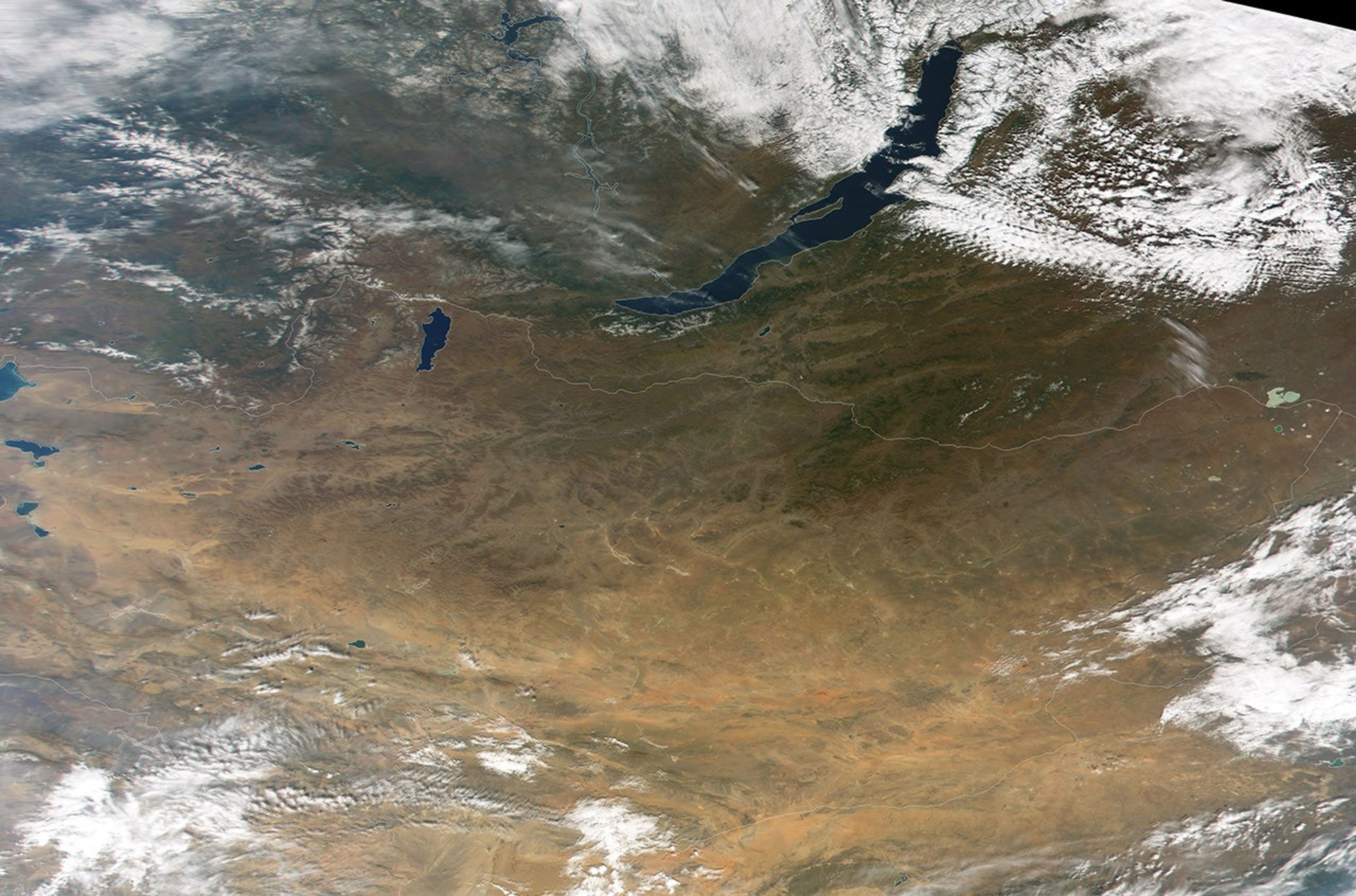















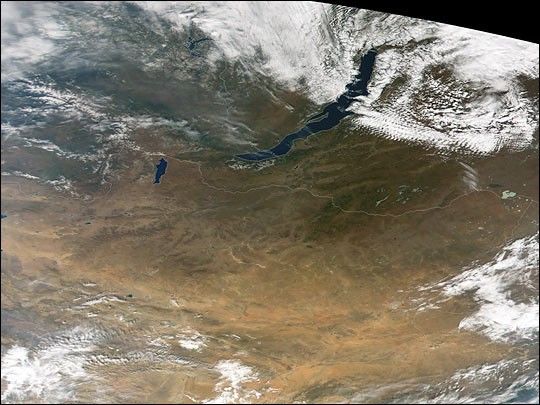
With winds that constantly whip dust across high plains, a nomadicpopulation that mostly lives in felt tents, and a local cuisine thatconsists of fermented goat milk and stewed meats, Mongolia is not aplace for the pampered. This true-color image of Mongolia was acquiredon March 27, 2000, by the Moderate-resolution Imaging Spectroradiometer(MODIS), flying aboard NASA’s Terra spacecraft. Most of the 2.3 millionMongolians live on the vast, rolling, semi-arid, grass-covered plateausthat stretch across eastern and northern Mongolia. In the image, theseareas are a dark reddish-brown. The faint herringbone pattern runningthrough eastern Mongolia is formed by the Kerulen and Orhon Gol riversand their tributaries.
The lighter reddish-brown areas covering most of southern Mongolia is the Gobi Desert. Vast and largely uncharted, the Gobi has become a favorite of fossil hunters from around theworld. Here ideal fossil specimens of Velociraptor and Protoceratopshave been unearthed. (See Finding Fossils from Space for more details.) Moving to the southwest corner of the country, onecan see the defined ridges that make up the sparsely vegetated AltaiMountain Range, the highest mountains in Mongolia.
A number of lakes can be spotted to the northwest and the far north.The drumstick-shaped lake at the northern tip of Mongolia is HovsgolNuur, which is considered a national treasure in Mongolia with itspicturesque alpine surroundings and pristine water. Further north inRussia, the long lake that is half surrounded by snow is the great Lake Baykal.Reaching 1,620 meters (nearly one mile) in depth, Lake Baykal is thedeepest freshwater lake in the world and holds as much fresh water asthe shallower lakes Superior, Huron, Ontario, Michigan, and Erie combined.
References & Resources
Image courtesy MODIS Science Team