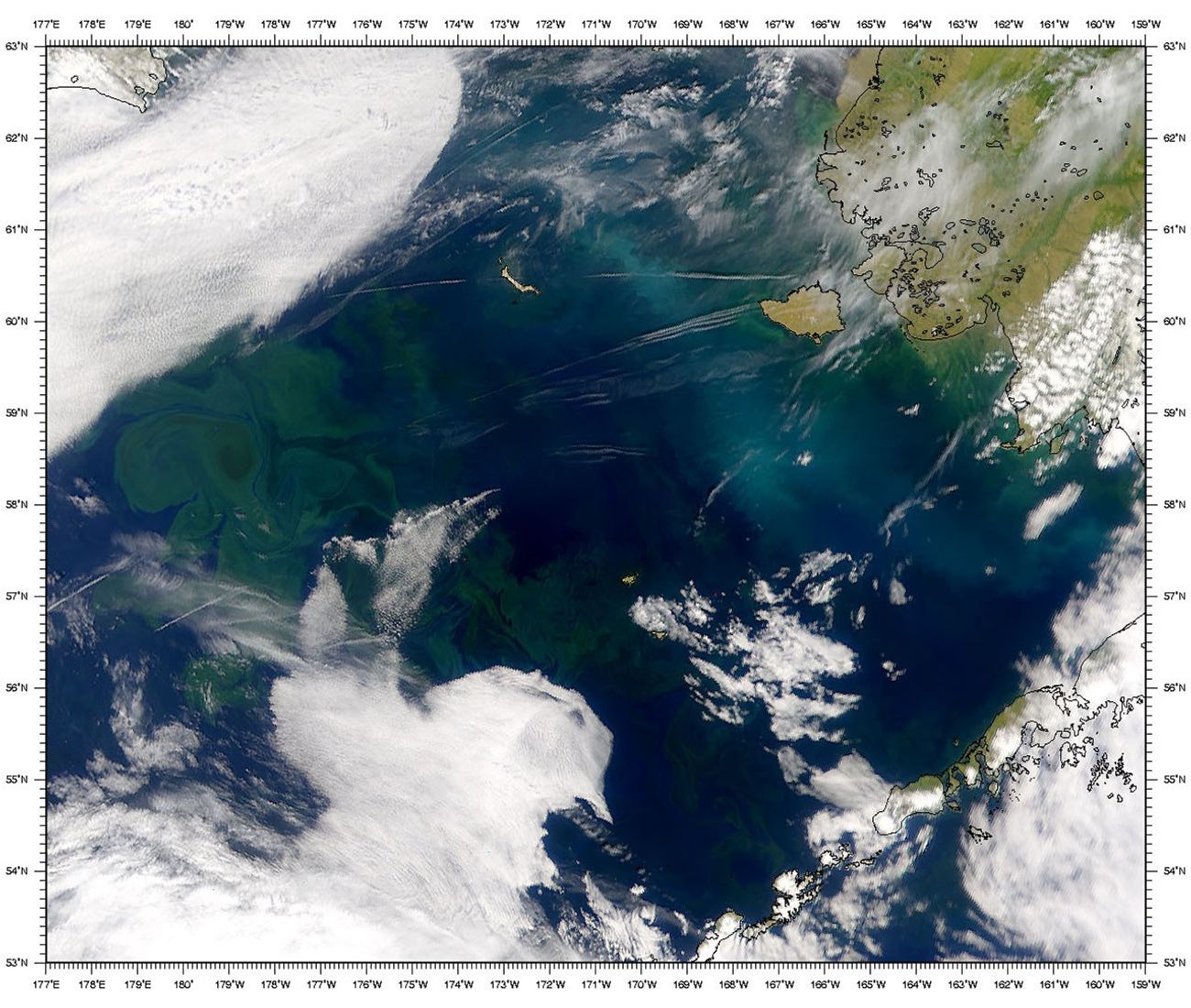












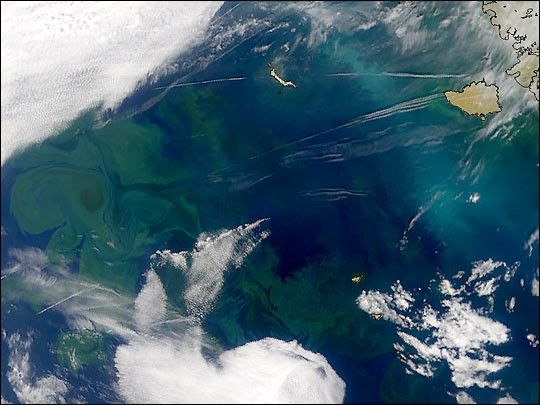
The Bering Strait—the stretch of water between Siberia and Alaska—featuressome of the world’s most productive ocean waters. This Sea-viewing WideField-of-view Sensor (SeaWiFS) image from June 26 & 27, 2000, shows phytoplanktoncovering vast stretches of water. Phytoplankoton are microscopic plants that form thebase of the marine food chain.
The green water on the left features a high concentration of phytoplankton.On the right, off the west coast of Alaska, a bloom of a specific type of phytoplankton,coccolithophores, appears bright blue-green. Coccolithophores have white calcium-richshells that reflect sunlight and brighten the water. The coccolithophoreshells—coccoliths—have persisted in the Bering Sea since 1997, butappear to be fading.
Compare this image to two previous SeaWiFS images of the Bering Sea:
June 15 & 16, 2000
April 29, 2000
For more information see:
SeaWiFS home page
Changing Currents Color the Bering Sea a New Shade of Blue
References & Resources
Provided by the SeaWiFS Project, NASA/Goddard Space Flight Center, and ORBIMAGE