























The Popocatepetl Volcano, almost 30 miles south of Mexico City,erupted yesterday (December 18, 2000) in what authorities are callingits most spectacular eruption since 800 A.D. This morning, Popocatepetl(pronounced poh-poh-kah-TEH-peh-til) continued spewing red-hot rocks aswell as a column of smoke and ash about 2.5 miles high into theatmosphere.
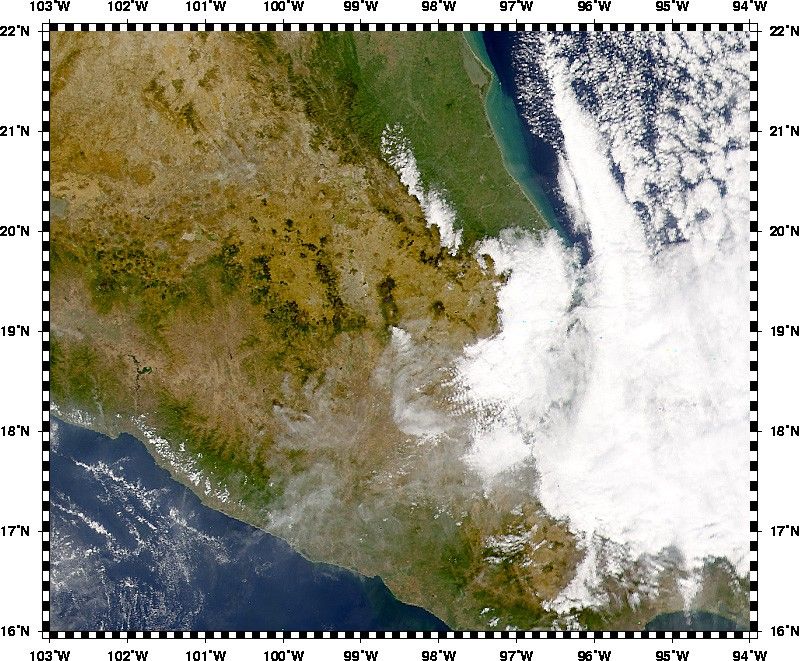
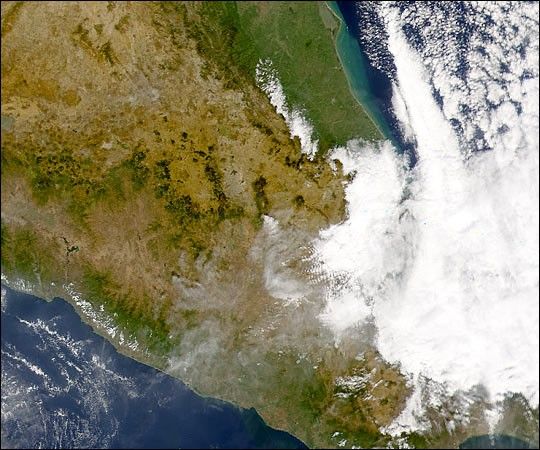
This true-color image of the volcano was acquired today by theSea-viewing Wide Field-of-view Sensor (SeaWiFS) flying aboard theOrbView-2 satellite. In this image, Popocatepetl’s plume (greyishpixels) can be seen blowing southward, away from Mexico City. There isa large cloud bank (bright white pixels) just to the east of thevolcanic plume.
Although Popocatepetl has been active since 1994—when it awoke froma 70-year slumber—this most recent eruption is most concerning to thegreater Mexico City region’s 20 million residents. The volcanodemonstrated what it can do in 800 A.D. when it belched forth enoughlava to fill many of the valleys in the surrounding region.
Earlier, scientists warned the citizens of Mexico that there is adome of lava at the base of the volcano that is causing pressure tobuild inside. They are concerned that, if it continues to buildunabated, this pressure could cause even larger eruptions in the future.
References & Resources
Image provided by the SeaWiFS Project, NASA/Goddard Space Flight Center, and ORBIMAGE