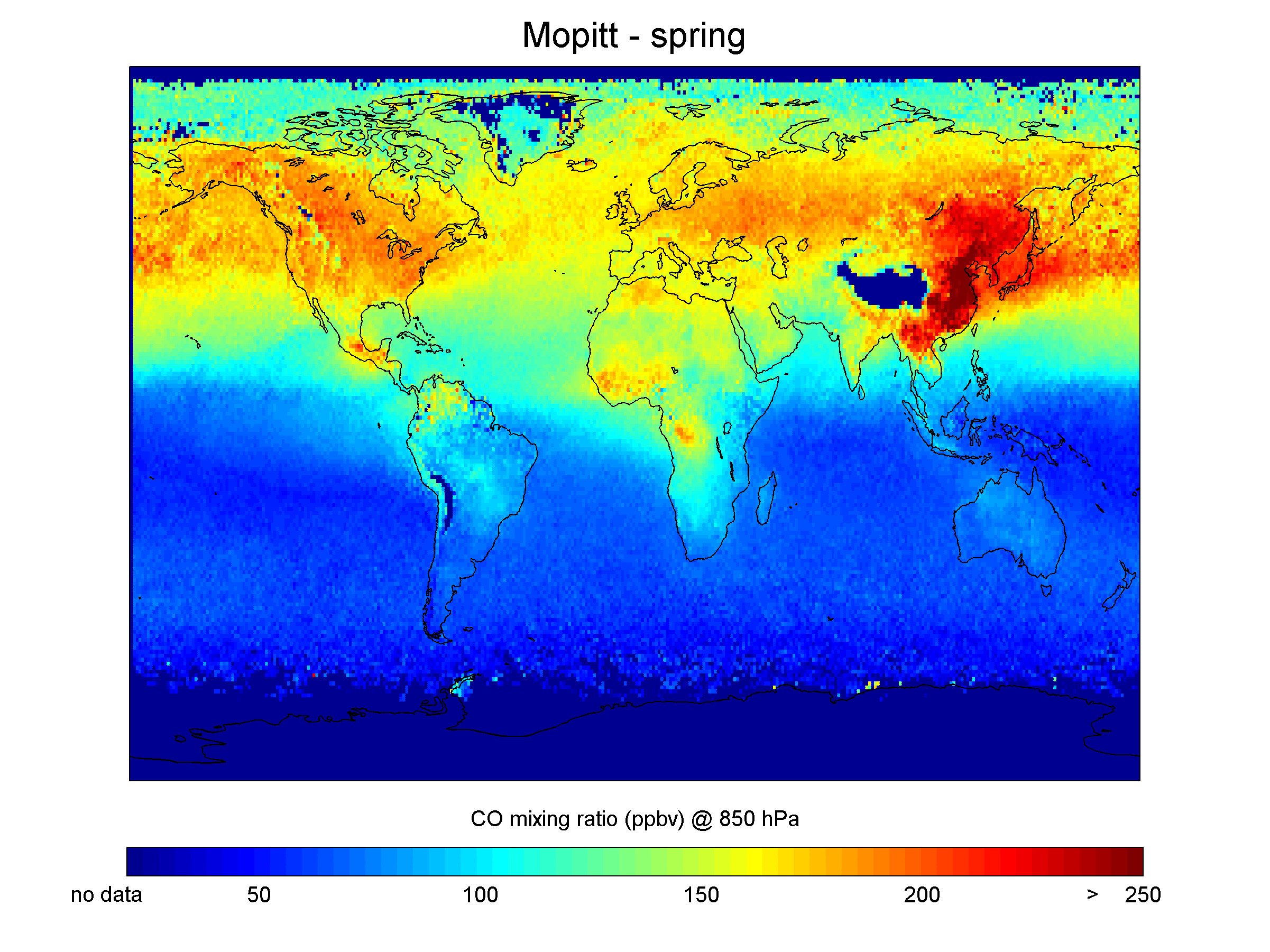
- April, May, June (1.4 MB JPEG)
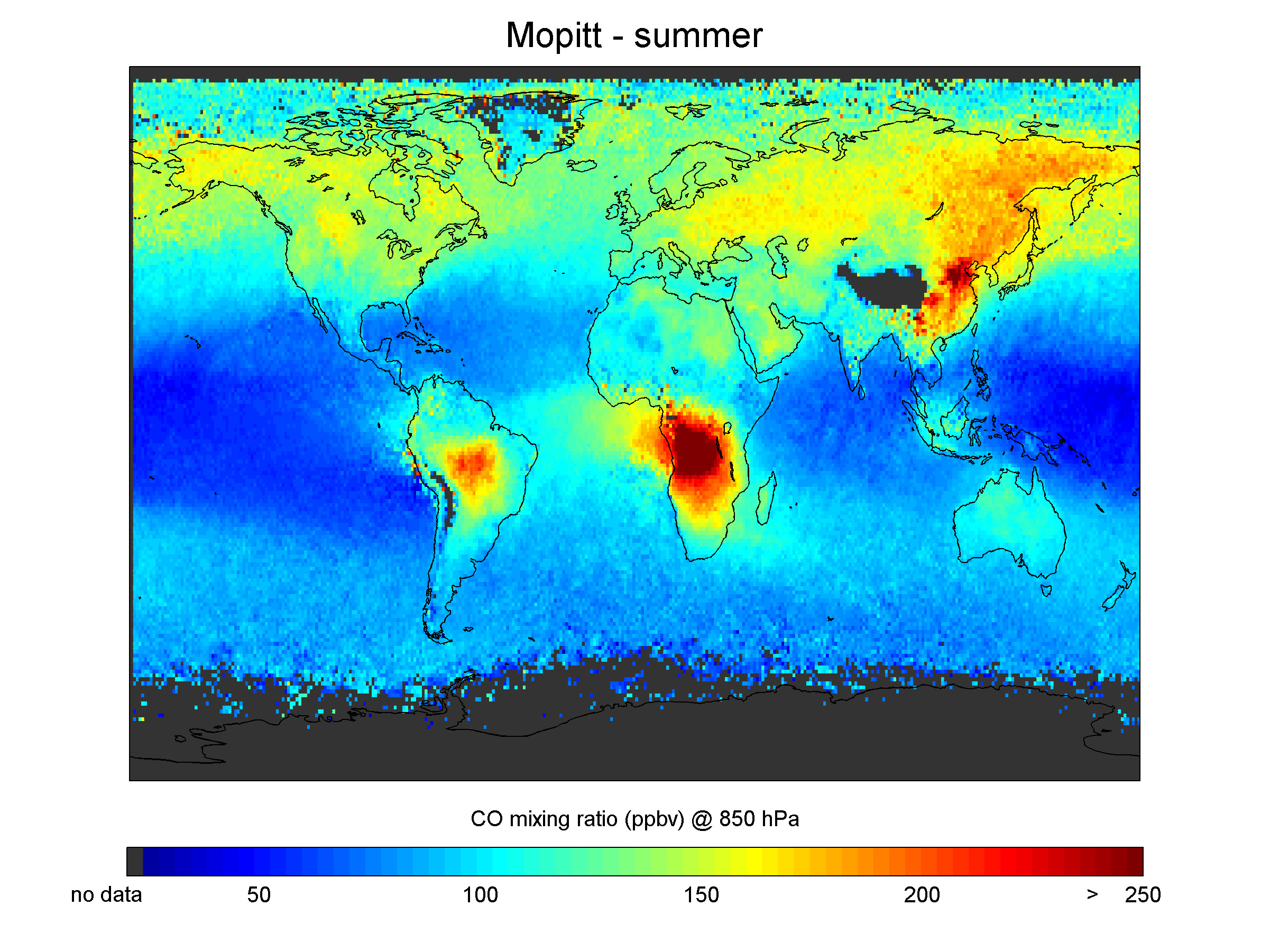
- July, August, September (1.5 MB JPEG)
- October, November, December (1.5 MB JPEG)
- January, February, March (1.4 MB JPEG)
Colorless, odorless, and poisonous, carbon monoxide (CO) is one of the six major air pollutants regulated in the United States (and by other nations around the world, as well). CO is created when carbon-based fuels, like fossil fuels or wood, don’t burn completely or efficiently.
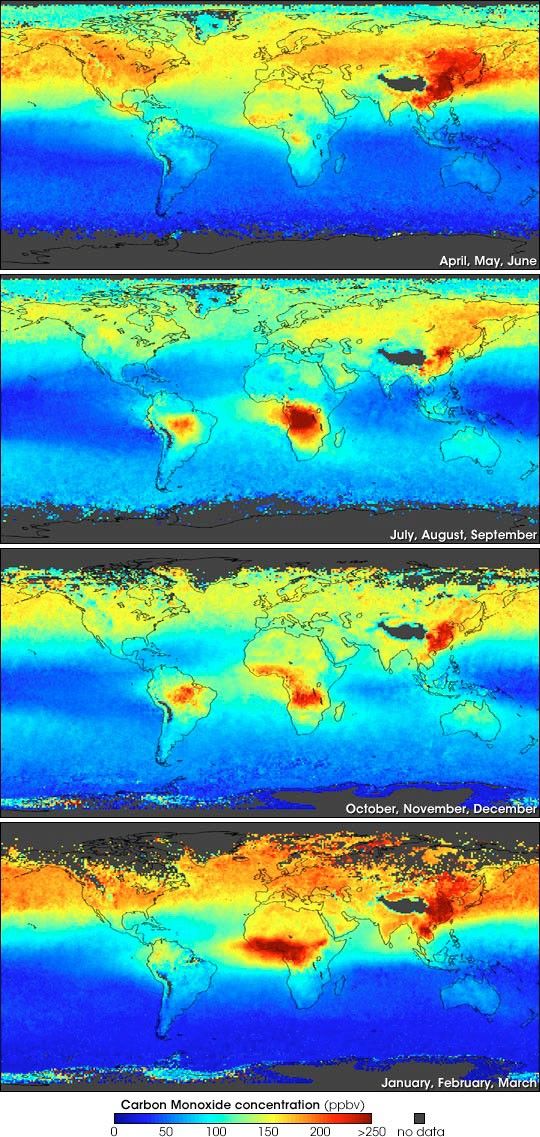
NASA-funded scientists at the National Center for Atmospheric Research (NCAR) have recently put together an analysis of four years of CO measurements from the MOPITT sensor (Measurements of Pollution in the Troposphere) on NASA’s Terra satellite. The images above show the seasonal global record of amounts and geographic sources of CO from March 2000 through February 2004. Blue areas have little or no atmospheric CO, while progressively higher levels are show in green, yellow, orange, and red.
High levels of carbon monoxide pollution are found around the world, and they result from different types of burning in different locations. In the United States, 77 percent of carbon monoxide emissions come from transportation sources. In other countries, the high levels of CO are linked to widespread fire activity, such as agricultural burning in central Africa in January through March, or in Central America in April through June.
Carbon monoxide molecules can last from a few weeks to several months in the atmosphere, and they travel long distances, without regard for national or international boundaries. They affect air quality in regions far from the original source; in January through March, carbon monoxide levels are in the red zone—more than 200 parts per billion—across much of the Northern Hemisphere, even way up into the Arctic, and out over the Atlantic and Pacific Oceans, far from any large source of emissions.
For more information about studies using MOPITT data, read: NASA’s Terra Satellite Tracks Global Pollution.
References & Resources
Images courtesy Cathy Clerbaux, NCAR Atmospheric Chemistry Division.
None