






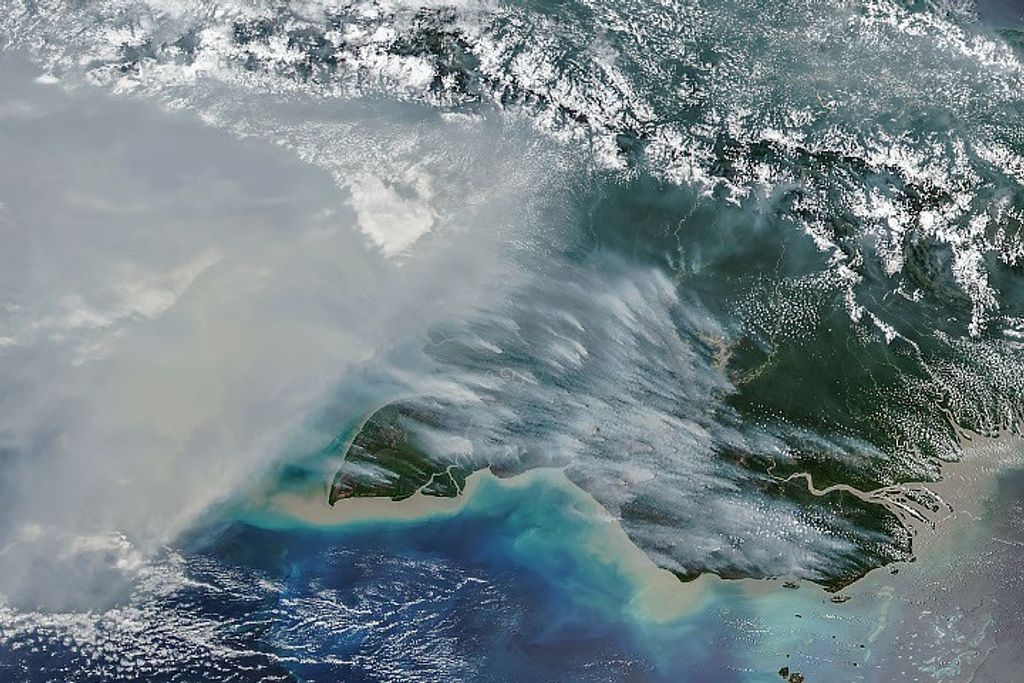



















Sierra Negra Volcanco on Isla Isabela in the Galapagos Islands continued erupting on October 27, 2005. By the time the Moderate Resolution Imaging Spectroradiometer (MODIS) flying onboard the Aqua satellite captured this image, the eruption had produced a large amount of vog. Nature’s version of smog, vog results from the mixing of volcanic gases like sulfur dioxide, oxygen, water, aerosols, and sunlight.
In this image, the vog has moved westward from the islands over the Pacific. Another phenomenon this image shows is sunglint. When the Sun bounces its light off the ocean surface and into the satellite sensor, the result is a light area on the satellite image. This image also shows a hotspot at the volcano’s summit. MODIS detects hotspots by locating areas significantly warmer than their surroundings. The Galapagos Islands are one of the world’s most volcanically active regions. In geologic terms, the area is young, and some islands are still forming.
References & Resources
NASA image created by Jesse Allen, Earth Observatory, using data obtained courtesy of the MODIS Rapid Response Team