


























- Photo-like true color (1.93 MB JPG)
- Infrared False Color (2.82 MB JPG)
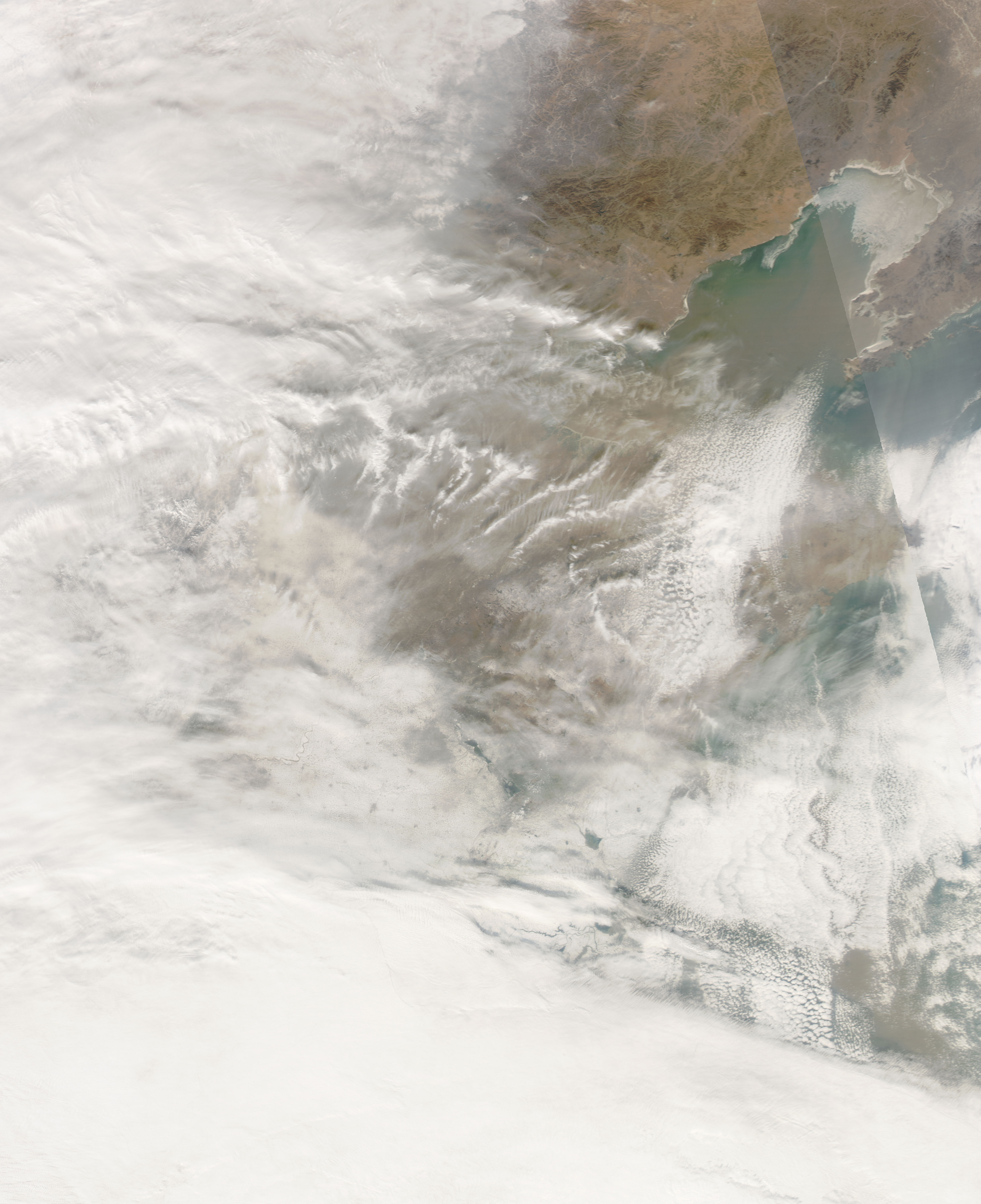
China was a blur of white when the Moderate Resolution Imaging Spectroradiometer (MODIS) on NASA’s Aqua satellite captured this image on January 21, 2008. Unusually heavy snow had fallen over central and eastern China, reported BBC News, and this snow, combined with a light pall of haze and the thick bank of clouds that covers the lower edge of the image, left the landscape an indistinct white. Cities form tiny dark spots in the snow, and water in the Huang (Yellow) River and the Weishan and Luoma Reservoirs similarly stand out against the field of white.
The snow, clouds, and haze all testify to the severe winter conditions that paralyzed much of central China. Storm clouds linger over much of the region, and indeed, meteorologists forecast two more days of snow as of January 22, said BBC News. Extremely cold temperatures drove up the demand for electricity, much of which comes from haze-producing, coal-fired power plants, said BBC News. Coal is also used to heat individual homes, and this contributes to haze during the winter.
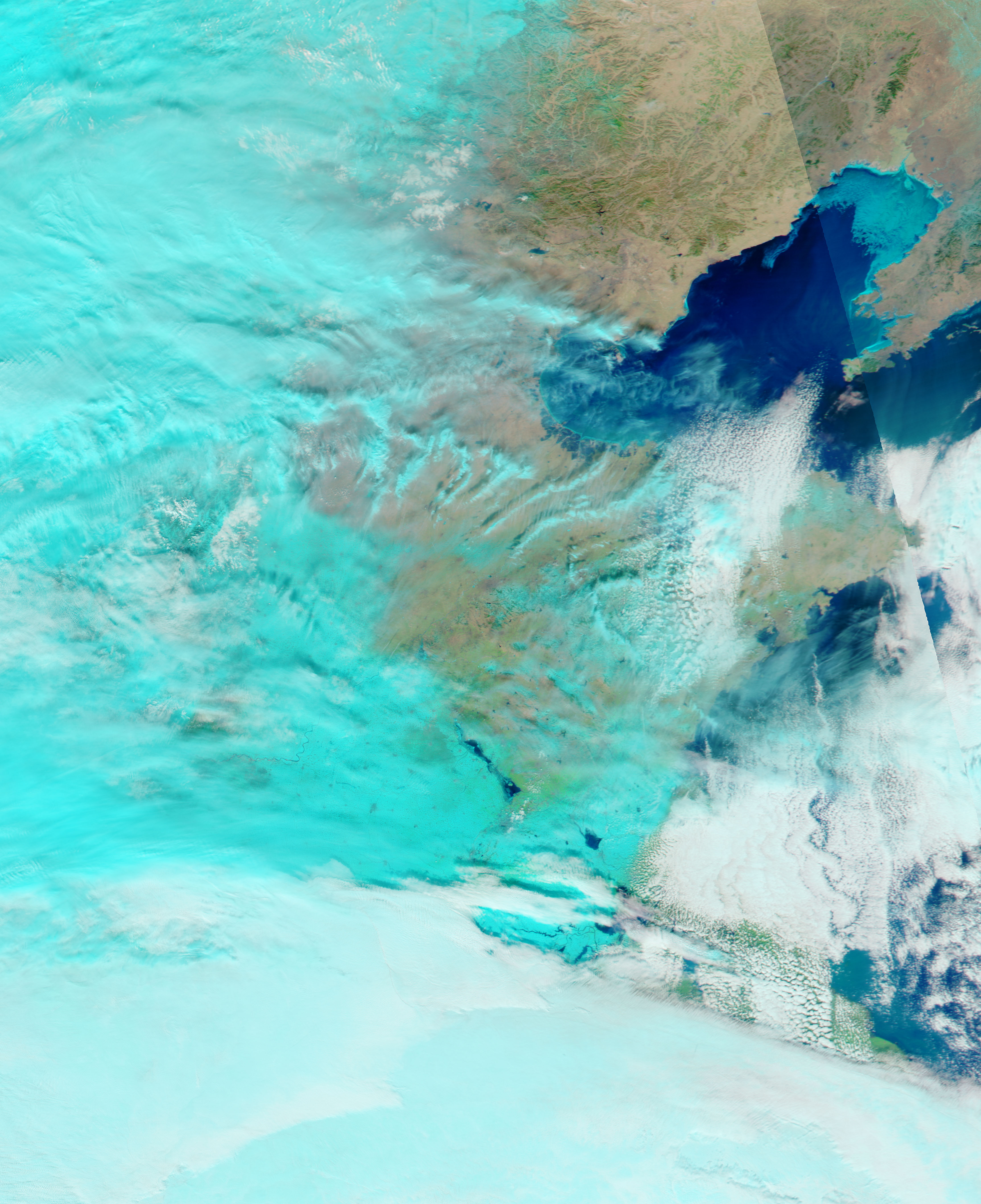
The lower image shows the same scene in both infrared and visible light. In this type of image, haze seems to disappear. The false-color image (so called because it is not what the human eye would see) also makes it possible to distinguish between cloud and snow. Clouds are pale blue and white, while snow is dark turquoise. The image reveals that the snow stretches east to the shore of the East China Sea, and extends beneath the clouds to the south.
Daily images of China are available from the MODIS Rapid Response System.
China was a blur of white when the Moderate Resolution Imaging Spectroradiometer (MODIS) on NASA’s Aqua satellite captured this image on January 21, 2008. Unusually heavy snow had fallen over central and eastern China, reported BBC News, and this snow, combined with a light pall of haze and the thick bank of clouds that covers the lower edge of the image, left the landscape an indistinct white. Cities form tiny dark spots in the snow, and water in the Huang (Yellow) River and the Weishan and Luoma Reservoirs similarly stand out against the field of white.
The snow, clouds, and haze all testify to the severe winter conditions that paralyzed much of central China. Storm clouds linger over much of the region, and indeed, meteorologists forecast two more days of snow as of January 22, said BBC News. Extremely cold temperatures drove up the demand for electricity, much of which comes from haze-producing, coal-fired power plants, said BBC News. Coal is also used to heat individual homes, and this contributes to haze during the winter.
The lower image shows the same scene in both infrared and visible light. In this type of image, haze seems to disappear. The false-color image (so called because it is not what the human eye would see) also makes it possible to distinguish between cloud and snow. Clouds are pale blue and white, while snow is dark turquoise. The image reveals that the snow stretches east to the shore of the East China Sea, and extends beneath the clouds to the south.
Daily images of China are available from the MODIS Rapid Response System.
- References
- BBC News. (2008, January 23). China in power shortage warning. Accessed January 23, 2008.
- BBC News. (2008, January 22). Severe snow hits central China. Accessed January 23, 2008.
References & Resources
- References
- BBC News. (2008, January 23). China in power shortage warning. Accessed January 23, 2008.
- BBC News. (2008, January 22). Severe snow hits central China. Accessed January 23, 2008.
NASA images courtesy the MODIS Rapid Response Team at NASA GSFC. Caption by Holli Riebeek.