

















April 22, 2019
Solar-Powered China
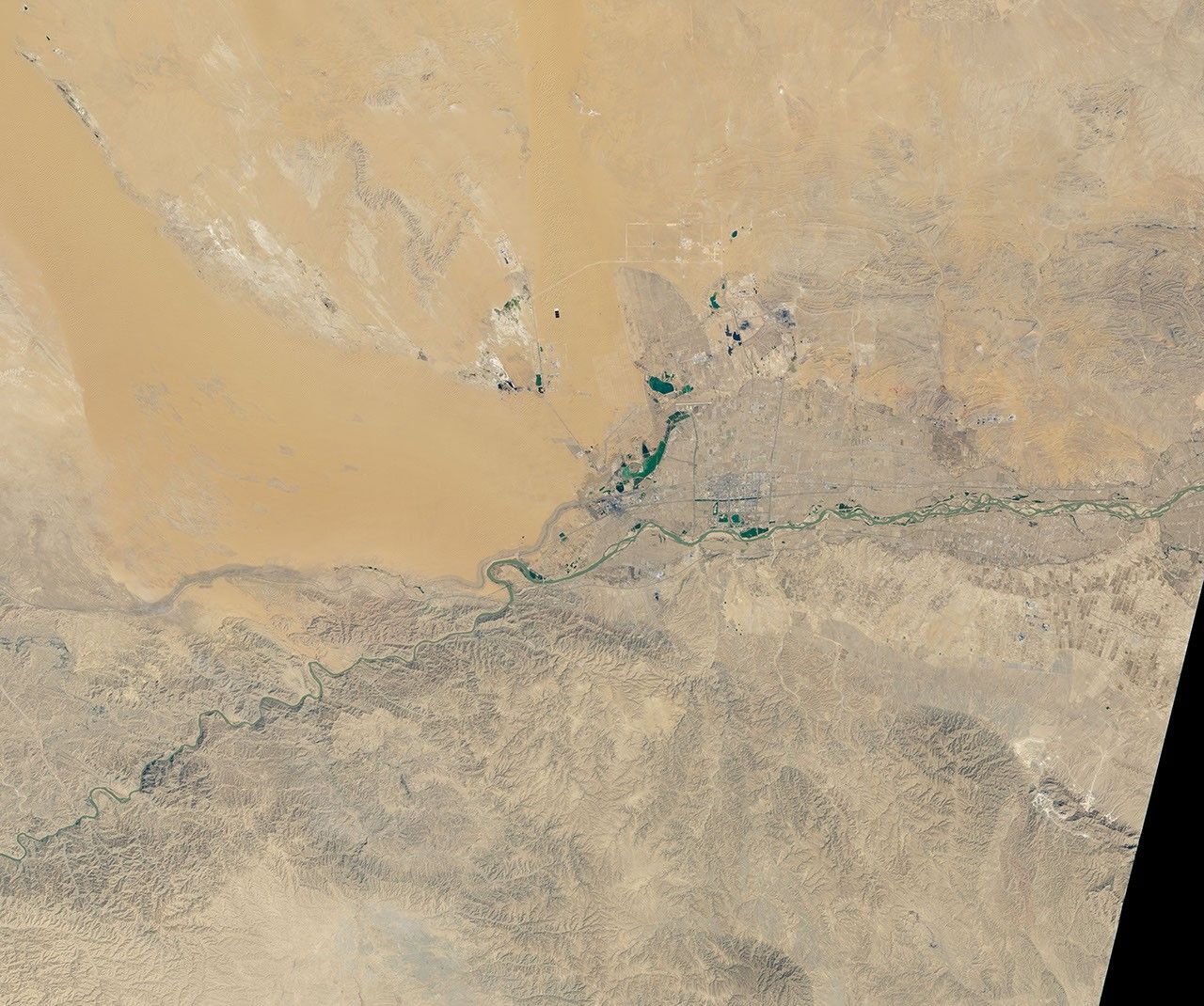
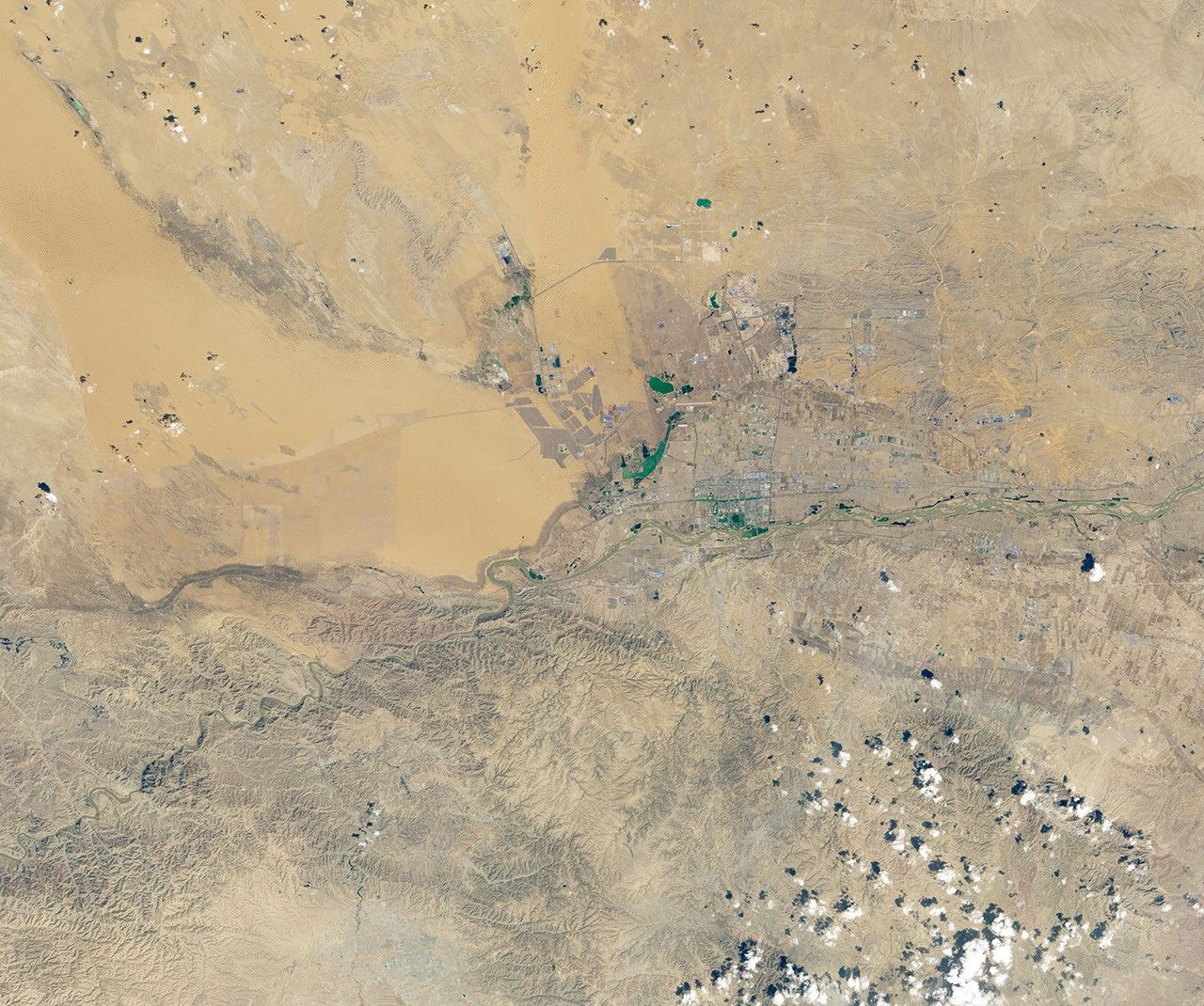
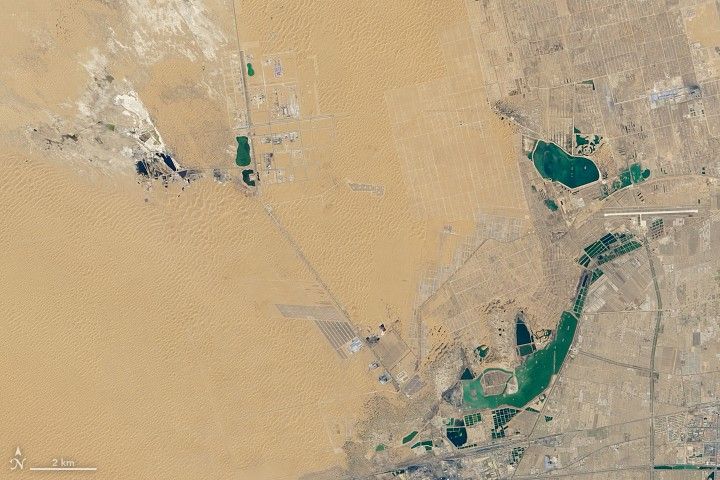
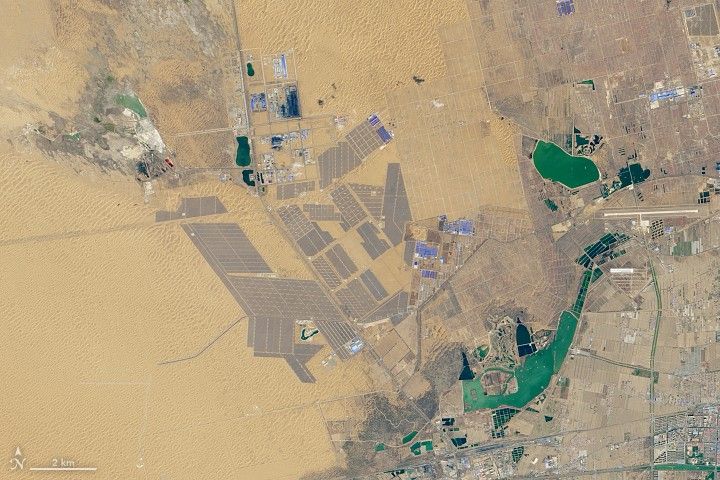
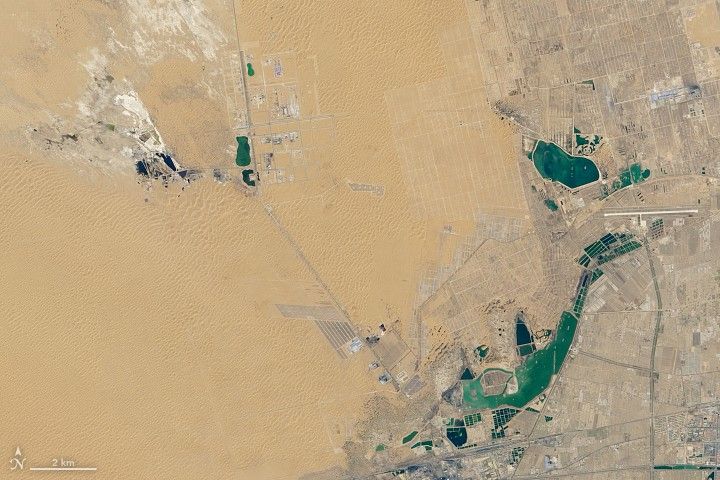
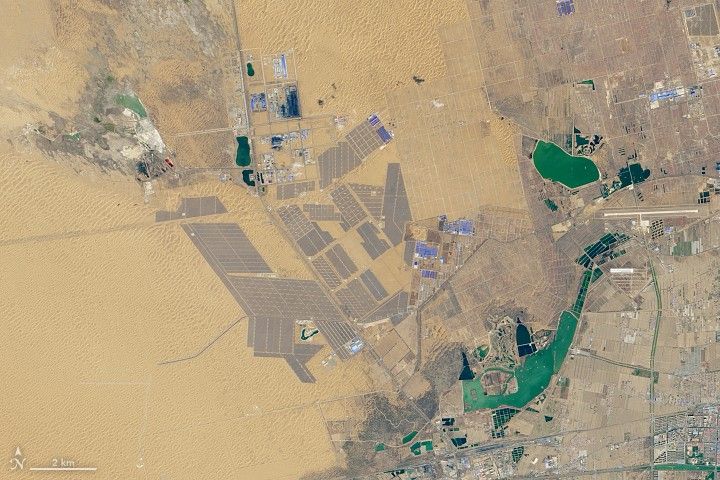
The largest solar park in the world now stands in China’s northwestern Ningxia province. Sprawling across 43 square kilometers (17 square miles), the Tengger Desert Solar Park provides China with 1.5 gigawatts (GW) of new solar generation capacity.
But don’t expect the Tengger facility to hold that “largest” status for long. Work is ongoing on even larger solar projects in India, Egypt, and the United States.
This pair of Landsat 8 images highlights the rapid expansion of the Tengger Desert facility. The Operational Land Imager (OLI) acquired the left image in April 2013—when just a few solar panels stood in the southern part of the facility—and the right image in April 2019.
The completion of the Tengger facility helped push China’s installed solar capacity above 176 gigawatts. The country is, by far, the world’s leader in terms of installed capacity, with about 32 percent of the global total, according to data published by the International Energy Agency. China is followed by the European Union (115 gigawatts) and the United States (62 gigawatts). Germany (45 gigawatts) leads among countries in the European Union.
However, Tengger’s 1.5 gigawatt capacity does not mean 100 percent of the energy gets used. Most people in China live in the eastern part of the country, but most large solar parks are in deserts in the northwest, where demand for power is low. There are some big technical hurdles in transmitting power generated in these far-flung places to where it can be used.
At times, provinces in northwest China have been shedding as much as one-third of the solar power produced—the industry term for this is curtailment—because of transmission bottlenecks, oversupply, and other issues with the electrical grid. China’s National Energy Administration even blocked the development of some new solar power projects in western Gansu, Xinjiang, and Tibet to prevent new power plants from sitting idle as they wait for better connections to the grid, according to Reuters.
References & Resources
- BBC (2018, August 22) How ChinaâÂÂs giant solar farms are transforming world energy. Accessed June 7, 2019.
- Greentech Media (2017, November 17) China Faces an Uphill Renewable Energy Curtailment Challenge. Accessed June 7, 2019.
- International Energy Agency (2019) International Energy Agency. Accessed June 7, 2019.
- Institute for Energy Economics and Financial Analysis (2018, May 21) IEEFA Report: Advances in Solar Energy Accelerate Global Shift in Electricity Generation. Accessed June 7, 2019.
- Reuters (2019, February 4) China blocks new solar in 3 NW regions amid overcapacity fears. Accessed June 7, 2019.
- The University of Pennsylvania Kleinman Center for Energy Policy (2018, June 11) Chinaâs Renewable Energy Curtailment Challenge. Accessed June 7, 2019.
NASA Earth Observatory images by Lauren Dauphin, using Landsat data from the U.S. Geological Survey. Story by Adam Voiland.