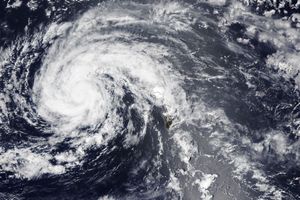



















As Daniel weakened over the eastern Pacific in early July 2012, Emilia strengthened. Emilia formed as a tropical depression on July 7, and within two days intensified to a Category 1 hurricane, the U.S. National Hurricane Center (NHC) reported. As of 2:00 a.m. Pacific Daylight Time on July 9, Emilia was located roughly 760 miles (1,225 kilometers) south of the southern tip of Baja California, with maximum sustained winds of 75 miles (120 kilometers) per hour.
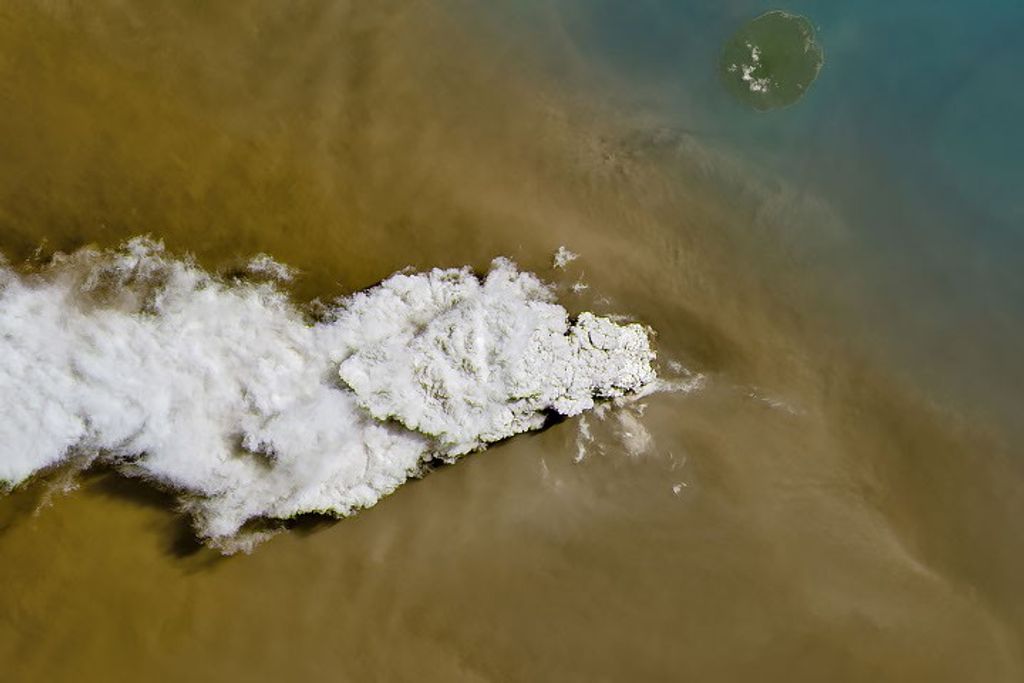
Emilia was still a tropical storm when the Moderate Resolution Imaging Spectroradiometer (MODIS) on NASA’s Terra satellite captured this natural-color image at 10:45 a.m. PDT on July 8. The storm had maximum sustained winds of 65 miles (100 kilometers) per hour, and was headed west-northwest, the NHC reported.
The NHC forecast that Emilia could become a major hurricane by July 10 as it continued moving westward over the Pacific Ocean. As of July 9, however, it posed no hazards to land.
References & Resources
- National Hurricane Center. (2012, July 9) Hurricane Advisory Archive. Accessed July 9, 2012.
NASA image courtesy Jeff Schmaltz, LANCE MODIS Rapid Response Team, Goddard Space Flight Center. Caption by Michon Scott.