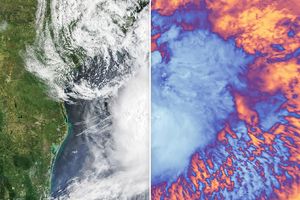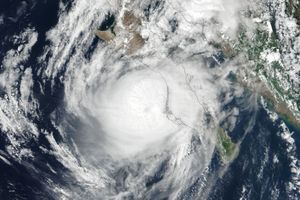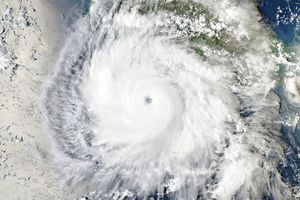


























As of October 25, 2012, Hurricane Sandy had the potential to become a very destructive storm along the U.S. East Coast. The U.S. National Hurricane Center (NHC) five-day forecast showed the storm veering northeastward over the Atlantic Ocean then turning back toward the north-northwest and potentially making landfall around October 30. Capital Weather Gang reported that the storm might bring strong winds, heavy rains, floods, and power outages to large areas.
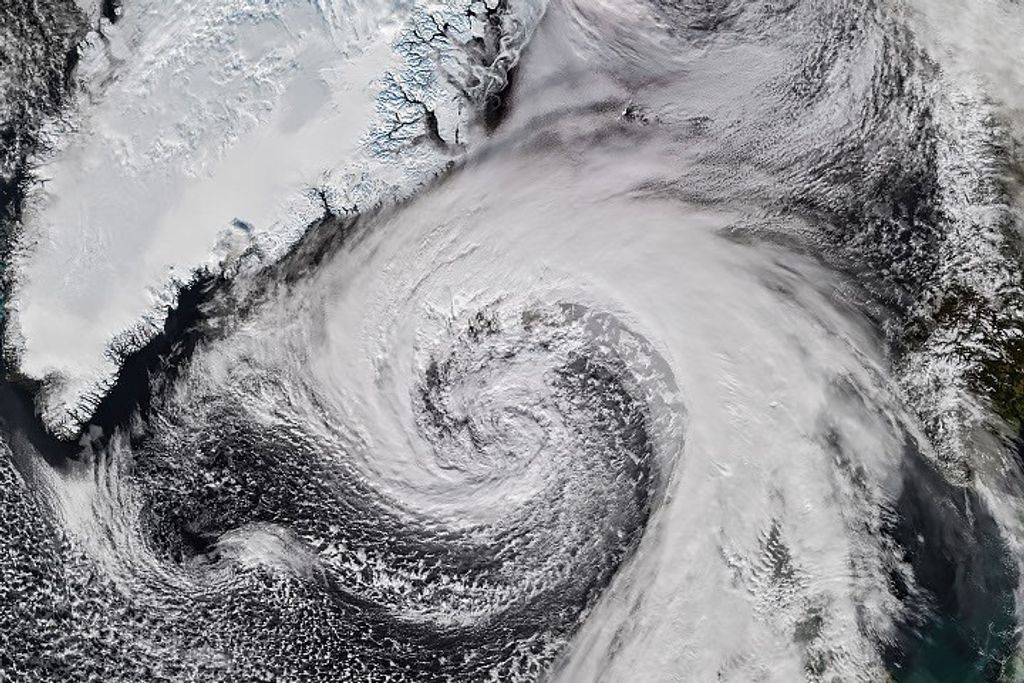
On October 23, Sandy was still a tropical storm hovering over the Caribbean Sea. The Moderate Resolution Imaging Spectroradiometer (MODIS) on NASA’s Terra satellite captured this natural-color image of Sandy the same day. At that time, the NHC reported, Sandy had maximum sustained winds of 50 miles (85 kilometers) per hour, and the government of Jamaica had issued a hurricane warning.
By October 25, Sandy had strengthened into a Category 2 hurricane. Packing winds of 105 miles (165 kilometers) per hour, the storm was approaching the central Bahamas, the NHC stated. CNN reported that the storm had already caused two deaths, one in Jamaica and one in Haiti, by the time it reached Cuba.
References & Resources
- Junker, W. (2012, October 25) Overnight models still indicate blockbuster storm threat from Hurricane Sandy. Capital Weather Gang. The Washington Post. Accessed October 25, 2012.
- National Hurricane Center. (2012, October 25) Hurricane Sandy Advisory Archive. Accessed October 25, 2012.
- Payne, E. (2012, October 25) Sandy packs punch as a strong Category 2 hurricane, claims 2 lives. CNN. Accessed October 25, 2012.
NASA image courtesy Jeff Schmaltz, LANCE MODIS Rapid Response Team at NASA GSFC. Caption by Michon Scott.