


















October 2, 2018-October 7, 2019
Unusual Monsoon Season Causes Flooding in India
India’s 2019 monsoon season has been one of the most unusual in recent decades. From June to September 2019, India received the highest amount of monsoonal rain in the past 25 years. According to the India Meteorological Department, those rains are not expected to retreat until at least October 10, which would be the latest withdrawal of the monsoon in the country’s recorded history.
The monsoon usually accounts for around 70 percent of India’s annual rainfall, but the surplus this year has caused major hardship. According to local media, floods this year have displaced or injured at least 2.5 million people in 22 states and killed several thousand.
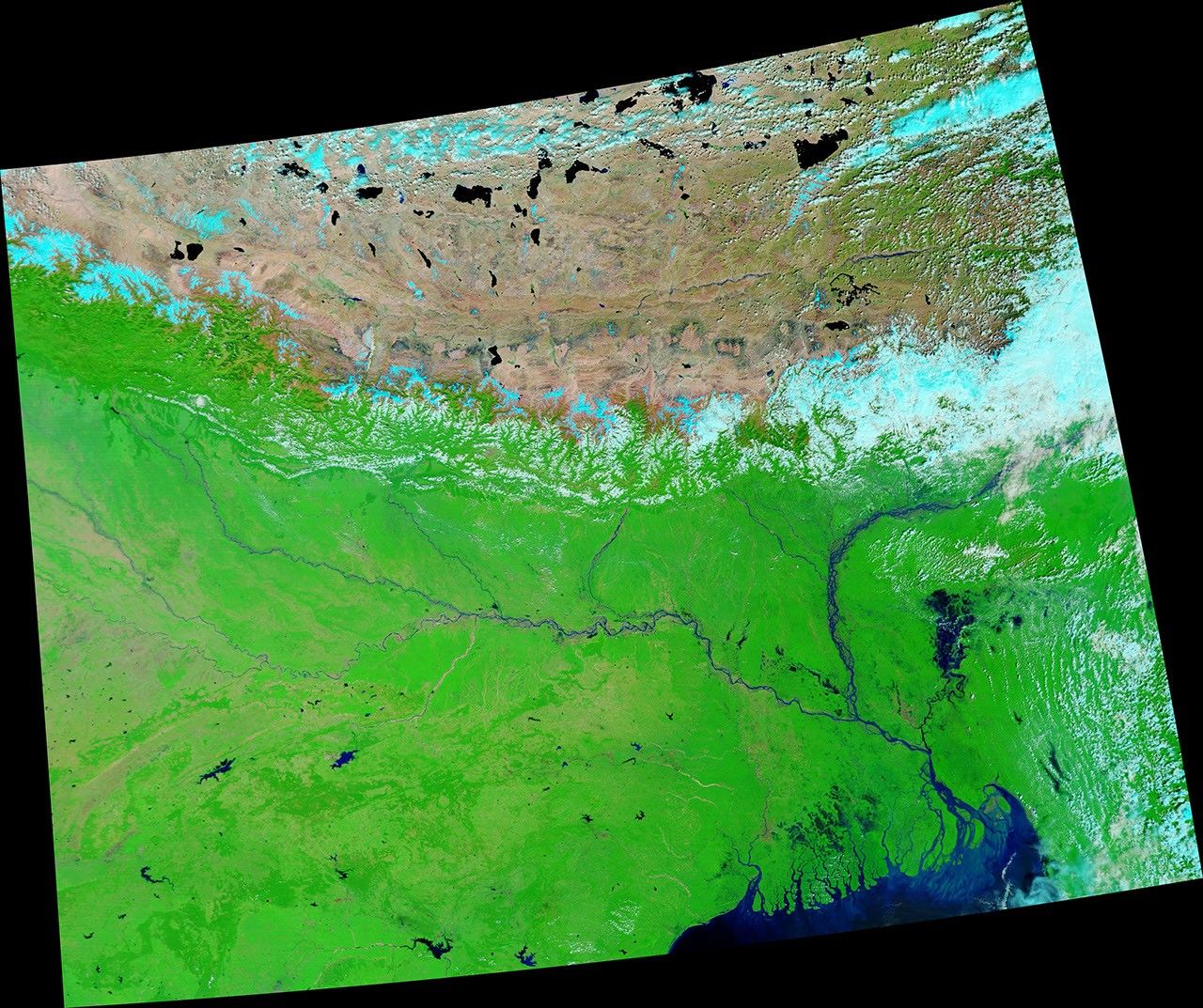
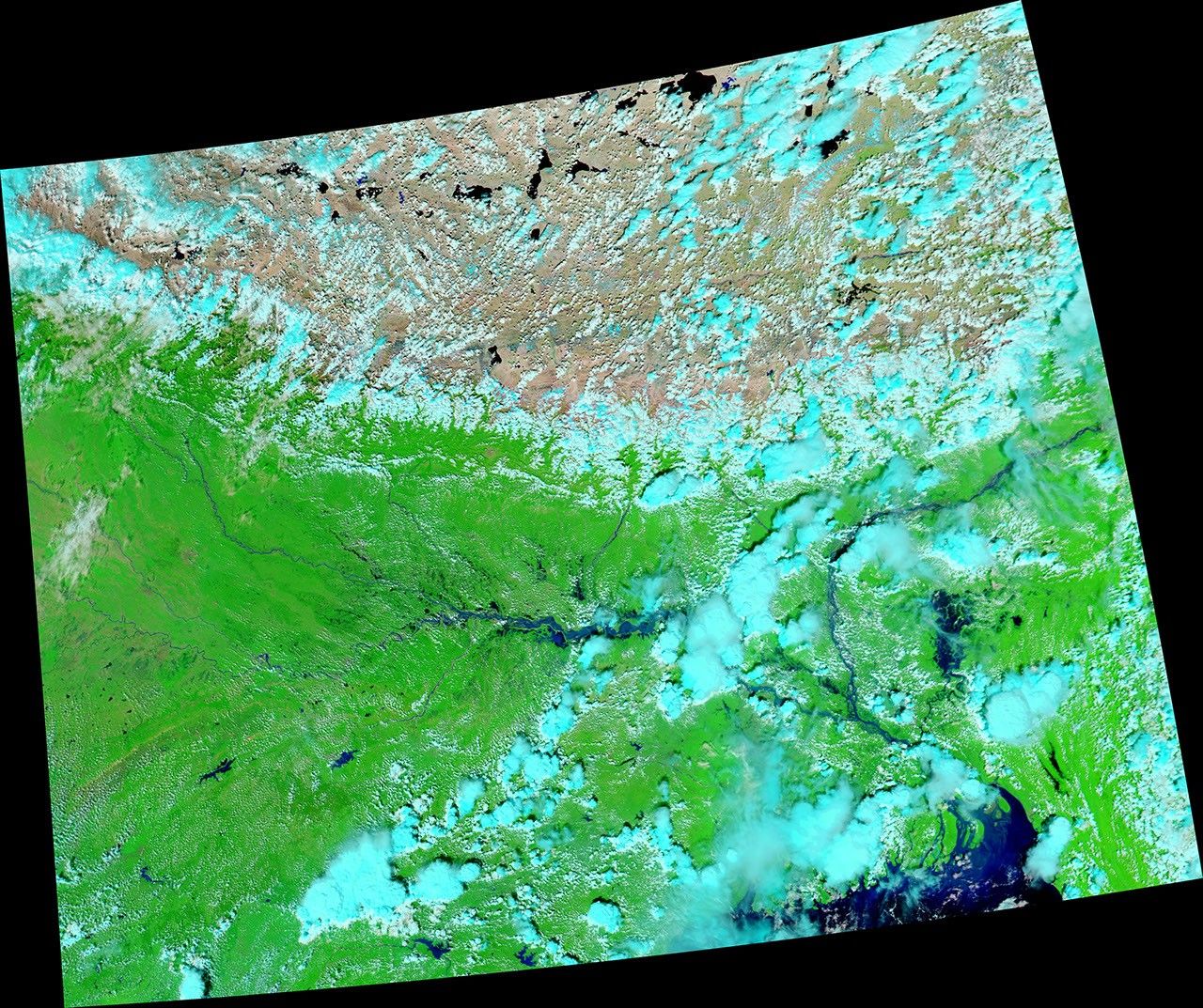
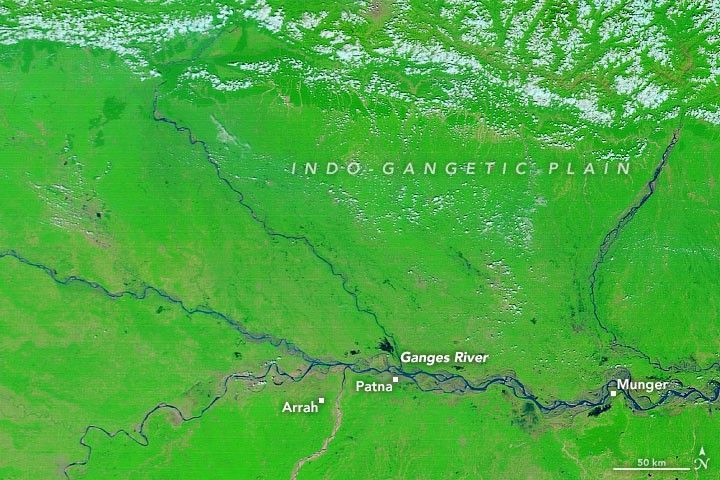
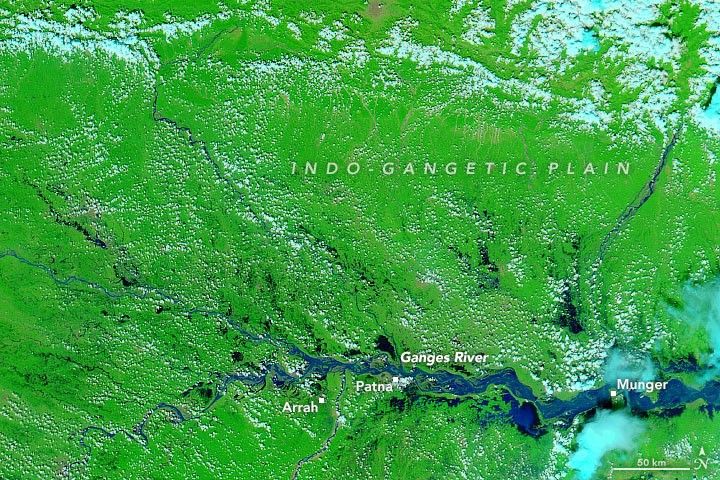
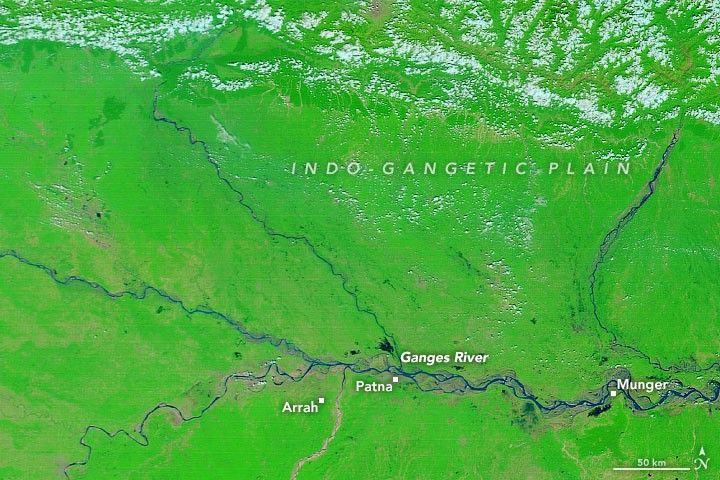
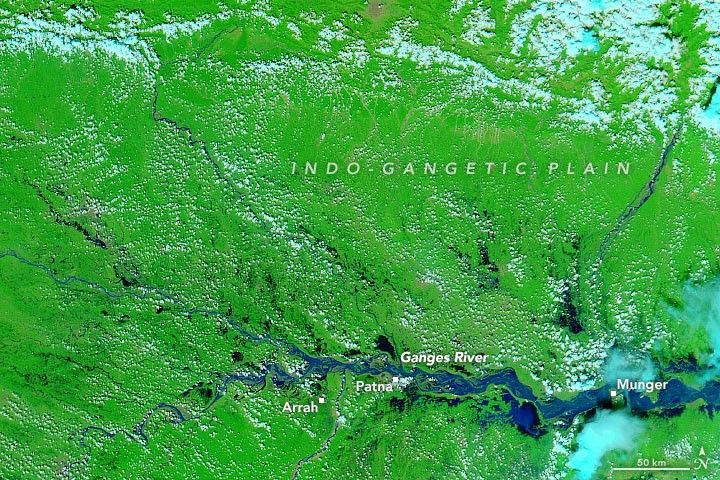
The most recently affected area is the state of Bihar in eastern India. In just a few days in late September, extreme rainfall covered many areas with knee-deep water. The images above show the flooding around the Ganges River in Bihar. The left image was acquired on October 2, 2018, and the right on October 7, 2019. Both images were acquired by Moderate Resolution Imaging Spectroradiometer (MODIS) on NASA’s Aqua satellite.
The monsoon season started slow. In June 2019, much of India endured major heatwaves related to sparse spring rainfall and a late arrival of monsoon rains. By August and September, however, many regions were experiencing above average rain. In total, a national average of 97 centimeters (38 inches) of rain fell this year from June 1 to September 30, which is 110 percent of the norm and the most since 1994. (Average annual rainfall from 1951–2000 was 88 centimeters, or 35 inches.) It is important to note that while many portions of India have received a lot of rain, some regions have actually experienced a rainfall deficit.
Much of the rain in 2019 was caused by an increased number of low-pressure systems. News reports state that the country experienced more extreme rainfall events this year compared to last year. Scientists believe the increased rain events could be associated with a phenomenon known as the Indian Ocean Dipole, when the western and eastern parts of the Indian Ocean are different temperatures. When the western portion is warmer than the eastern portion (as it was this summer), the region experiences a stronger monsoon rainfall.
The India Meteorological Department predicts the monsoon will start withdrawing about a month later than usual. Researchers attribute the delay to unusual patterns in the Intertropical Convergence Zone (ITCZ), a region of weather centered around the equator where trade winds from the northern and southern hemispheres meet. Usually by September 1, temperatures decrease and the ITCZ moves south of India. However, temperatures have remained warm in the northern hemisphere, and ITCZ weather patterns have lingered longer than normal.
References & Resources
- India Meteorological Department (2019, September 30) 2019 Southwest Monsoon Season Rainfall and IMDâs Long Range Forecasts.
- India Meteorological Department (2019, October 3) Current Weather Status and Outlook for next two weeks (03 to 16 October, 2019) Accessed October 7, 2019.
- The Indian Express (2019, October 5) Explained: Why monsoon isnât over yet. Accessed October 7, 2019.
- Scroll.in (2019, Oct 6) Rain check: How the monsoons went from 33% deficient to 10% higher than normal, all in three months. Accessed October 7, 2019.
- The Telegraph (2019, October 5) Monsoon toll: 1900 lives. Accessed October 7, 2019.
NASA Earth Observatory images by Joshua Stevens, using MODIS data from NASA EOSDIS/LANCE and GIBS/Worldview. Story by Kasha Patel.