

















After erupting for 11 months, Chile’s Puyehue-Cordón Caulle Volcano finally fell silent in April 2012. The eruption was notable for its prodigious output of volcanic ash, which traveled around the world shortly after the eruption began.
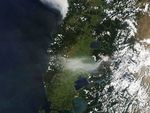
In late January 2013, ash again fell on communities downwind of Puyehue-Cordón Caulle. But rather than signaling the onset of a new eruption, the ash was the result of dry weather and high winds in the Andes Mountains, according to the website barilocheopina.com. Fine ash was picked up by the wind and carried over 150 kilometers (93 miles) from the volcano. Ash extends to Chile’s Pacific coast in this natural-color satellite image. The image was collected by the Moderate Resolution Imaging Spectroradiometer (MODIS) on the Aqua satellite on January 20, 2013.
References & Resources
- Bariloche Opina.com. (2013, January 20) Chile: Preocupación en Osorno por cenizas en suspensión del Caulle Puyehue. Accessed January 28, 2013.
- Klemetti, Erik. Eruption Update for January 22, 2013: Puyehue-Cordón Caulle, White Island, Rabaul, Taal and Kamchatka. Accessed January 28, 2013.
NASA image courtesy Jeff Schmaltz LANCE/EOSDIS MODIS Rapid Response Team, GSFC. Caption by Robert Simmon.