
















What is an Exoplanet?
So far scientists have categorized exoplanets into the following types: Gas giant, Neptunian, super-Earth, and terrestrial.
The planets beyond our solar system are called “exoplanets,” and they come in a wide variety of sizes, from gas giants larger than Jupiter to small, rocky planets about as big around as Earth or Mars. They can be hot enough to boil metal or locked in deep freeze. They can orbit their stars so tightly that a “year” lasts only a few days; they can orbit two suns at once. Some exoplanets are even sunless rogues, wandering solo through the galaxy in permanent darkness.
NASA/JPL-Caltech
A galaxy of stars – and planets
Our galaxy, the Milky Way, is the thick stream of stars that cuts across the sky on the darkest, clearest nights. Its spiraling expanse contains at least 100 billion stars, our Sun among them. And if each of those stars has not just one planet, but, like ours, a whole system of them, then the number of planets in the galaxy is truly astronomical: We’re already heading into the trillions.
We humans have been speculating about such possibilities for thousands of years, but ours is the first generation to know, with certainty, that exoplanets are really out there. In fact, way out there. Our nearest neighboring star, Proxima Centauri, was found to possess at least one planet – probably a rocky one. It’s about 4 light-years away – more than 25 trillion miles (40 trillion kilometers). The bulk of exoplanets found so far are hundreds or thousands of light-years away.
The bad news: As yet we have no way to reach them, and won’t be leaving footprints on them anytime soon. The good news: We can look in on them, take their temperatures, taste their atmospheres and, perhaps one day soon, detect signs of life that might be hidden in pixels of light captured from these dim, distant worlds.
Exoplanet discovery – and mystery
The first exoplanets were discovered in the early 1990s, but the first exoplanet to burst upon the world stage was 51 Pegasi b, a “hot Jupiter” orbiting a Sun-like star 50 light-years away. The watershed year was 1995. Since then we’ve discovered thousands more.
Size and mass play a crucial role in determining planet types. There are also varieties within the size/mass classifications. Scientists also have noted what seems to be a strange gap in planet sizes. It’s been dubbed the “radius valley,” or the Fulton gap, after Benjamin Fulton, lead author on a paper describing it. Data from NASA’s Kepler spacecraft showed that planets of a certain size-range are rare – those between 1.5 and 2 times the size (diameter) of Earth, which would place them among the super-Earths. It’s possible that this represents a critical size in planet formation: Planets that reach this size quickly attract thick atmospheres of hydrogen and helium gas, and balloon up into gaseous planets, while planets smaller than this limit are not large enough to hold such an atmosphere and remain primarily rocky, terrestrial bodies. On the other hand, the smaller planets that orbit close to their stars could be the cores of Neptune-like worlds that had their atmospheres stripped away.
Explaining the Fulton gap will require a far better understanding of how planetary systems form.

Types of exoplanets
Each planet type varies in interior and exterior appearance depending on composition.
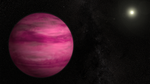
Gas giants are planets the size of Saturn or Jupiter, the largest planet in our solar system, or much, much larger.
More variety is hidden within these broad categories. Hot Jupiters, for instance, were among the first planet types found – gas giants orbiting so closely to their stars that their temperatures soar into the thousands of degrees (Fahrenheit or Celsius).
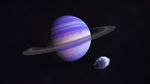
Neptunian planets are similar in size to Neptune or Uranus in our solar system. They likely have a mixture of interior compositions, but all will have hydrogen and helium-dominated outer atmospheres and rocky cores. We’re also discovering mini-Neptunes, planets smaller than Neptune and bigger than Earth. No planets of this size or type exist in our solar system.
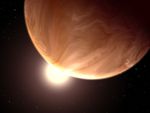
Super-Earths are typically terrestrial planets that may or may not have atmospheres. They are more massive than Earth, but lighter than Neptune.
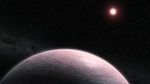
Terrestrial planets are Earth sized and smaller, composed of rock, silicate, water or carbon. Further investigation will determine whether some of them possess atmospheres, oceans or other signs of habitability.
Explore the Planet Types
Discovery Alert: Exoplanet Candidate HD 137010 b
-
Research by volunteers led to the discovery of a possible cool, rocky exoplanet, slightly larger than Earth
Exoplanet candidate HD 137010 b was discovered orbiting a Sun-like star 146 light-years away. An international team of professional and amateur astronomers published “A Cool Earth-sized Planet Candidate Transiting a Tenth Magnitude K-dwarf From K2” in The Astrophysical Journal Letters on Jan. 27, 2026. The paper’s authors include several volunteers from NASA’s Planet Hunters citizen science project — Hans Martin Schwengeler, Martti H. Kristiansen, Mark Omohundro, and Ivan A. Terentev, as well as lead author Alexander Venner, who participated in this citizen science project before he completed his Ph.D.
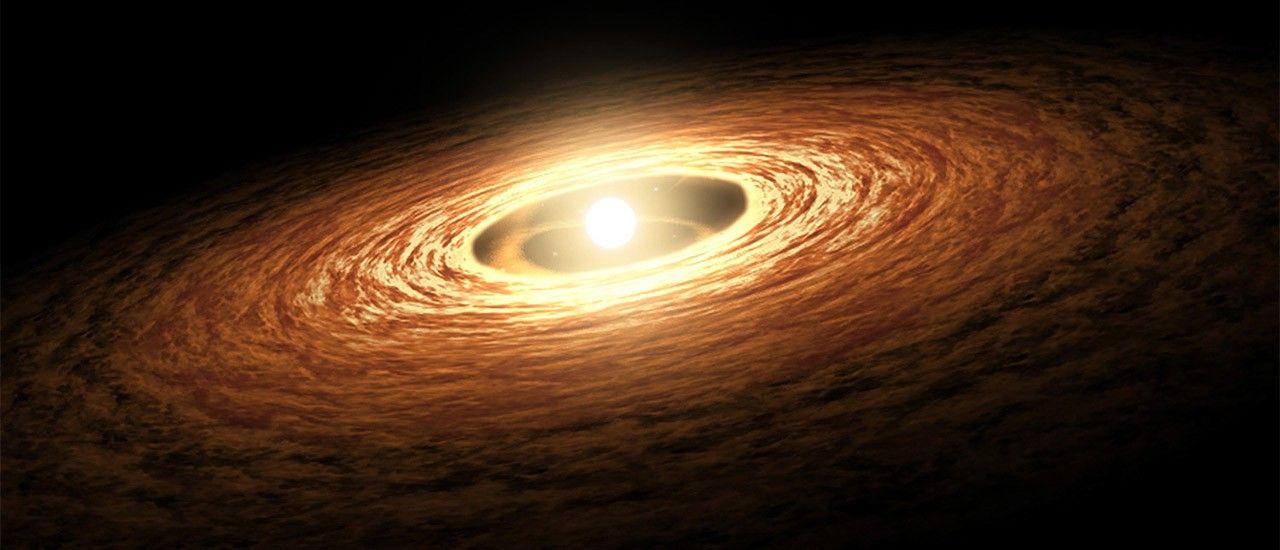
NASA's citizen science projects are collaborations between scientists and interested members of the public. Through these collaborations, volunteers (known as citizen scientists) have helped make thousands of important scientific discoveries. Learn how to get involved with NASA Citizen Science. Artist's concept of exoplanet candidate HD 137010 b, dubbed an "ice-cold Earth" because it's a possible rocky planet slightly larger than Earth, orbiting a Sun-like star about 146 light-years away.NASA/JPL-Caltech/Keith Miller (Caltech/IPAC)