























APOD
Astronomy Picture of the Day
Discover the cosmos! Each day a different image or photograph of our fascinating universe is featured, along with a brief explanation written by a professional astronomer.
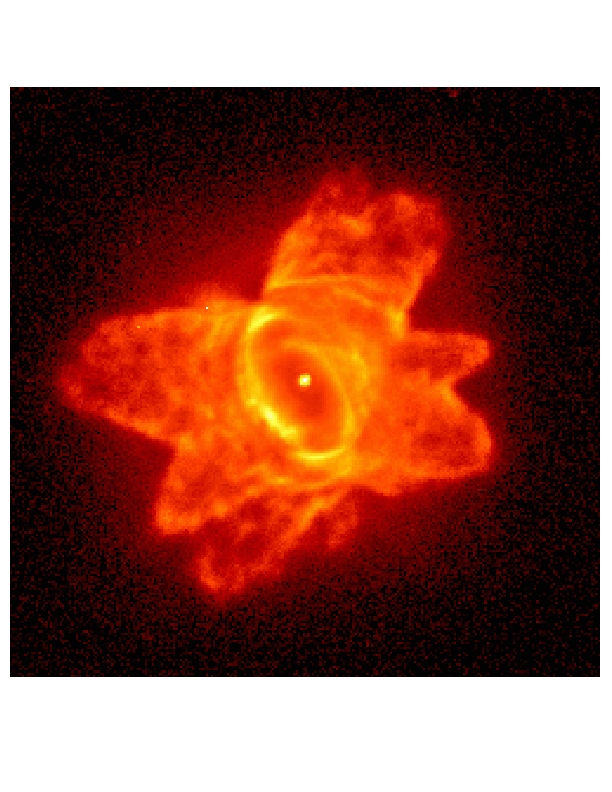
PKS285-02: A Young Planetary Nebula
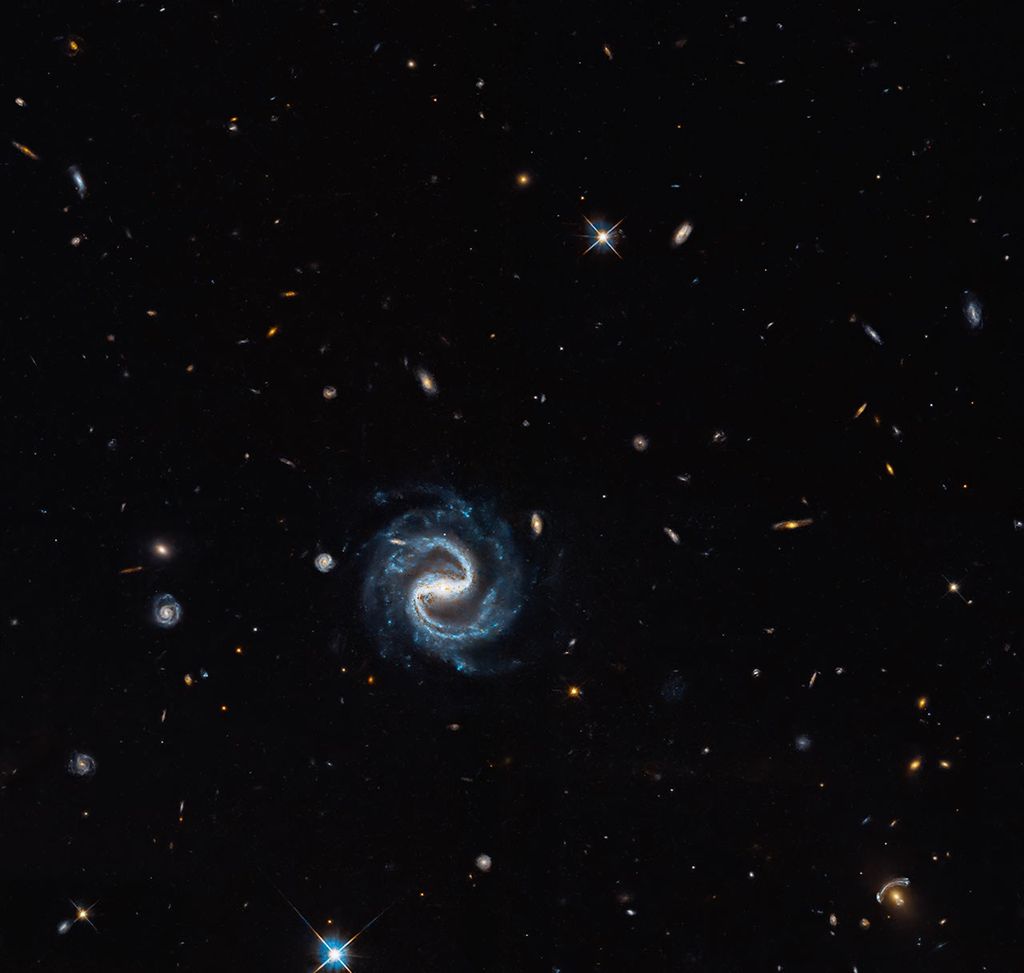
Explanation: How do planetary nebulae acquire their exquisite geometrical shapes ? To investigate this, astronomers used the Hubble Space Telescope to image several young planetary nebulae . These nebulae are the outer envelopes of stars like our Sun that have recently been cast away to space, leaving behind a core fading to become a white dwarf . In this photograph in red H-alpha carbon that composes humans is thought to be created by red giant stars and ejected into the cosmos in planetary nebulae like PKS285-02. The complexity of this nebula leads some astronomers to hypothesize that these shells were created by high-speed, collimated outflows during a late phase of this star's evolution .
| Date | June 22, 1999 |
|---|---|
| Credit | Credit: R. Sahai & J. Trauger (JPL), WFPC2, HST, NASA |
| Authors & editors: | Robert Nemiroff (MTU) & Jerry Bonnell (UMCP) |
| A service of: |
ASD at NASA / GSFC, NASA Science Activation & Michigan Tech. U. |