






























APOD
Astronomy Picture of the Day
Discover the cosmos! Each day a different image or photograph of our fascinating universe is featured, along with a brief explanation written by a professional astronomer.


Quadrantid Meteors through Orion
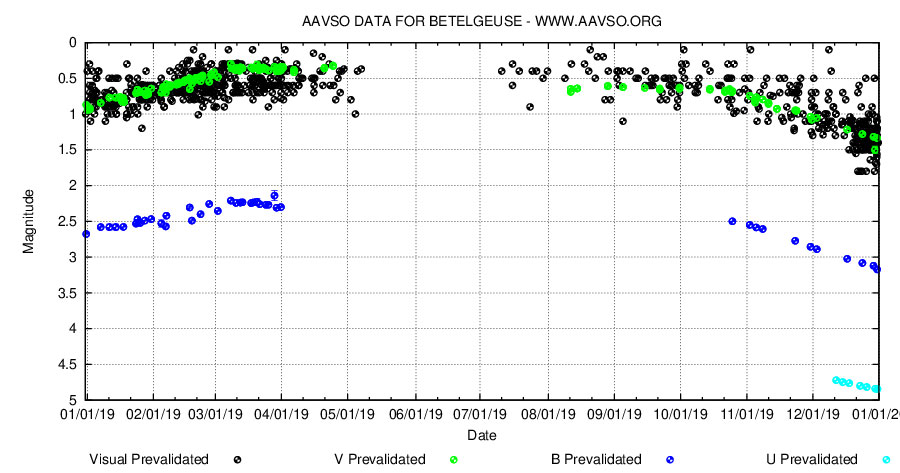
Explanation: Why are these meteor trails nearly parallel ? Because they were all shed by the same space rock and so can be traced back to the same direction on the sky: the radiant of the Quadrantid Meteor Shower . This direction used to be toward the old constellation of Quadrans Muralis , hence the name Quadrantids, but when the International Astronomical Union formulated its list of modern constellations in 1922, this constellation did not make the list . Even though the meteors are now considered to originate from the recognized constellation of Bootes , the old name stuck. Regardless of the designation, every January the Earth moves through a dust stream and bits of this dust glow as meteors as they heat up in Earth's atmosphere . The featured image composite was taken on January 4 with a picturesque snowy Slovakia n landscape in the foreground, and a deep-exposure sky prominently featuring the constellation Orion in the background. The red star Betelgeuse appears unusually dim -- its fading over the past few months is being tracked by astronomers .
Teachers: APOD in the Classroom
| Date | January 20, 2020 |
|---|---|
| Credit | Image Credit & Copyright: Petr Horálek |
| Authors & editors: | Robert Nemiroff (MTU) & Jerry Bonnell (UMCP) |
| A service of: |
ASD at NASA / GSFC, NASA Science Activation & Michigan Tech. U. |