























APOD
Astronomy Picture of the Day
Discover the cosmos! Each day a different image or photograph of our fascinating universe is featured, along with a brief explanation written by a professional astronomer.

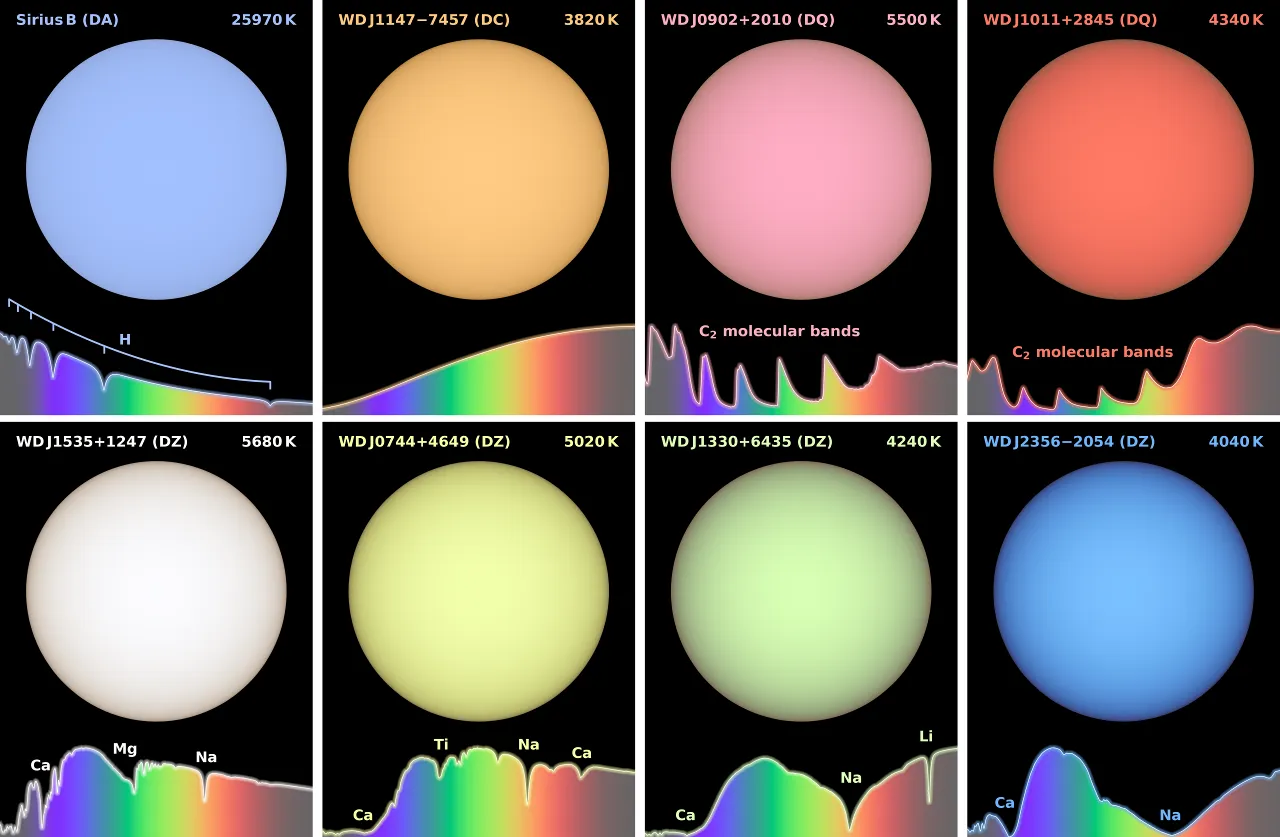
The First Green Star, WD J1330+6435
Explanation: Star light, star bright: is there a green star out tonight? Other than the Sun, all stars are so far from Earth that they appear as points in the sky. They are mostly white, but sometimes noticeably red or blue. This color typically relates to the temperature: blue stars are hotter than red stars. What about other colors? The featured image is an illustration showing WD J1330+6435, a white dwarf star, surrounded by an accretion disk with gas and rocks orbiting the star. White dwarfs are small, faint stars that are left over when a star like the Sun exhausts its nuclear fuel. Astronomers recently found that some white dwarf stars, despite their name, would appear yellow, green, cyan, pink, or purple. In these cases, trace elements that were accreted to these stars interact with the stellar atmosphere and shift its normally white color. But, alas! I wish I may, I wish I might, but they are too faint to see tonight...
Tomorrow's picture: eye in the sky
| Date | October 22, 2026 |
|---|---|
| Credit & Copyright | Mark A. Garlick/University of Warwick |
| Authors & editors: | Cecilia Chirenti, Robert Nemiroff, Jerry Bonnell, Keighley Rockcliffe |
| A service of: |
ASD at NASA / GSFC, NASA Science Activation & Michigan Tech. U. |