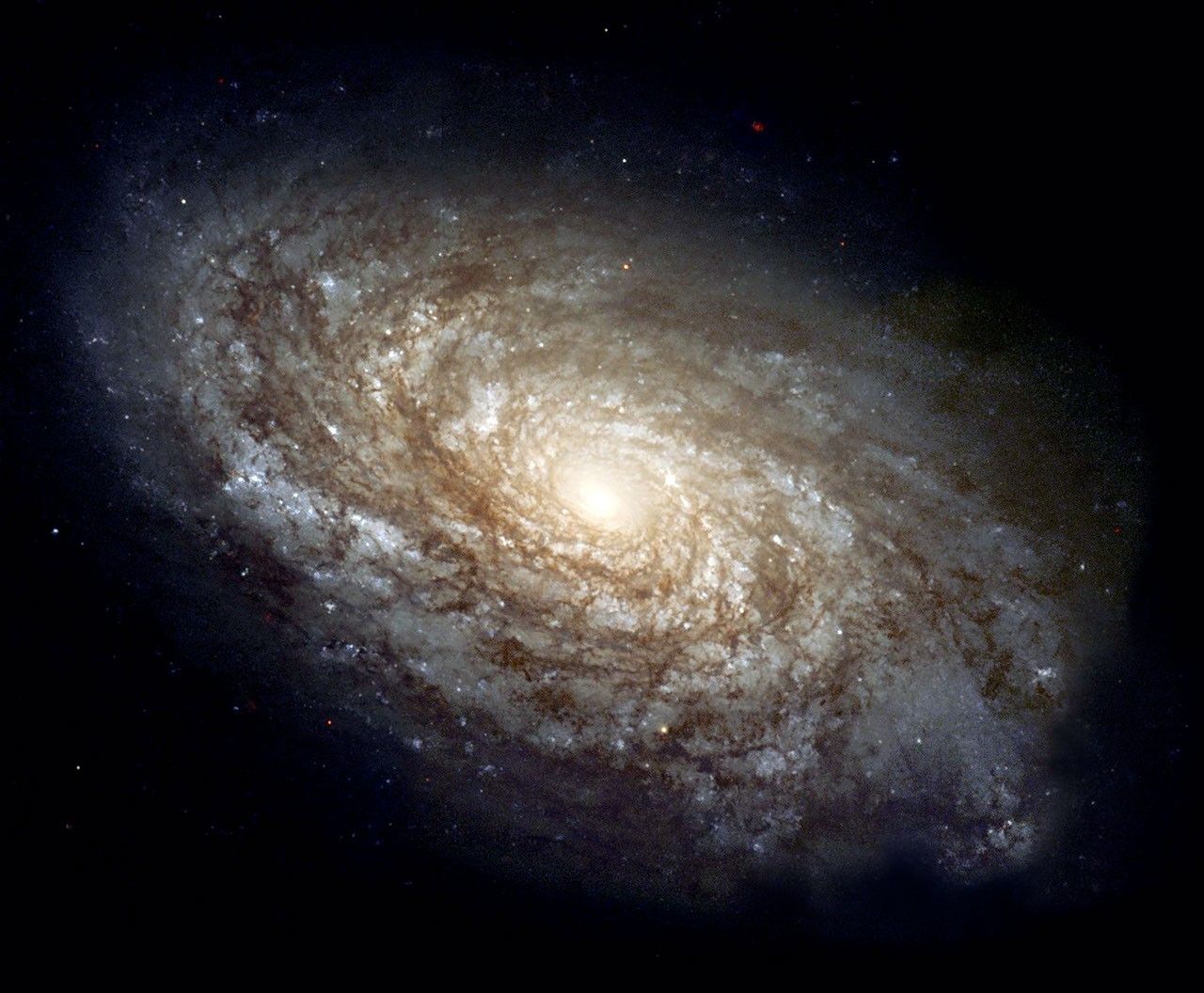









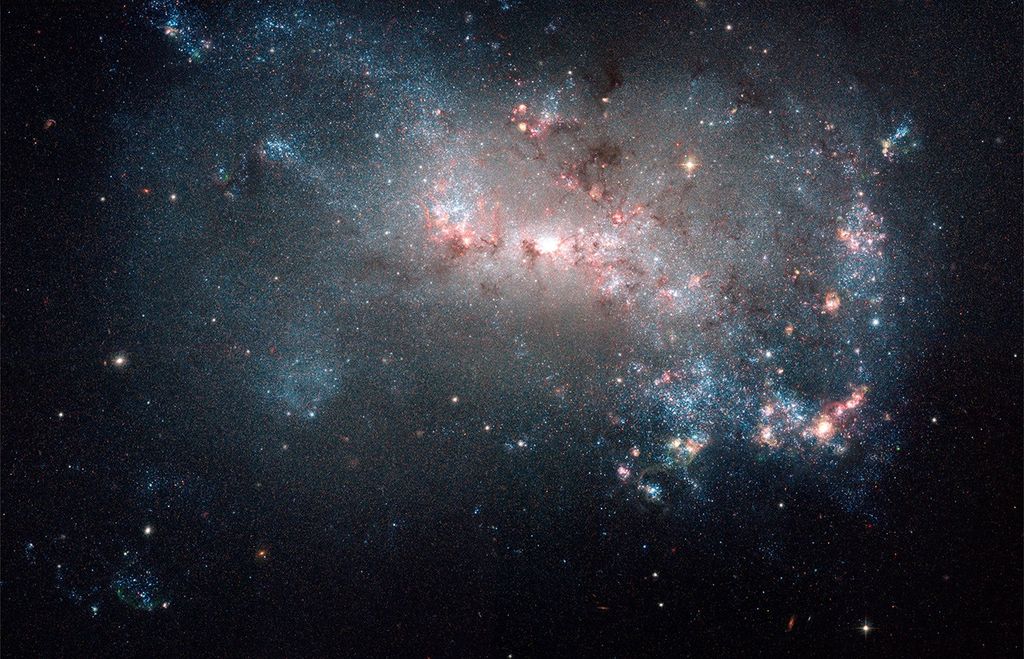













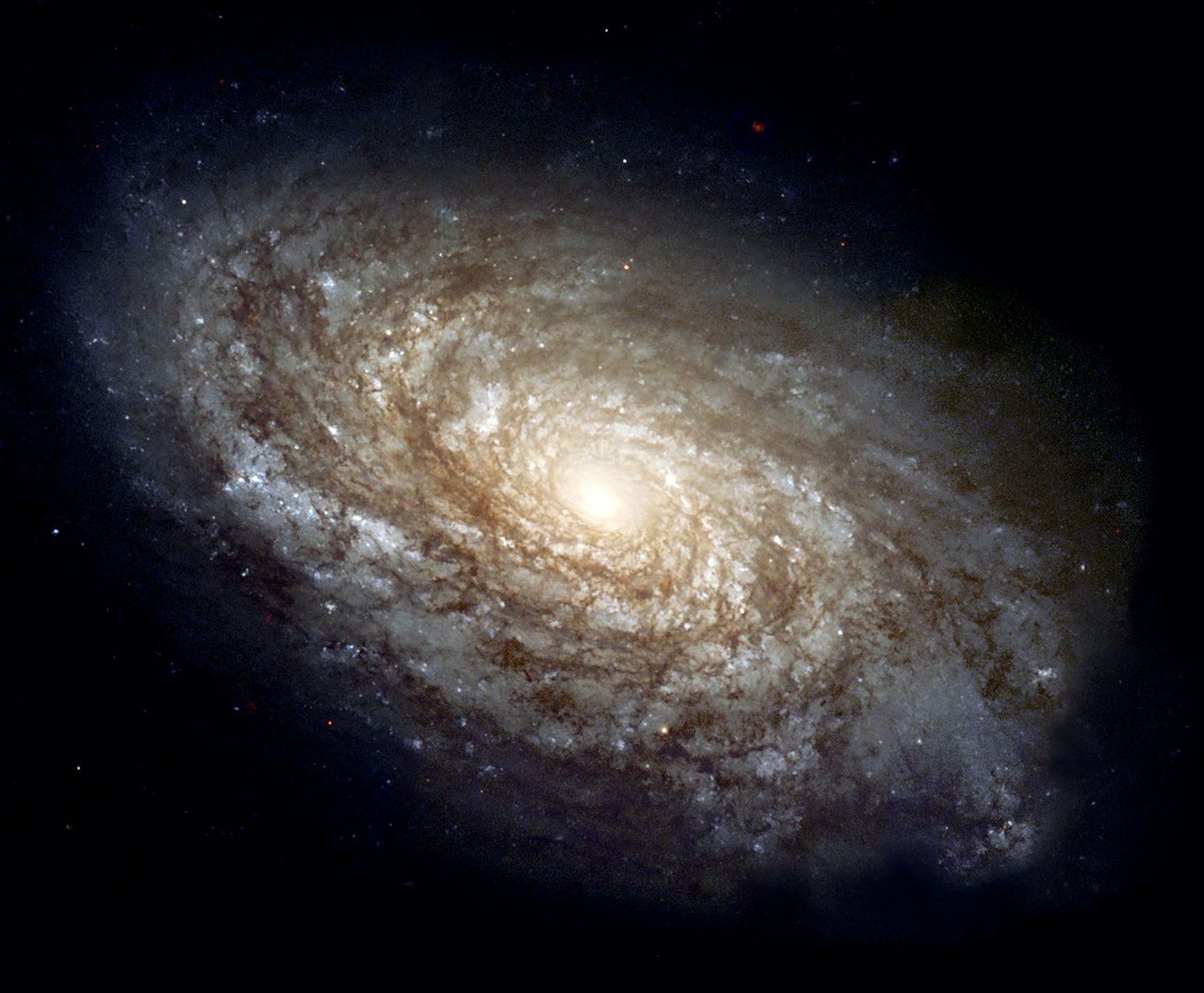
Dusty Spiral Galaxy NGC 4414
This picture of NGC 4414 shows that the central regions of the galaxy, as is typical of most spirals, contain primarily older, yellow and red stars. The outer spiral arms are considerably bluer due to ongoing formation of young, blue stars. The arms are also very rich in clouds of interstellar dust, seen as dark patches and streaks silhouetted against the starlight. This galaxy was used to help determine the overall knowledge of the rate of expansion of the universe. The distance to NGC 4414, 19.1 megaparsecs or about 60 million light-years, along with similarly determined distances to other nearby galaxies, contributed to astronomers' understanding of the Hubble constant, the ratio of how fast galaxies are moving away from us to their distance from us. This astronomical value is used to determine distances, sizes, and the intrinsic brightnesses for many objects in our universe, as well as the age of the universe itself.
Image Credit: The Hubble Heritage Team (AURA/STScI/NASA)
- X
https://science.nasa.gov/image-detail/amf-2df232a1-5c02-46e0-92f3-e95a6e20aaf0/
Image CreditThe Hubble Heritage Team (AURA/STScI/NASA)
Size1730x1428px