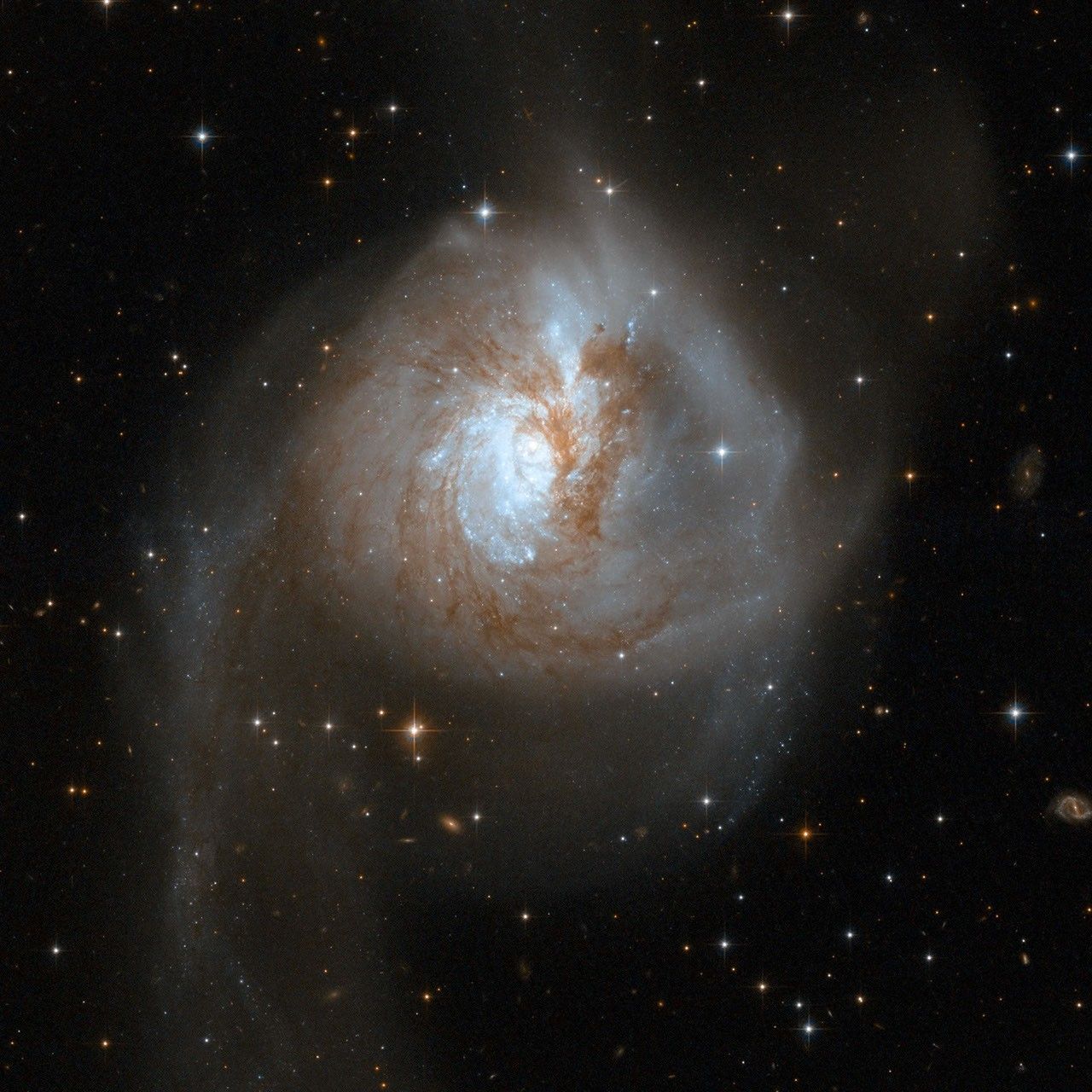















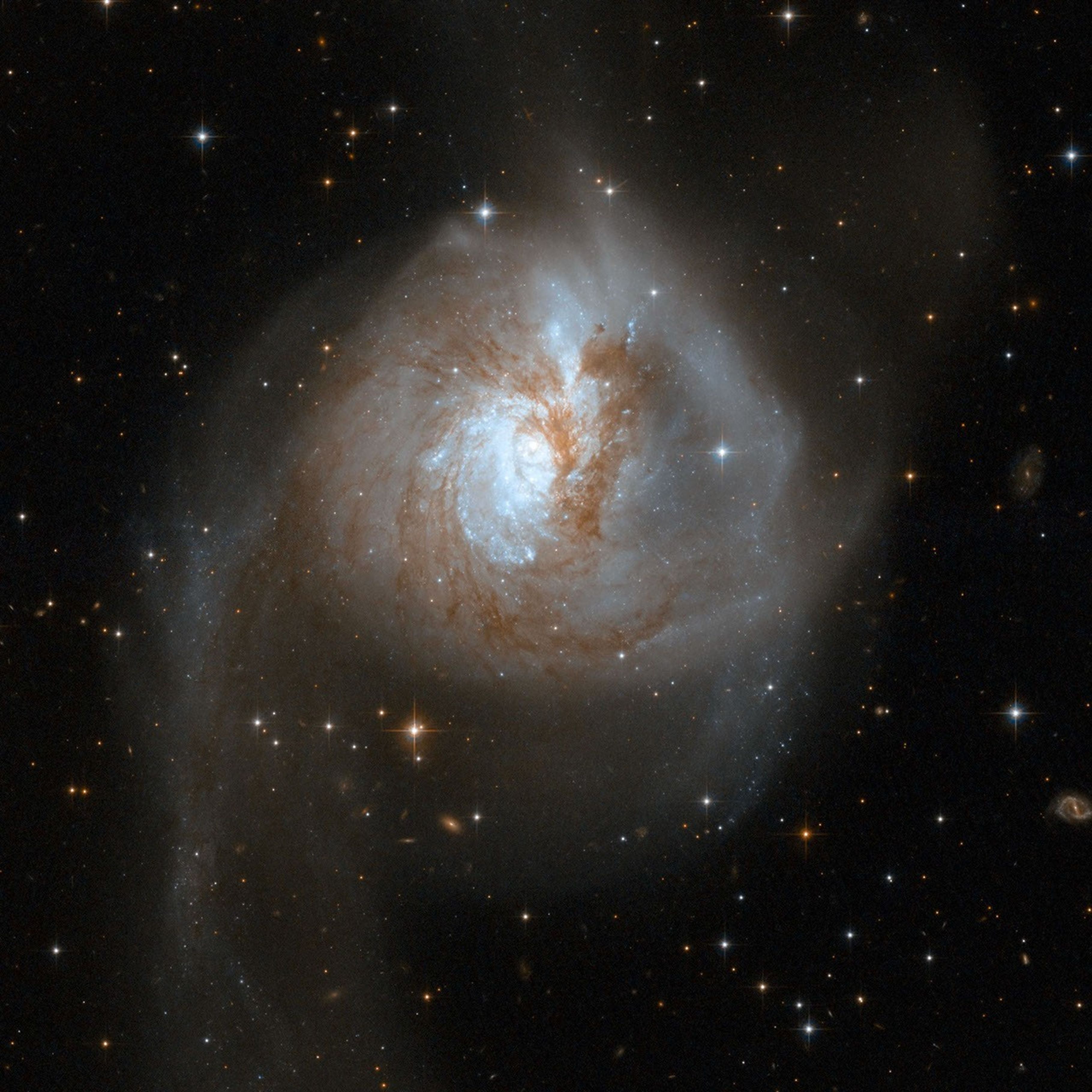
A Galactic Collision Site, NGC 3256
NGC 3256 is an unusually shaped galaxy found in the southern constellation Vela that is evidently the result of a collision of two separate galaxies some time ago. The galaxy lies approximately 100 million light-years distant and belongs to the Hydra-Centaurus supercluster complex. NGC 3256 is considered by astronomers to provide a nearby template for studying the properties of young star clusters in tidal tails. The system hides a double nucleus and a tangle of dust lanes in the central region. The tails are studded with a particularly high density of star clusters. The galaxy is also one of the most luminous galactic sources in the nearby universe, evidently home to copious amounts of dust and stars.
Image Credit: NASA, ESA, the Hubble Heritage Team (STScI/AURA)-ESA/Hubble Collaboration, and A. Evans (University of Virginia, Charlottesville/NRAO/Stony Brook University)
- X
https://science.nasa.gov/image-detail/amf-867c6a84-fc03-4756-8344-9971771113a4/
Image CreditNASA, ESA, the Hubble Heritage Team (STScI/AURA)-ESA/Hubble Collaboration, and A. Evans (University of Virginia, Charlottesville/NRAO/Stony Brook University)
Size3640x3640px