







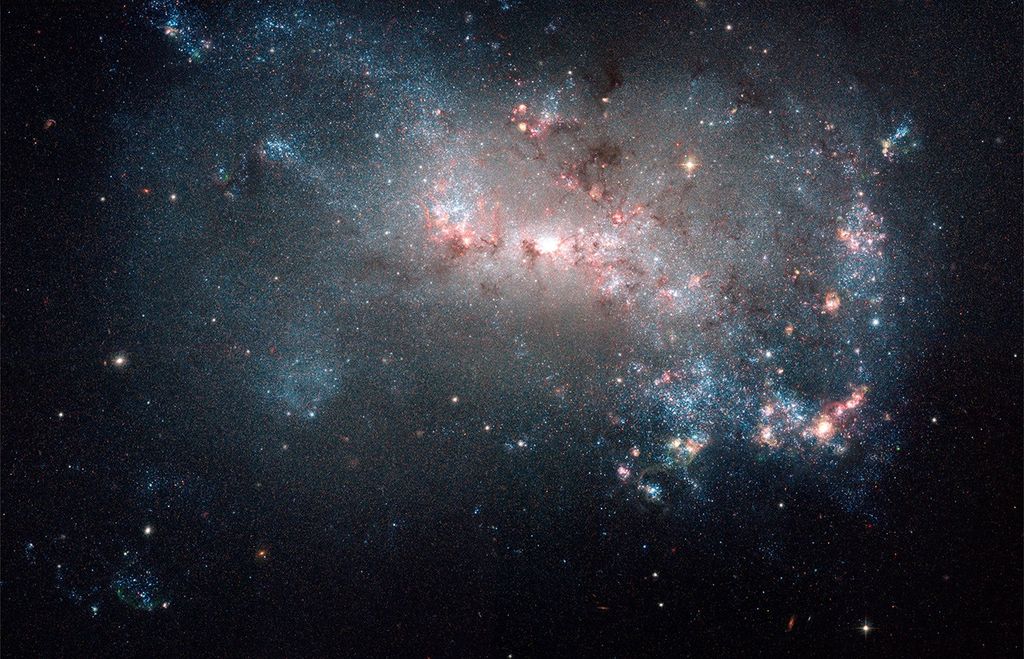












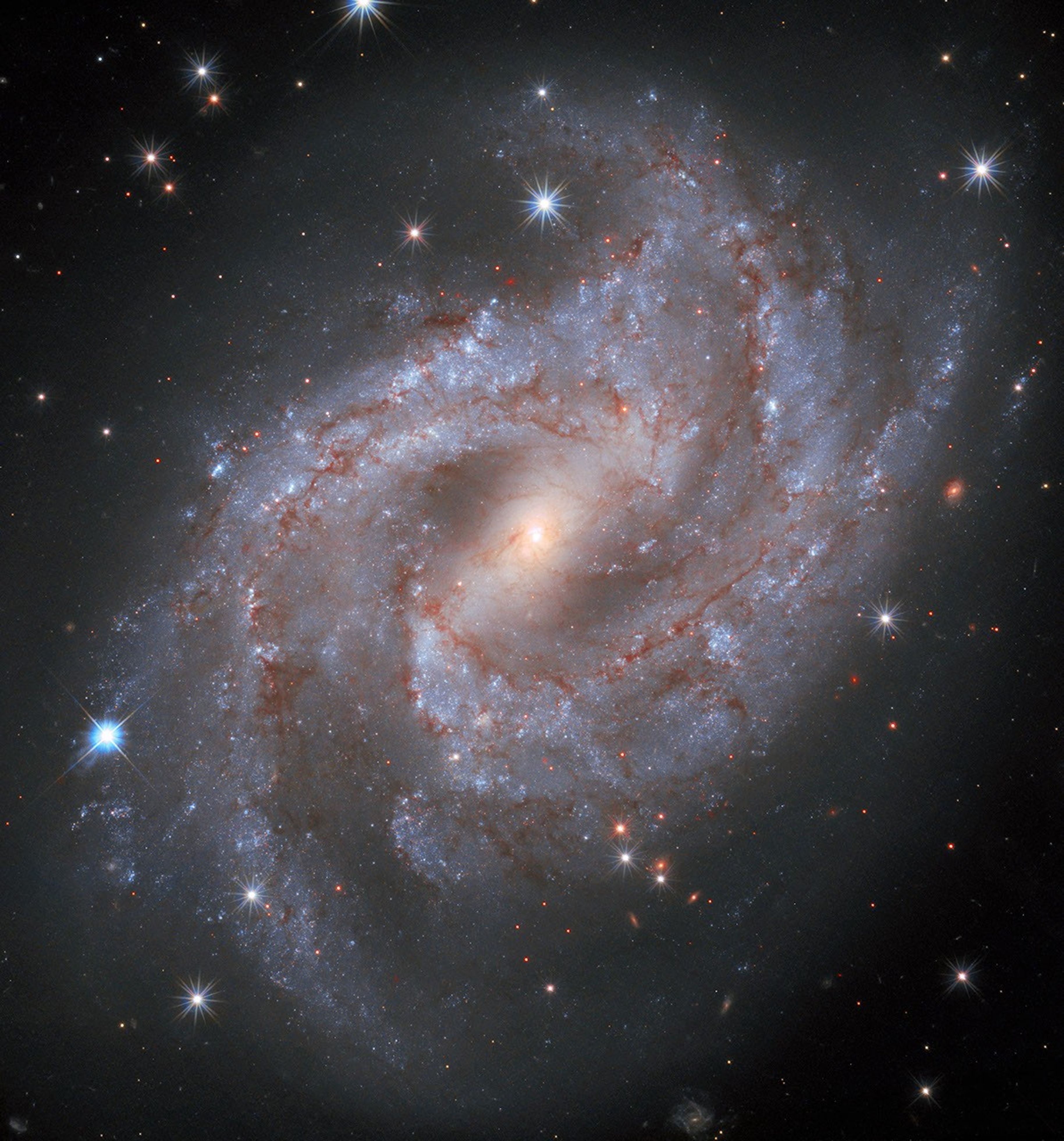
Galaxy NGC 2525
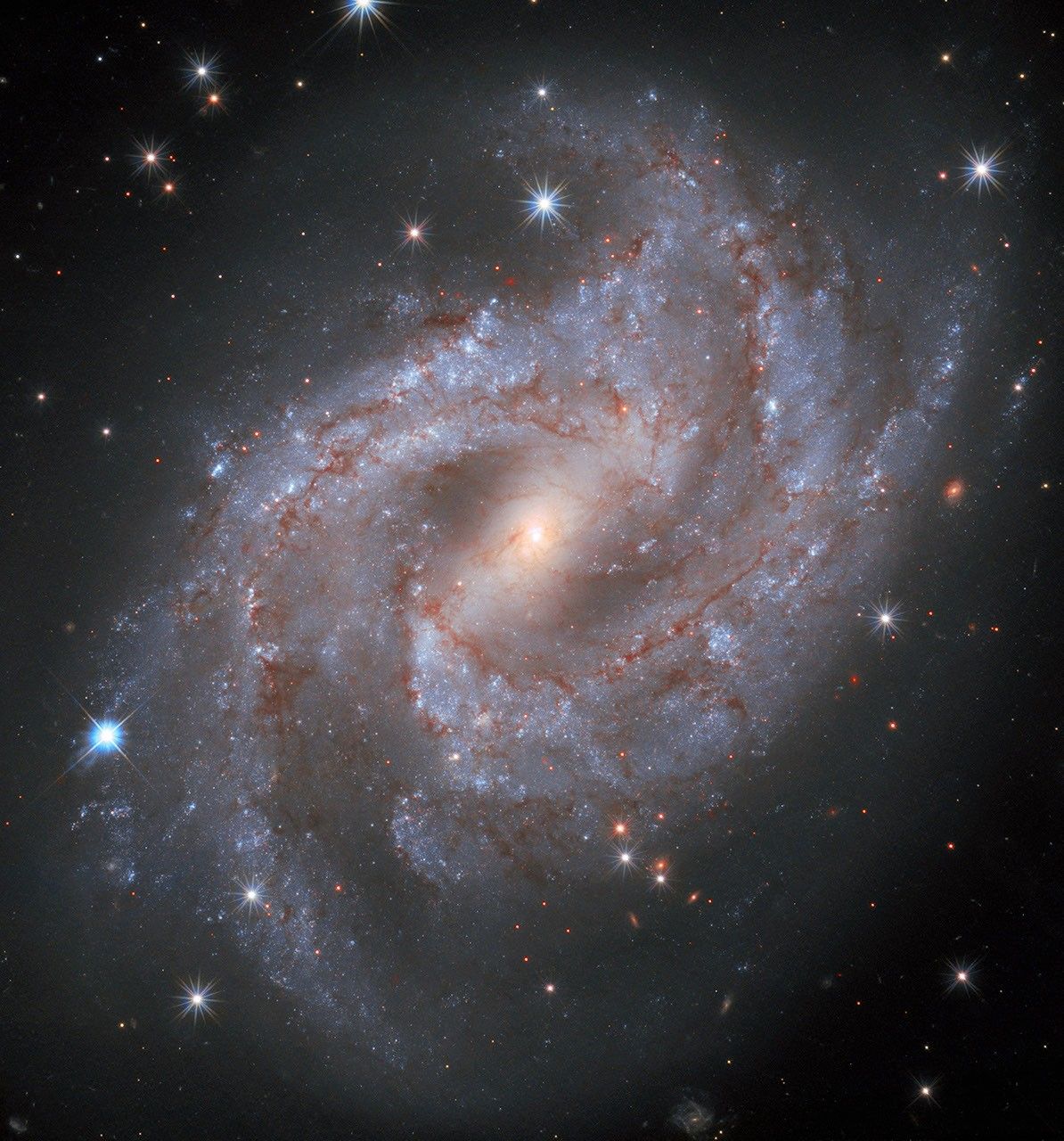
Pictured here is the captivating galaxy NGC 2525. Located nearly 70 million light-years from Earth, this galaxy is part of the constellation of Puppis in the southern hemisphere. Hubble observed this galaxy to capture the appearance of an exploding star, a supernova. Hubble began observing SN 2018gv in February 2018. Hubble astronomers were using the supernova as part of a program to precisely measure the expansion rate of the universe. The supernova serves as a milepost maker to measure galaxy distances, a fundamental value needed for measuring the expansion of space. The supernova appears as a blazing, bluish star located on the galaxy's outer edge in the lower left portion of the frame. It initially outshone the brightest stars in the galaxy before fading out of sight.
Image Credit: NASA, ESA, and A. Riess (STScI/JHU) and the SH0ES team; Acknowledgment: M. Zamani (ESA/Hubble)
- X
https://science.nasa.gov/image-detail/amf-a83aac57-10e7-4e3b-95a2-69a6abded710/
Image CreditNASA, ESA, and A. Riess (STScI/JHU) and the SH0ES team; Acknowledgment: M. Zamani (ESA/Hubble)
Size3657x3920px