









In the News

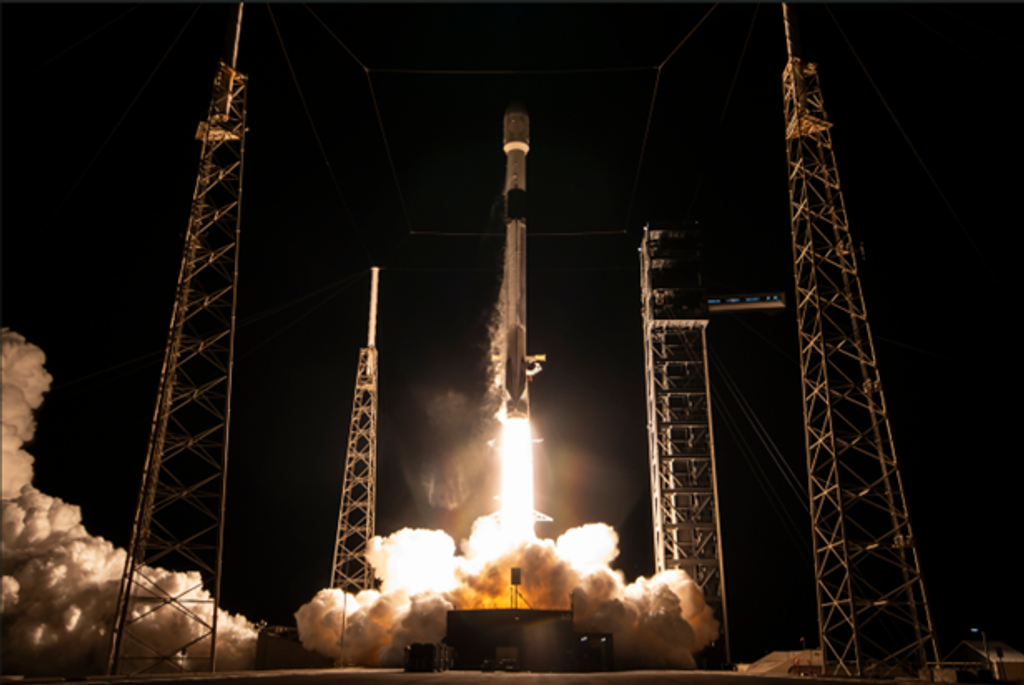
NASA PACE Launch with proof-of-concept polarimeter technology for AOS Sky
[06-Feb-2024] The PACE (Plankton, Aerosol, Cloud, ocean Ecosystem) mission will continue and improve NASA's 20-year record of satellite observations of global ocean biology, aerosols, and clouds. PACE will help us better understand how the ocean and atmosphere exchange carbon dioxide, measure key atmospheric variables associated with air quality and Earth's climate, and monitor ocean health, in part by studying phytoplankton, tiny plants and algae that sustain the marine food web.
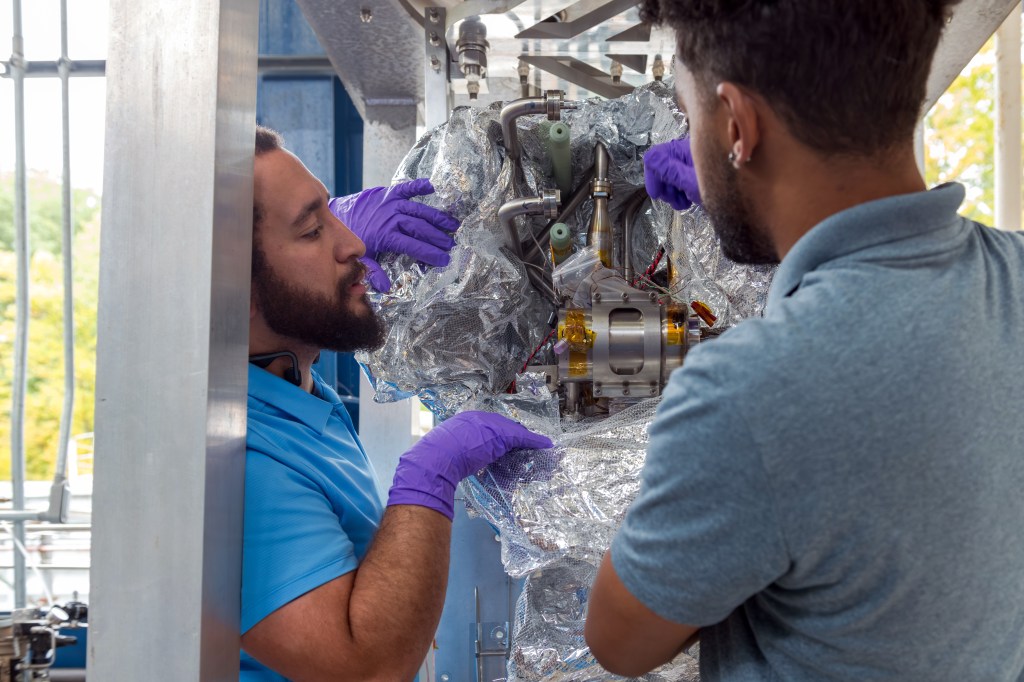
Two polarimeters – HARP2 and SPEXOne – on the PACE mission are a proof of concept for technology that will be on AOS-Sky. PACE's polarimeters also help advance the algorithms that will be used to analyze the AOS data.
Learn more: HARP2 | SPEXone | NASA PACE Mission
HAWC News
[28-Nov-2022] Addressing climate change with satellites: Canada will contribute to NASA's international Atmosphere Observing System (link below)
HAWC (High-altitude Aerosols, Water vapor and Clouds) is a planned Canadian mission that will provide critical data to support extreme weather prediction, climate modelling, and monitoring of disasters, such as volcanic eruptions, wildfires and extreme precipitation. HAWC consists of three innovative Canadian instruments and a Canadian satellite that will be part of the international NASA-led Atmosphere Observing System (AOS). Click for details
Study Contract Proposals Received
[19-Nov-2021]
ACCP Project Authorization Letter (PAL) Received
[23-May-2021] The ACCP Project Authorization Letter (PAL) has been received. This authorization signifies the transition from Project Formulation to Implementation.
ACCP Architecture Recommendation Review Released
[05-Feb-2021] The ACCP Architecture Recommendation Review has been released. These architectures provide multiple breakthrough technologies that will answer fundamental questions about how microscopic particles interact in the atmosphere to fuel severe storms, impact air quality, and influence our changing climate. View PDF
Concurrent Design Center Studies #1-#4 Completed
[20-Aug-2020] These studies provided Large, EELV Secondary Payload Adapter (ESPA) Grande, and ESPA Class Spacecraft designs used to accommodate ACCP instrument suites of various sizes and capabilities and the accommodation of a Japan Aerospace Exploration Agency (JAXA) Ku Band Doppler Radar. The two remaining Collaborative Design Center Studies will focus on Mission Operations and Ground System Architectures including Science Data Processing, Distribution and Archival (July 2020) and Refinement of Architectures (October 2020).
Architecture Construction Phase Nearly Complete
[03-Aug-2020] The Architecture Construction Phase is nearly complete (Architecture Freeze Planned for September 2020).
2017 Decadal Survey Released
[05-Jan-2018] On Jan. 5, 2018, at the request of NASA, the National Oceanic and Atmospheric Administration and the U.S. Geological Survey, the Committee on the Decadal Survey for Earth Science and Applications from Space of the National Academies of Sciences, Engineering and Medicine Space Studies Board, Division on Engineering and Physical Sciences released the 2017 Decadal Survey, Thriving on Our Changing Planet: A Decadal Strategy for Earth Observations from Space.
The goal is to define science objectives for the ACCP Designated Observable observing systems and observing system approaches and architectures that could achieve the science objectives. This study leverages results from historical studies and investments such as the Aerosol-Cloud-ocean Ecosystems study, those from existing and proposed Earth Venture concepts, analyses already conducted on data from past field experiments, and recent advances of modeling systems and Observing System Simulation Experiments. More at NASA Science