






















Mission Overview
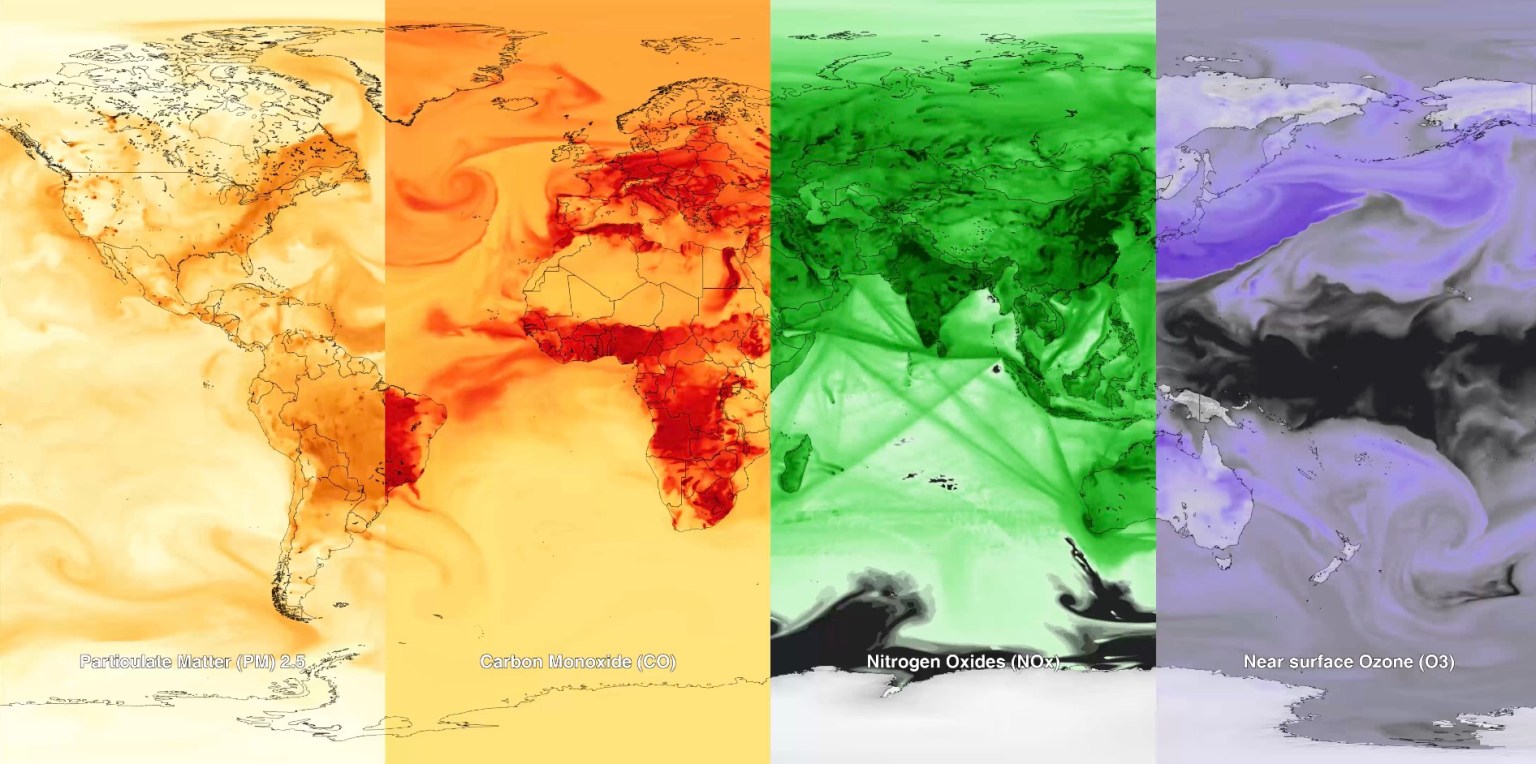
The Atmosphere Observing System (AOS) will provide measurements that are critical for clarifying aerosol and cloud processes that drive extreme weather and climate change.

A dedicated team from several NASA facilities and international partner organizations will develop instruments, build and launch spacecraft, coordinate suborbital instruments and operate the new observing system. AOS is one component of the Earth System Observatory designed by NASA to provide key information to guide efforts related to climate change, natural hazard mitigation, fighting forest fires, and improving real-time agricultural processes. AOS plans are under consideration by NASA and the international partner governments.
Mission Timeline
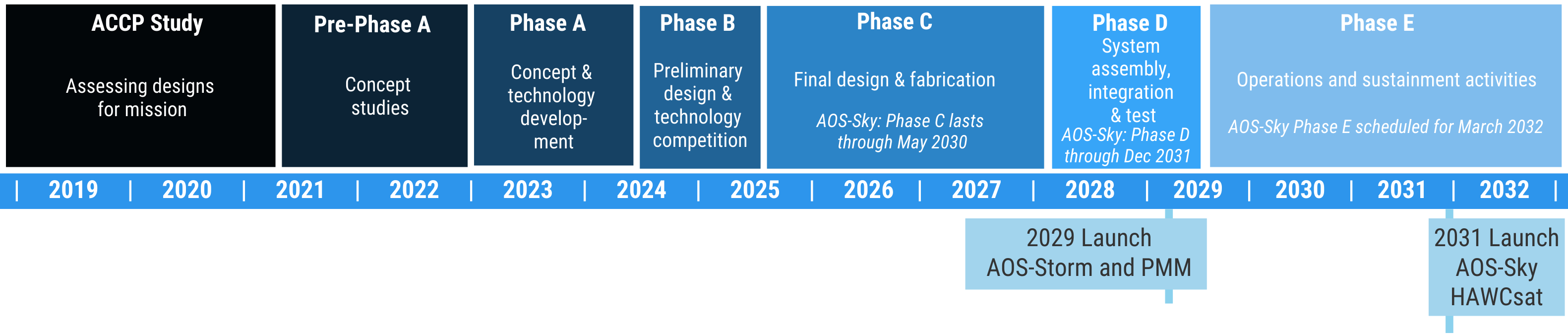
A high-level overview of the AOS mission timeline is presented here. The AOS mission was preceded by the Aerosols, Cloud, Convection and Precipitation (ACCP) Study. The nominal phases shown apply to AOS satellites in an inclined orbit (AOS-Storm). The timing of mission phases associated with the polar AOS satellite (AOS-Sky) are noted in italics.
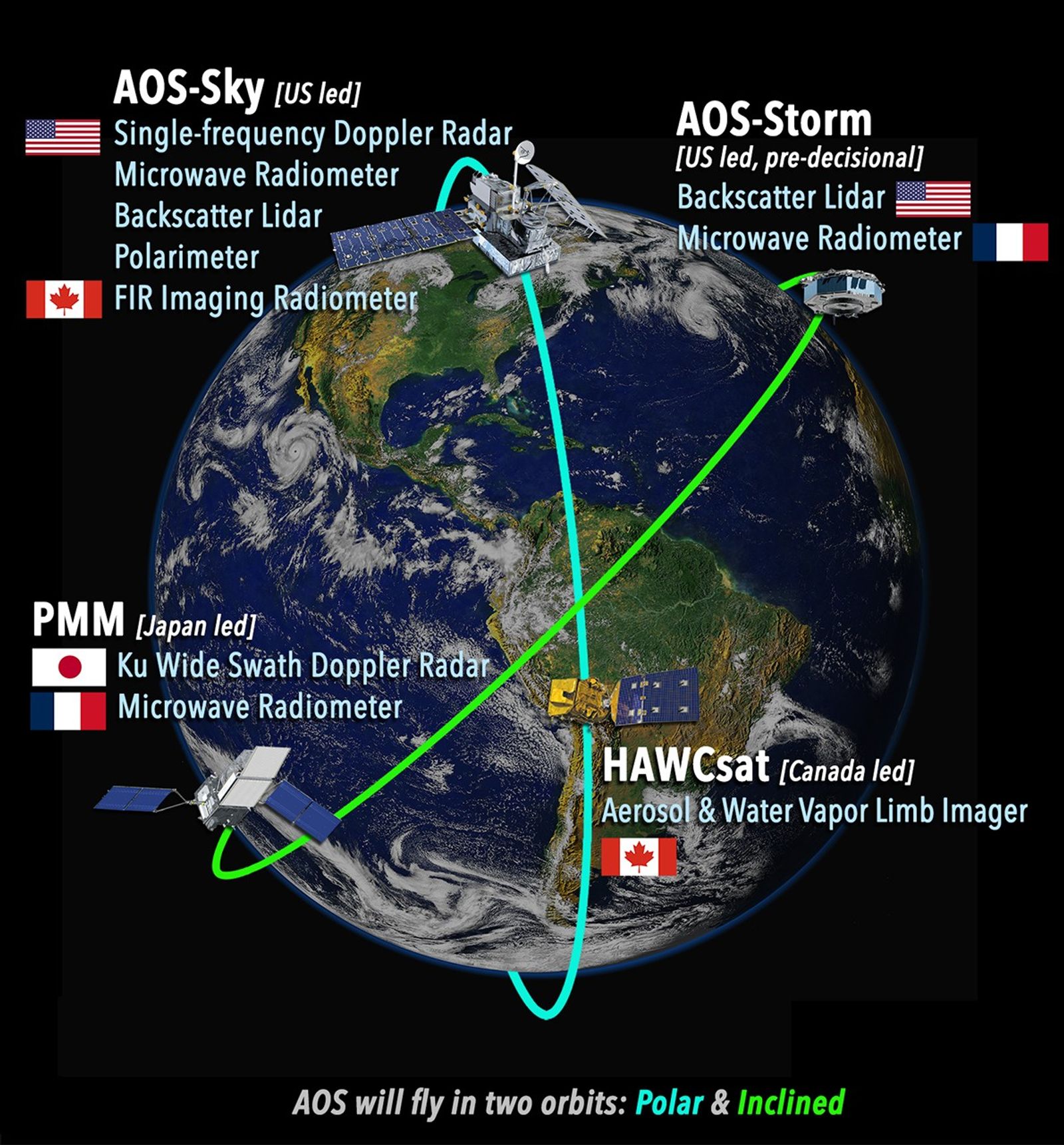
Spacecraft and Instruments
NASA Earth System Observatory
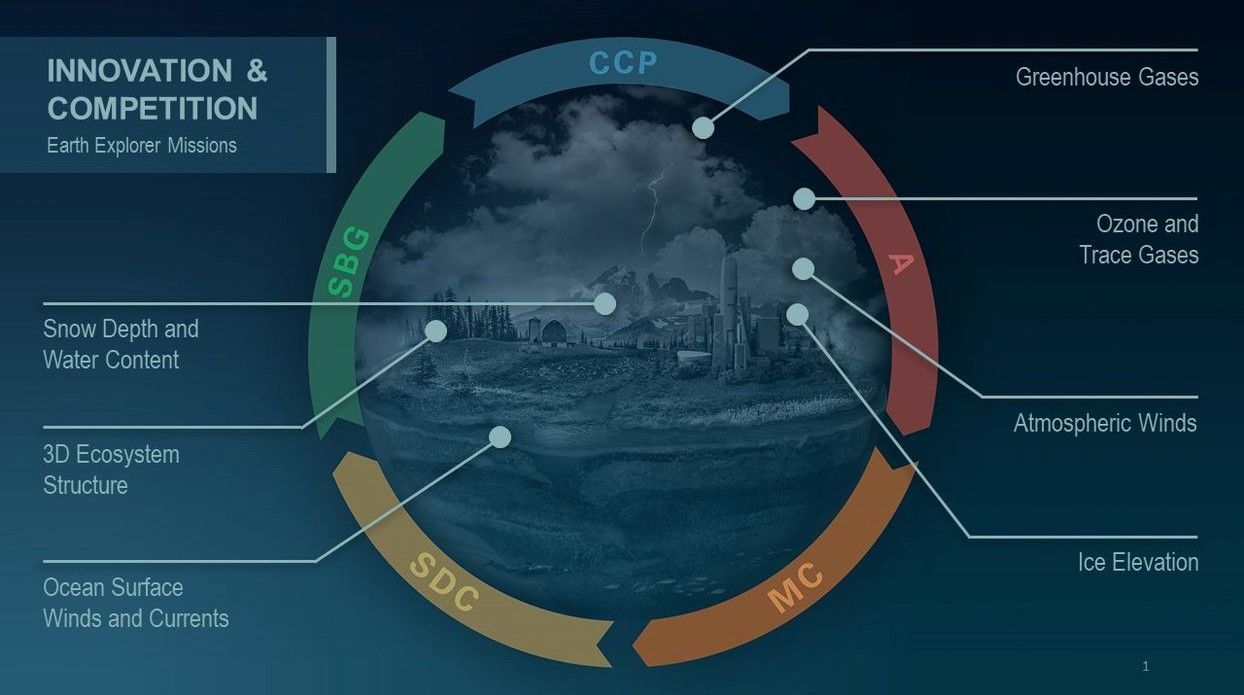
Areas of focus for core of the Earth System Observatory include:
Aerosols: Answering the critical question of how aerosols affect the global energy balance, a key source of uncertainty in predicting climate change.
Clouds, Convection, and Precipitation: Tackling the largest sources of uncertainty in future projections of climate change, as well as improved understanding and prediction of convective storms and severe weather.
Mass Change: Providing drought assessment and forecasting, associated planning for water use for agriculture, as well as supporting natural hazard response.
Surface Biology and Geology: Understanding climate changes that impact food and agriculture, habitation, and natural resources, by answering open questions about the fluxes of carbon, water, nutrients, and energy within and between ecosystems and the atmosphere, the ocean, and the Earth.
Surface Deformation and Change: Quantifying models of sea-level and landscape change driven by climate change, hazard forecasts, and disaster impact assessments, including dynamics of earthquakes, volcanoes, landslides, glaciers, groundwater, and Earth's interior.
Once the core missions of the Earth System Observatory (AOS, Mass Change, Surface Biology and Geology and Surface Deformation and Change) are established, NASA will augment the core with a new class of mission, the Earth Explorers, to make additional high-priority observations and encourage innovative solutions through competitive selection at the mission level.
Mission Ops & Ground Systems
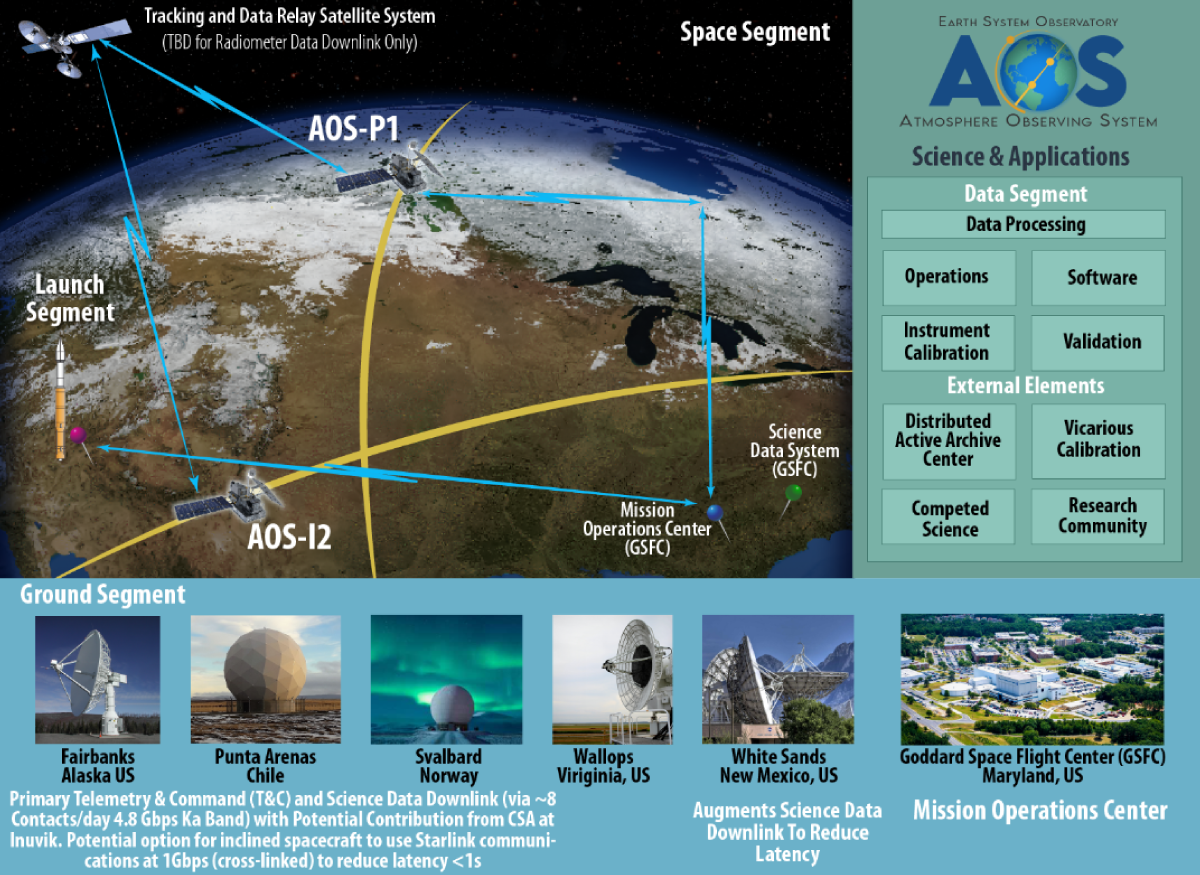
An example of typical NASA earth science mission elements including launch, space, ground, and science data segments. These work together to control earth-orbiting satellites, upload / download information, and ensure that high-quality data are available to the science community. Notional and subject to change pending future competition.
Thriving on Our Changing Planet
A Decadal Strategy for Earth Observation from Space
Go to Publication