



















MMX
Martian Moons eXploration
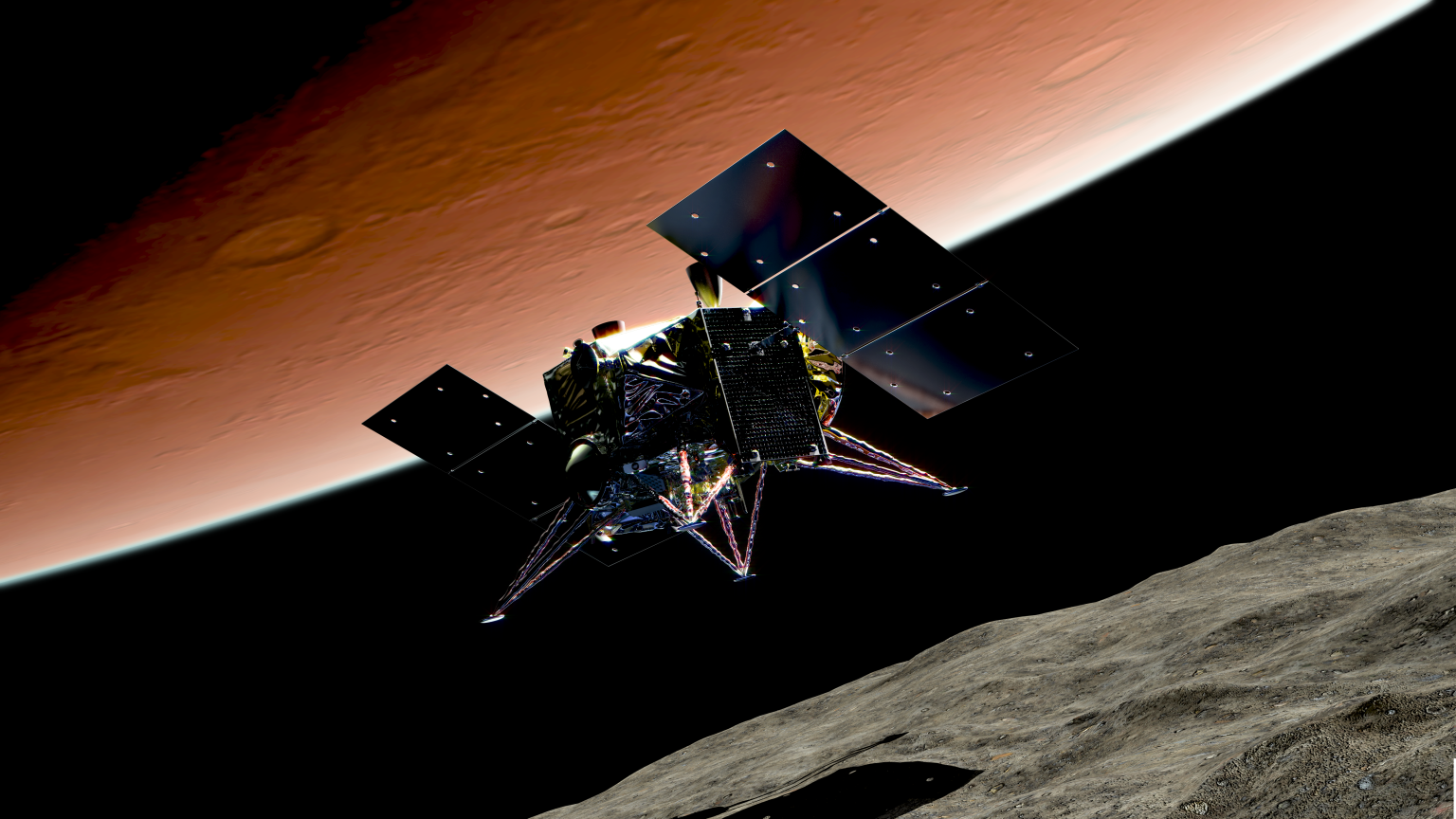
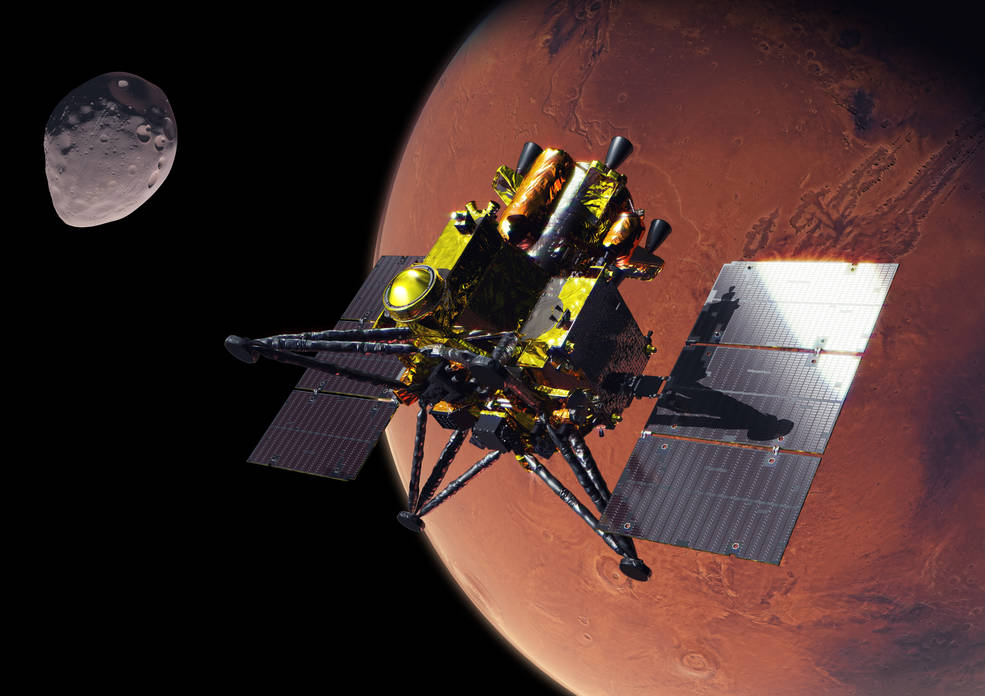
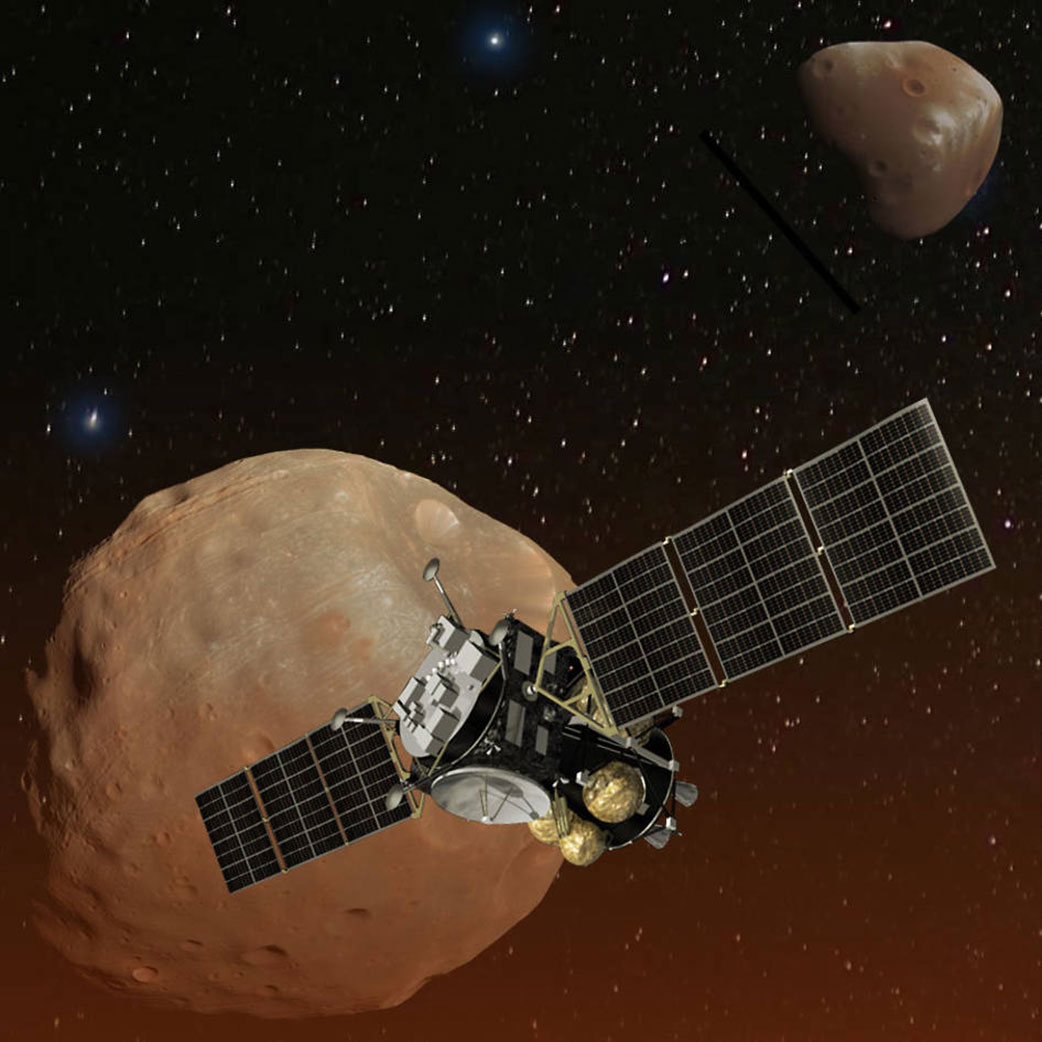
NASA’s Mars-moon Exploration with Gamma Ray and Neutrons (MEGANE) instrument will play a major role in the MMX mission, which aims to characterize and determine the origin of Mars’ moons, Phobos and Deimos, and deliver a sample from Phobos to Earth.
Scientists suspect the asteroid-sized bodies either are remnants of an ancient collision between Mars and a large impactor or are themselves asteroids captured by Mars’ gravity. By measuring the energies of neutrons and gamma rays emitted from the surface of Phobos, MEGANE will let MMX “see” the elemental composition of the moon’s surface and help peg the likely origin of the moon. MEGANE was developed by the Johns Hopkins Applied Physics Laboratory (APL) in Laurel, Maryland, in collaboration with colleagues from Lawrence Livermore National Laboratory (LLNL) in California.
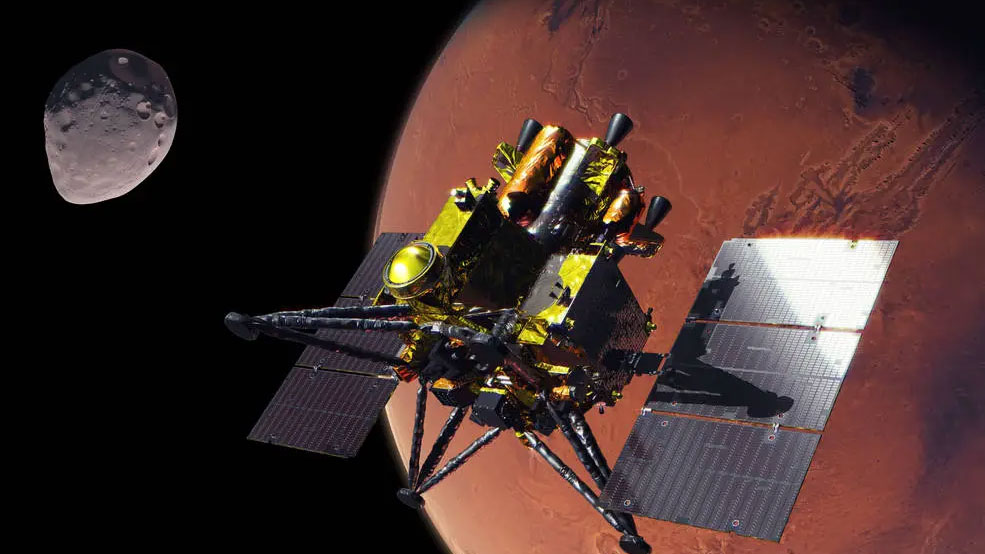
| Goals | Japan's MMX (Martian Moons eXploration) will study Mars' small moons Phobos and Deimos, collect a sample of one of them and return it to Earth. |
| Proposed Launch | Oct. 20, 2026 |
| Science Targets | Phobos, Deimos |
| Types | Orbiter, Lander, Sample Return |
| Agency | Japan |
| Alternate Names | https://www.mmx.jaxa.jp/en/ |