












Coronagraph Instrument testing and performance evaluation in single- and binary star modes
Ruslan Belikov / NASA – Ames Research Center, PI
Eduardo Bendek / Jet Propulsion Laboratory, Institutional PI
Dan Sirbu / NASA – Ames Research Center, Co-I
We propose to assist the Roman Coronagraph Instrument team with laboratory testing, as well as performance predictions, in both single as well as multi-star modes. The main objectives of this proposal are to: (1) gain even greater confidence in reaching the Threshold Technology Requirement (TTR); (2) advance performance capability and identify opportunities beyond TTR, especially ones that are enabled by the multi-star contributed mode. In order to achieve these objectives, our work will consist of three inter-related parts: pure single-star mode; MSWC-assisted single star mode; and multi-star mode. We describe these in what follows.
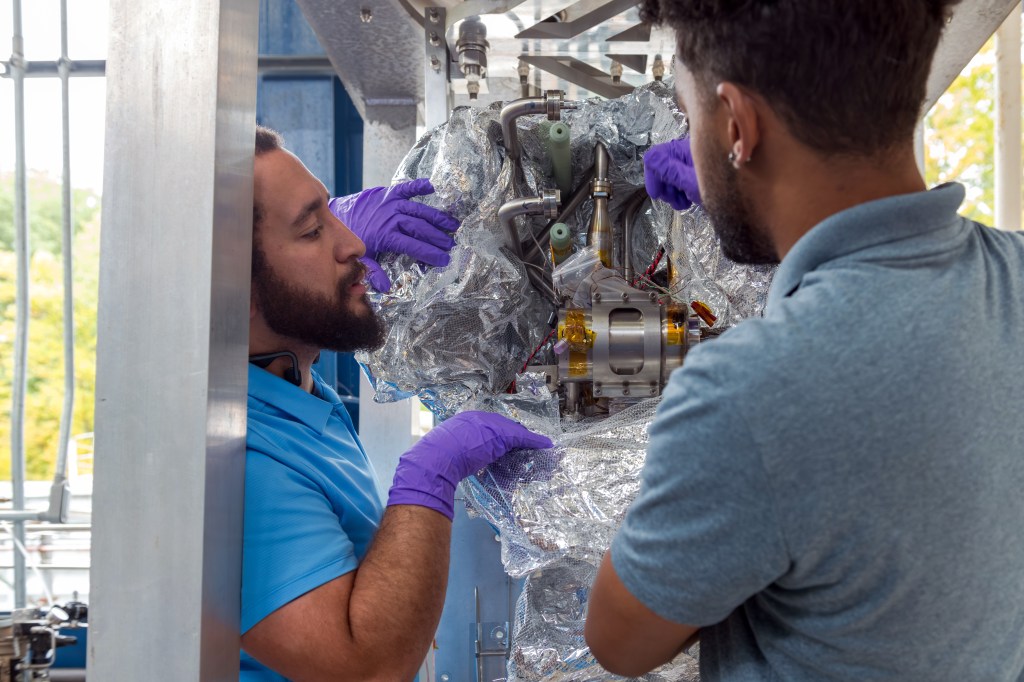
(1) We will work with the Roman Coronagraph Instrument team to test and advance the performance of the pure single star mode (on the OMC test bench, or the new planned bench for the flight instrument). In particular, we will assist with testing and optimizing baseline single-star algorithms, finding limiting factors, and gaining a better overall understanding of technical subtleties of operating the Coronagraph Instrument. In addition, we will contribute computation efficiency improvements based on algorithms we’ve developed, such as semi-analytical approximations (e.g. small-star approximation), zoomFFT, etc. The exact details of this work are meant to be flexible and adapt to the needs of the Roman Coronagraph Instrument test program. We will leverage our experience working with the OMC test bench over the past 2 years, both in HLC single-star mode, as well as SPC single- and multi-star modes.
(2) We will take advantage of synergies with our MSWC project to maximally benefit standard Coronagraph Instrument single-star modes. In particular, the Coronagraph Instrument models we developed for binary star sources are also useful for analyzing background sources contaminating single-star targets. This is valuable because the Coronagraph Instrument observation time is limited, so we cannot afford to spend time on targets that turn out to be contaminated by off-axis sources. The same models are also useful to more accurately assess the viability of binary stars as single-star mode targets. In addition, we will study several techniques that enhance single-star mode operation by using information or metrology provided by the MSWC mask. The basic idea is to test certain aspects of MSWC which happen to be applicable to single-star modes. This reduces the risk of TTR, supports several Coronagraph Instrument Technology Objectives, and helps enable performance beyond TTR.
(3) Finally, we will further develop and test the multi-star mode for flight observations, leveraging and complementing the work we are doing as part of the ISFM program, and in particular bring MSWC is as close to flight-ready as possible, not only in terms of performance, but also in terms of compatibility with flight software. We will coordinate with the Roman Coronagraph Instrument flight software team to develop MSWC code to flight-readiness. Also, in case the Coronagraph Instrument allows ground testing of instrument modes other than HLC, we plan to be ready to perform a test with flight hardware. We will also incorporate our findings and characterizations of flight components into MSWC mode performance estimates.
The primary significance of this work lies in gaining further confidence in achieving the Coronagraph Instrument TTR and Technology Objectives, which is of critical importance to ensure the Coronagraph Instrument success as a technology demo. In addition, the performance enhancements we described above have the potential to make the Coronagraph Instrument a powerhouse of exoplanet science in its own right.