






















XRISM’s Science
XRISM (X-ray Imaging and Spectroscopy Mission) is designed to transform our understanding about some of the universe’s hottest regions, largest structures, and objects with the strongest gravity. It uses high-resolution X-ray spectroscopy to determine the chemical makeup of distant objects, revealing new insights about the physics of the cosmos.
NASA's Goddard Space Flight Center
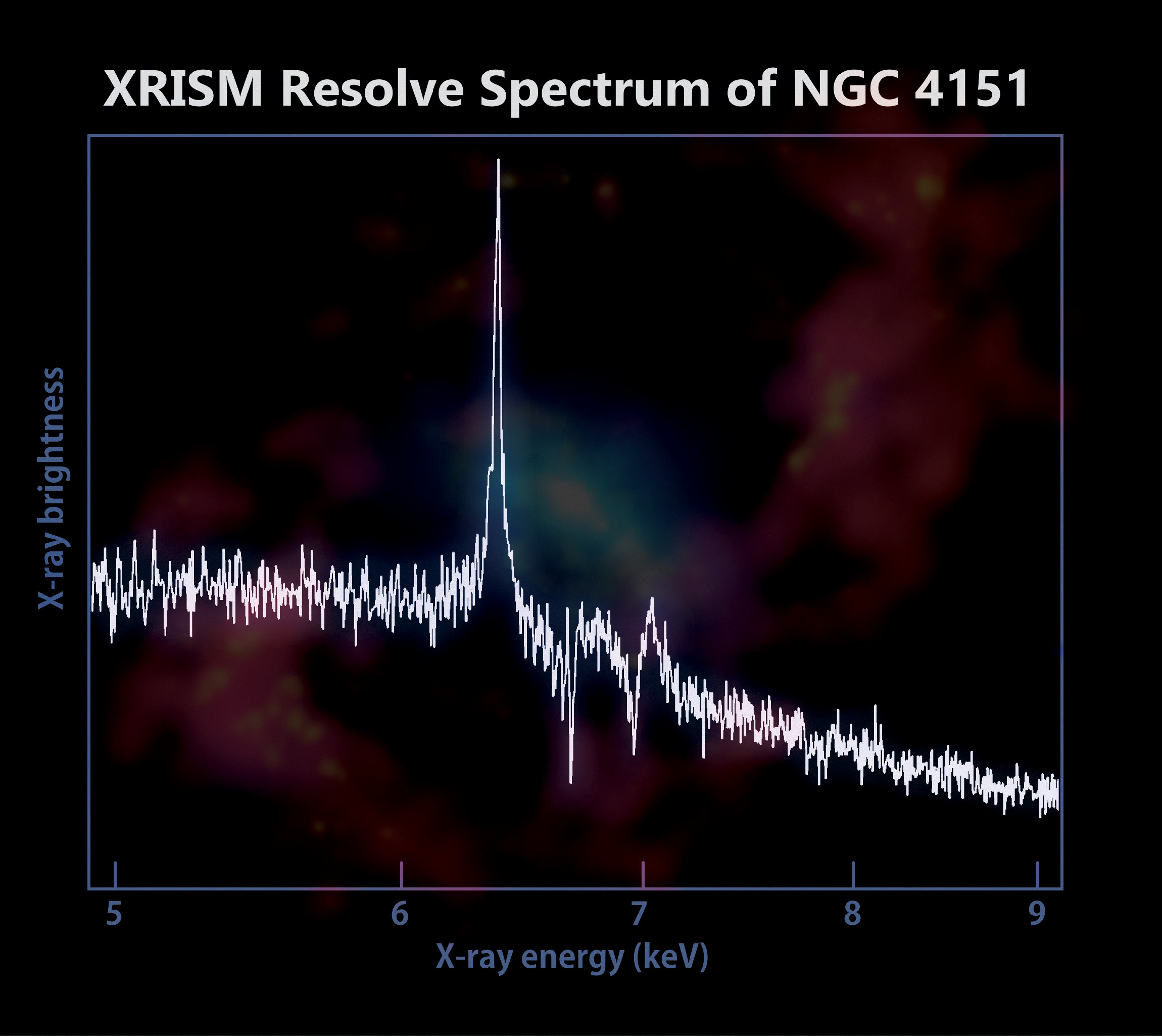
XRISM’s Resolve instrument builds up a picture of how bright a source is in various X-ray energies — the equivalent of colors of visible light — and lets astronomers identify chemical elements by their unique X-ray fingerprints, called spectra. XRISM’s other instrument, called Xtend, is an X-ray imager that performs simultaneous observations with Resolve, providing complementary information.
Recipe for the universe
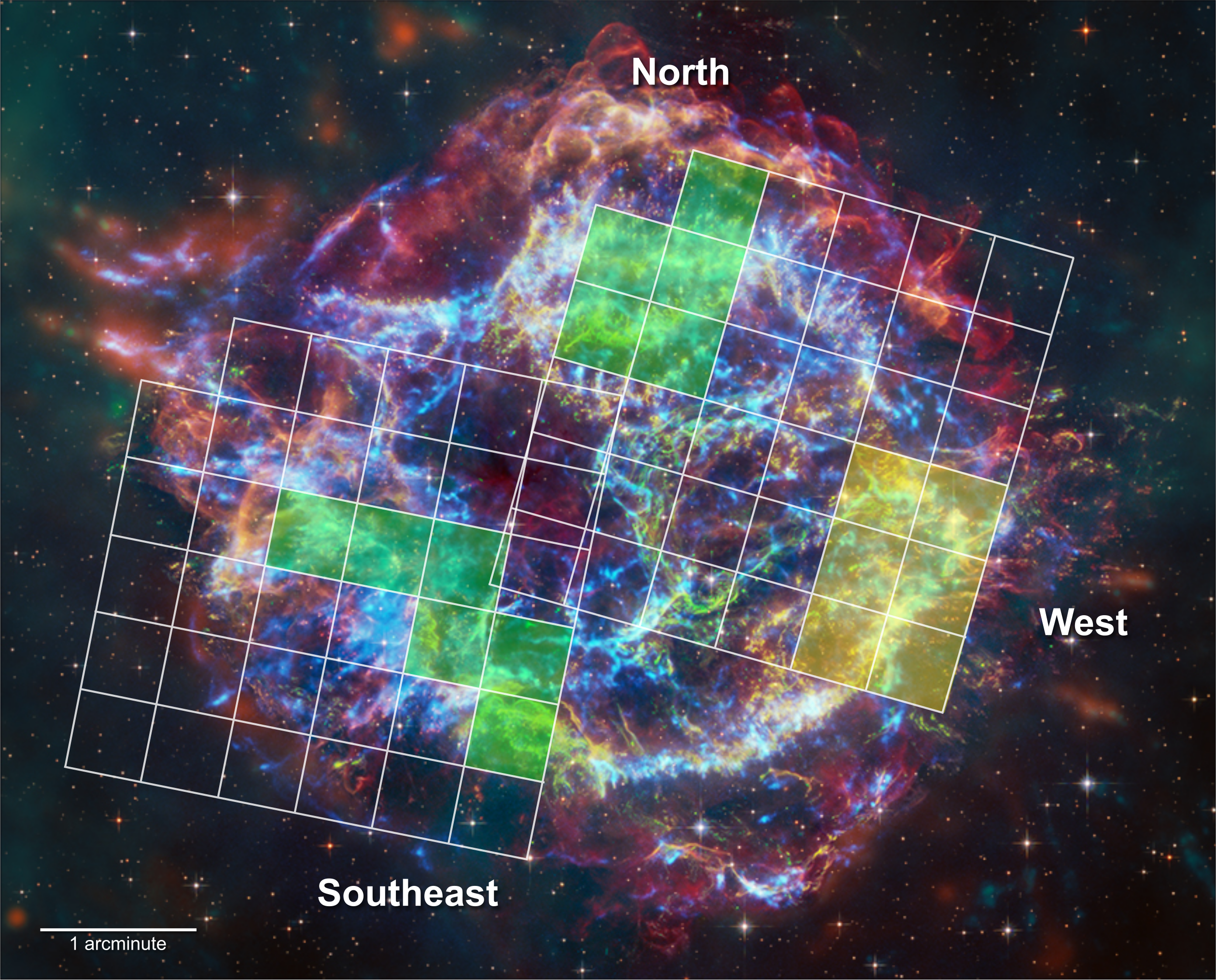
Stars that are at least eight times more massive than the Sun end their lives in enormous explosions called supernovae. When this happens, the outer layers of the star are expelled outward at high speed, where they will interact with the tenuous gas and dust that lies between the stars of a galaxy. This hot ball of glowing gas is called a supernova remnant and can emit X-rays.
The explosion releases the material forged inside the star during the main stages of its life. Elements like carbon, oxygen, magnesium, and iron are released into the star’s surroundings after being trapped inside for thousands to millions of years. Additional elements are created in the explosion itself. As this material expands into space, the new elements will mix with interstellar clouds, enriching the stellar factories that will produce future generations of stars and planets. XRISM’s spectra are so detailed that for the brightest supernova remnants, astronomers should be able to separate the material racing away from us on the far side of the expanding shell from that moving toward us on the near side. This will give scientists a detailed 3D picture of where elements are made and how they are distributed in the explosion.
Revealing cosmic history
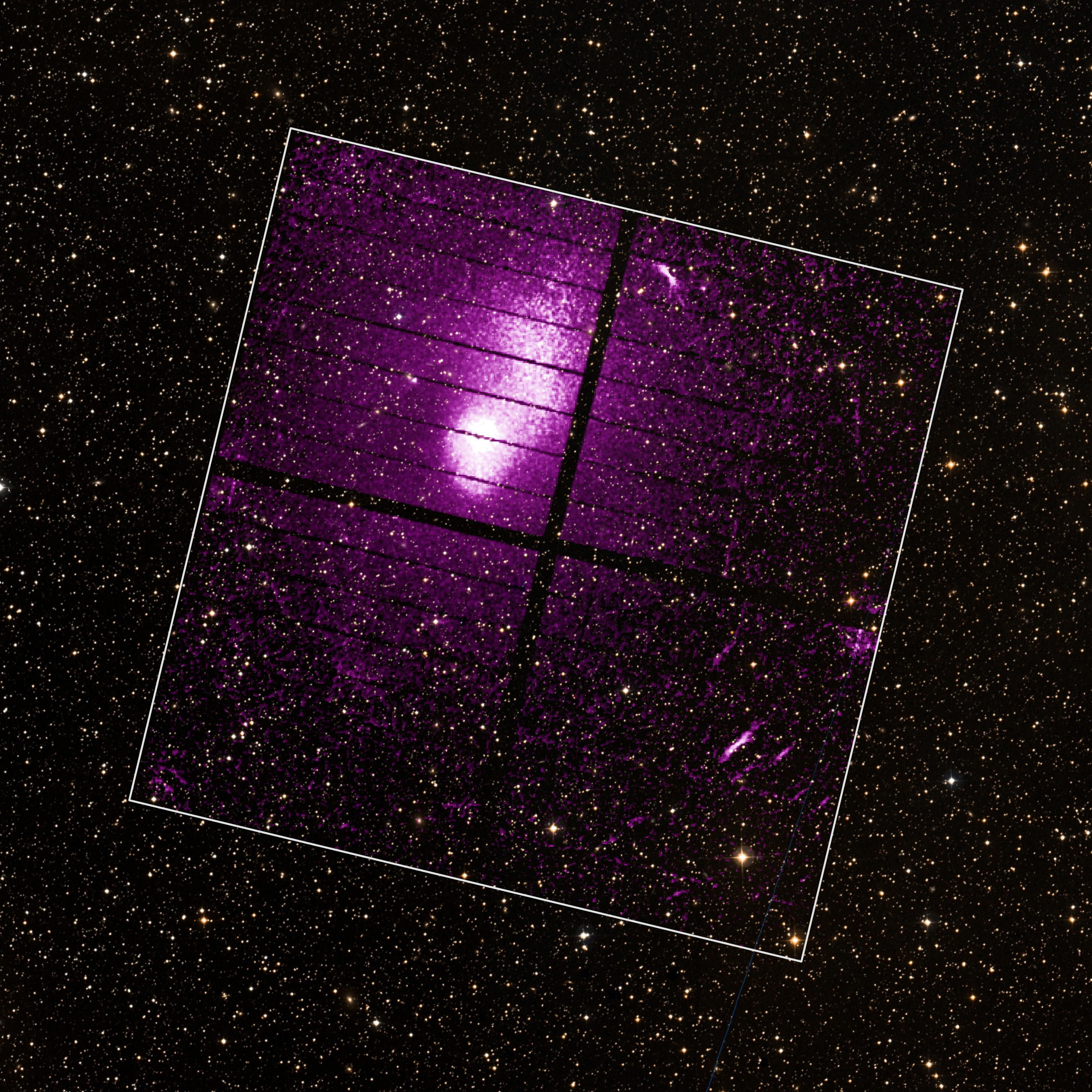
Galaxy clusters are groups of hundreds to thousands of galaxies that are all gravitationally bound to each other. In visible light, a galaxy cluster appears as individual galaxies gathered in the same region of the sky. However, in X-rays, it shines brightly as a single source because hot gas fills the entire cluster. By looking at this X-ray-emitting gas in clusters at different distances — or different ages of the universe — astronomers can trace star formation over cosmic time.
XRISM can also track the motions of this gas, revealing more about the mergers and interactions its galaxies have experiened. XRISM’s data is transforming our view from a single, static snapshot of galaxy clusters into a dynamic picture of interacting galaxies and swirling million-degree gas.
Probing strong gravity
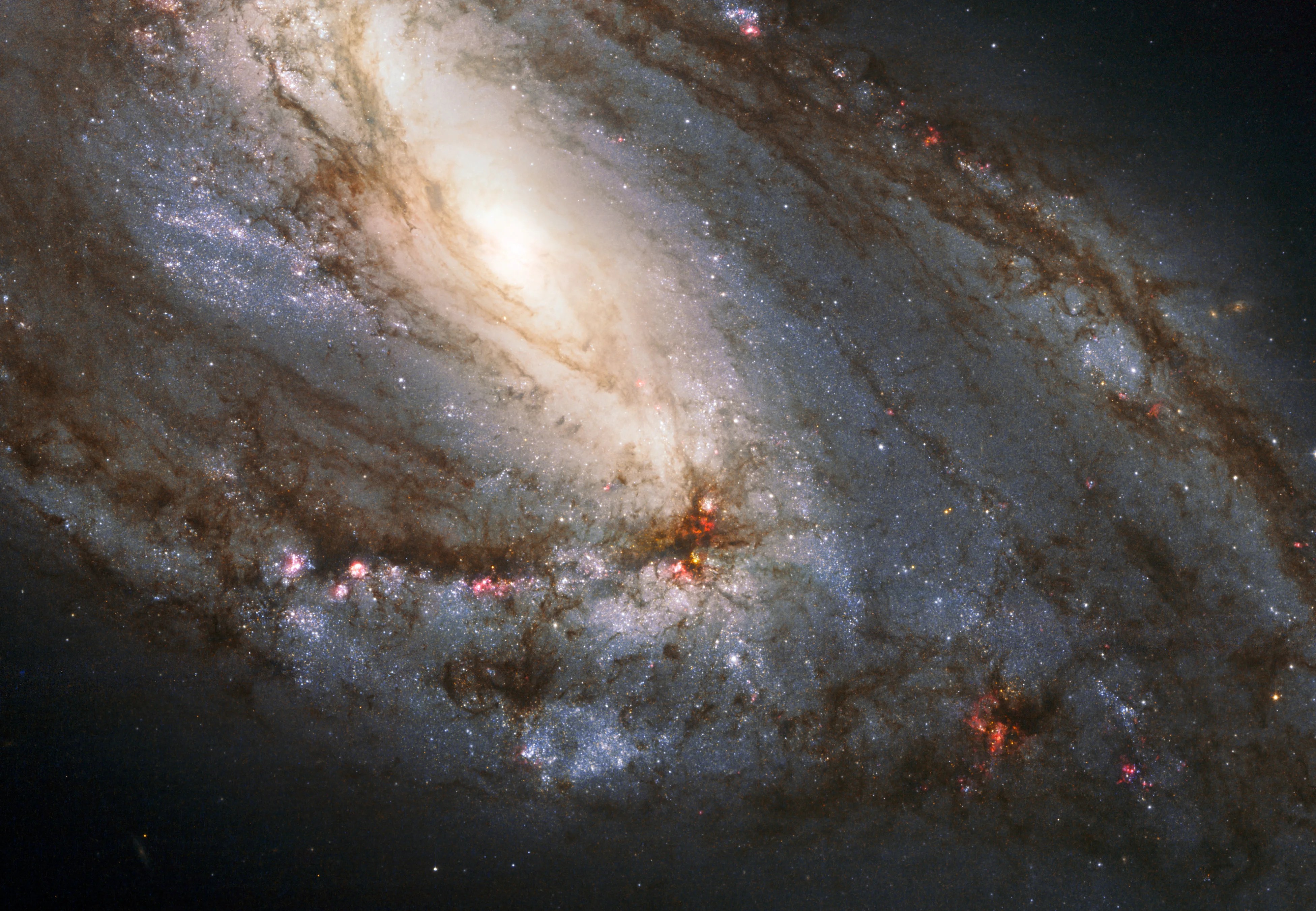
Nothing, not even light, can escape a black hole. Its chaotic environment, however, can be quite bright and provide information about the structures near the black hole. As material falls toward a black hole, it settles into a hot, bright, rapidly spinning accretion disk. Above and below the disk there is sometimes a superheated plasma of electrons called the corona. The black hole can also power a pair of high-speed particle jets that blast away from it in opposite directions.
XRISM is observing both supermassive black holes at the centers of galaxies and their smaller, stellar-mass cousins that are dotted around every galaxy. The high-resolution spectra from XRISM can see the dynamics of the material around black holes in greater detail than previous telescopes, giving us information about how it moves. This gives scientists insight into how gravity works in extreme conditions that cannot be replicated on Earth.