


















The XRISM Spacecraft
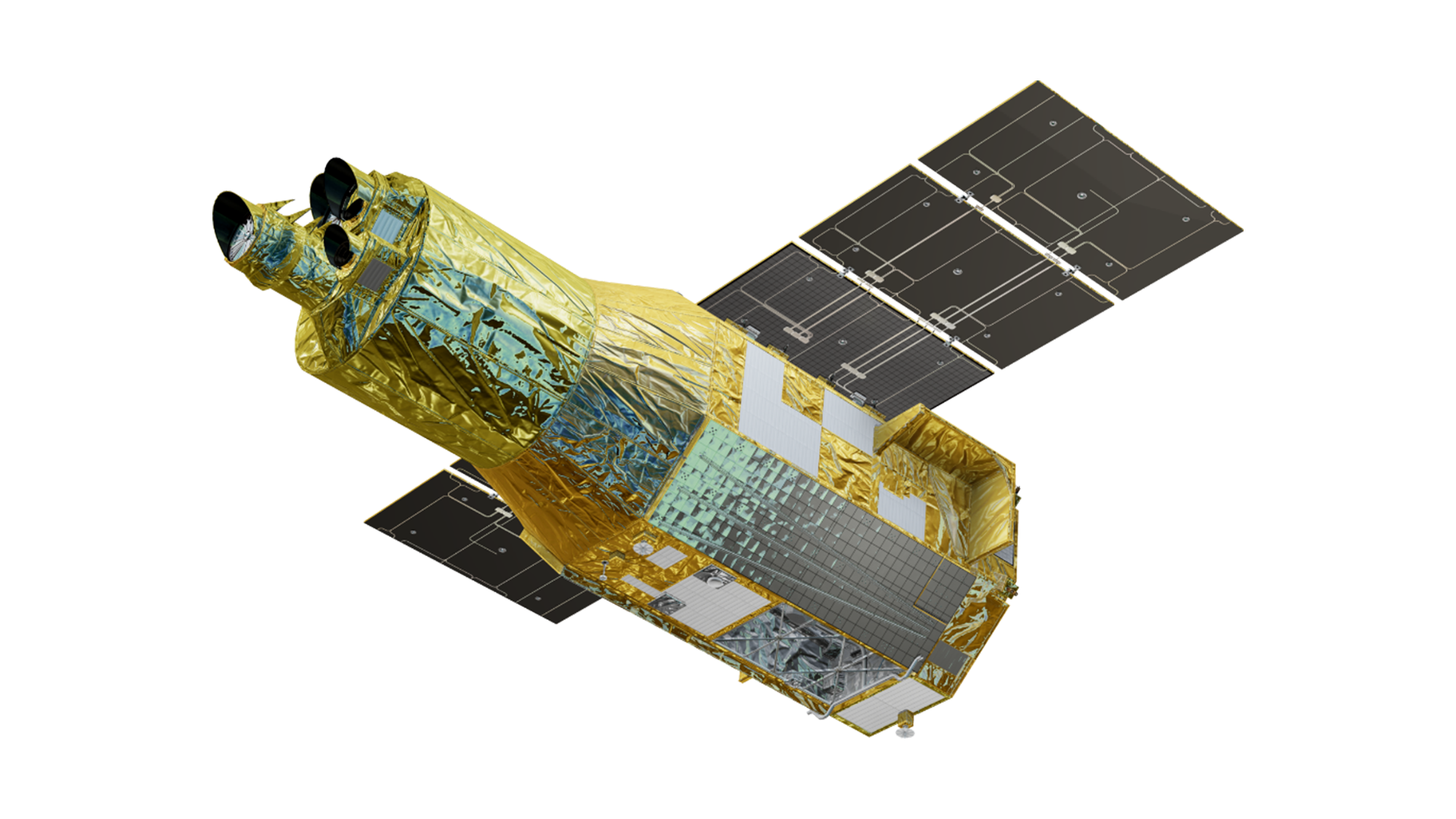
XRISM (X-ray Imaging and Spectroscopy Mission) launched on Sept. 6, 2023, from Japan's Tanegashima Space Center. It is the seventh in a series of X-ray observatories developed and operated by Japan.
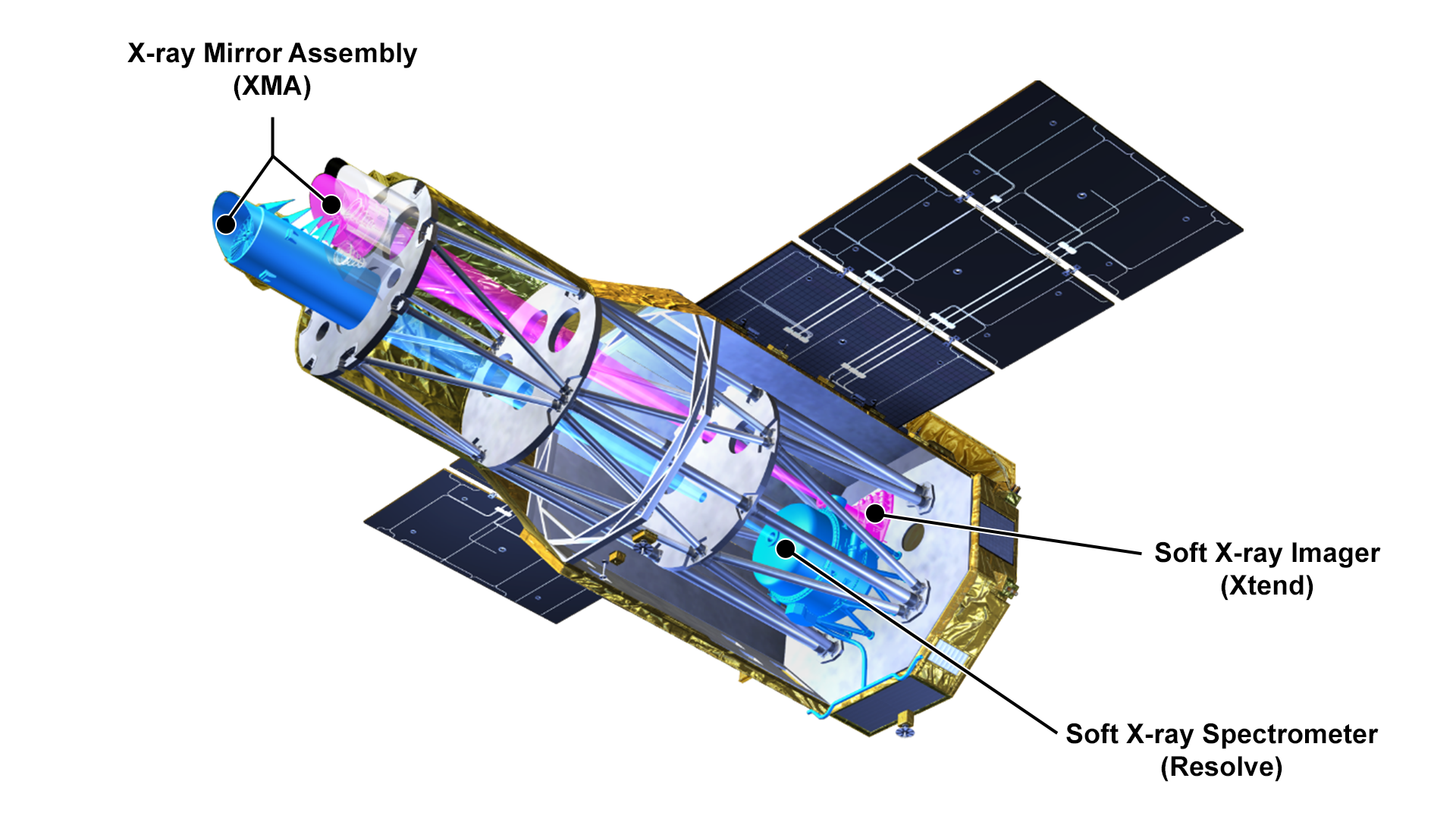
XRISM’s Resolve is an X-ray calorimeter spectrometer that is cooled to a fraction of a degree above absolute zero. This chilly temperature allows Resolve’s detectors to measure the slight amount of heat generated when each pixel absorbs a single X-ray photon. XRISM’s Xtend is an X-ray camera that can image a wide field of view. Each instrument is located at the focus of an XMA (X-ray Mirror Assembly) designed and developed at NASA's Goddard Space Flight Center in Greenbelt, Maryland.
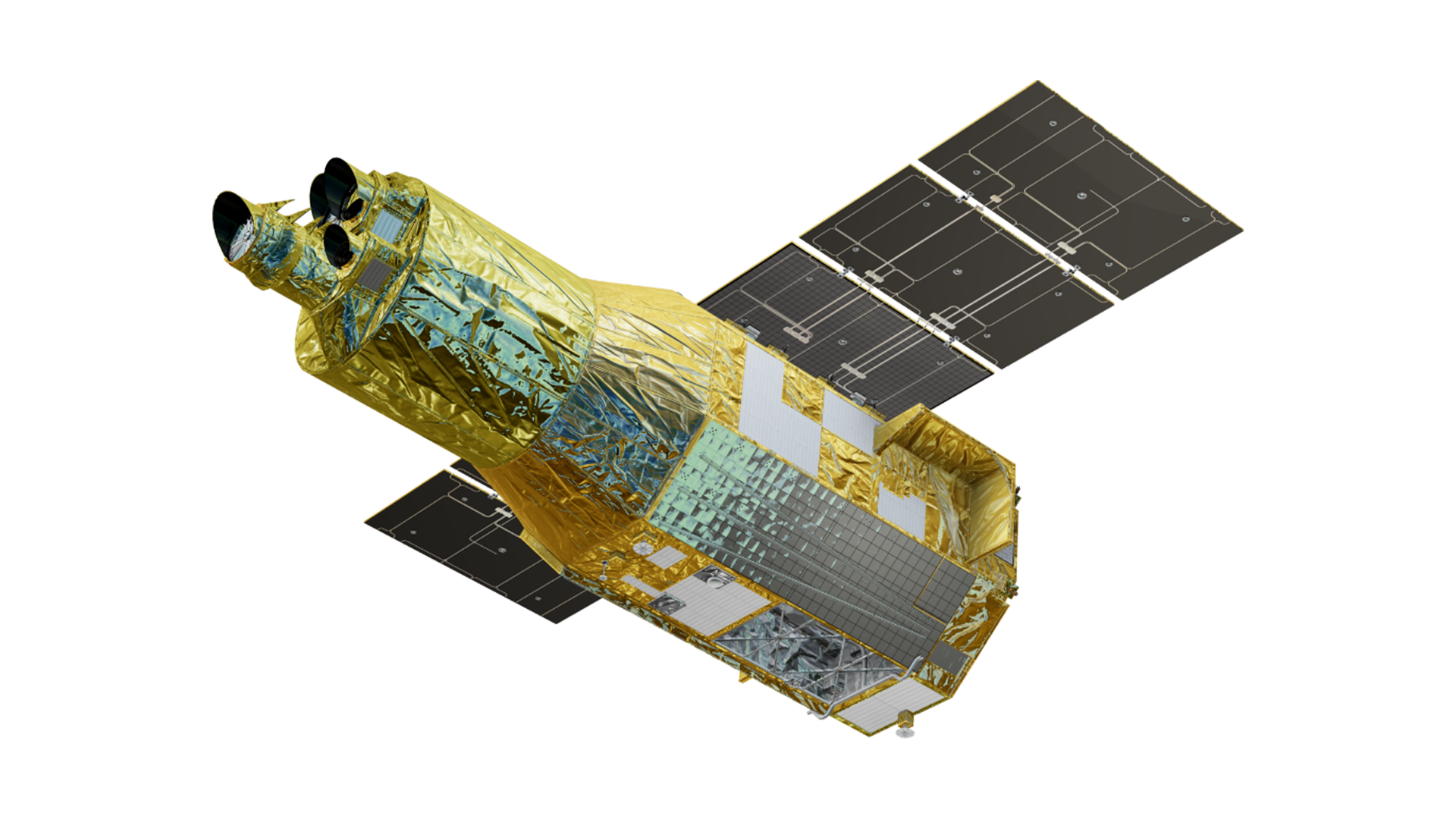
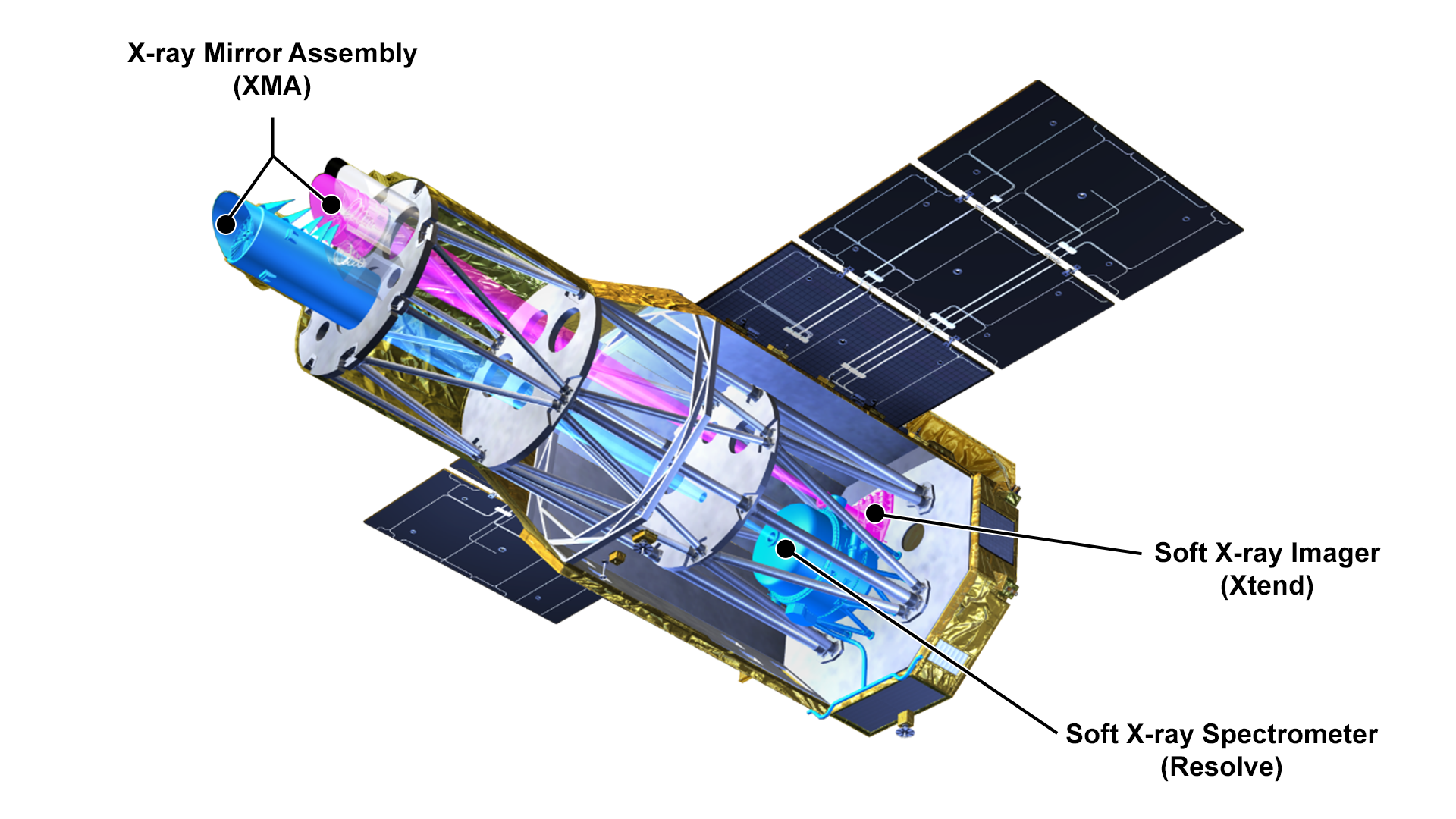
artist's concept
Look inside XRISM to see its instruments
Resolve
Resolve is a microcalorimeter spectrometer developed in collaboration between JAXA and NASA. When an X-ray hits Resolve’s 6-by-6-pixel detector, its energy causes a tiny increase in temperature.
To measure such a minuscule increase and determine the X-ray’s energy, the detector needs to cool down to around 460 degrees below zero Fahrenheit (minus 270 Celsius), just a fraction of a degree above absolute zero. The instrument reaches its operating temperature after undergoing a multistage mechanical cooling process inside a container of liquid helium.
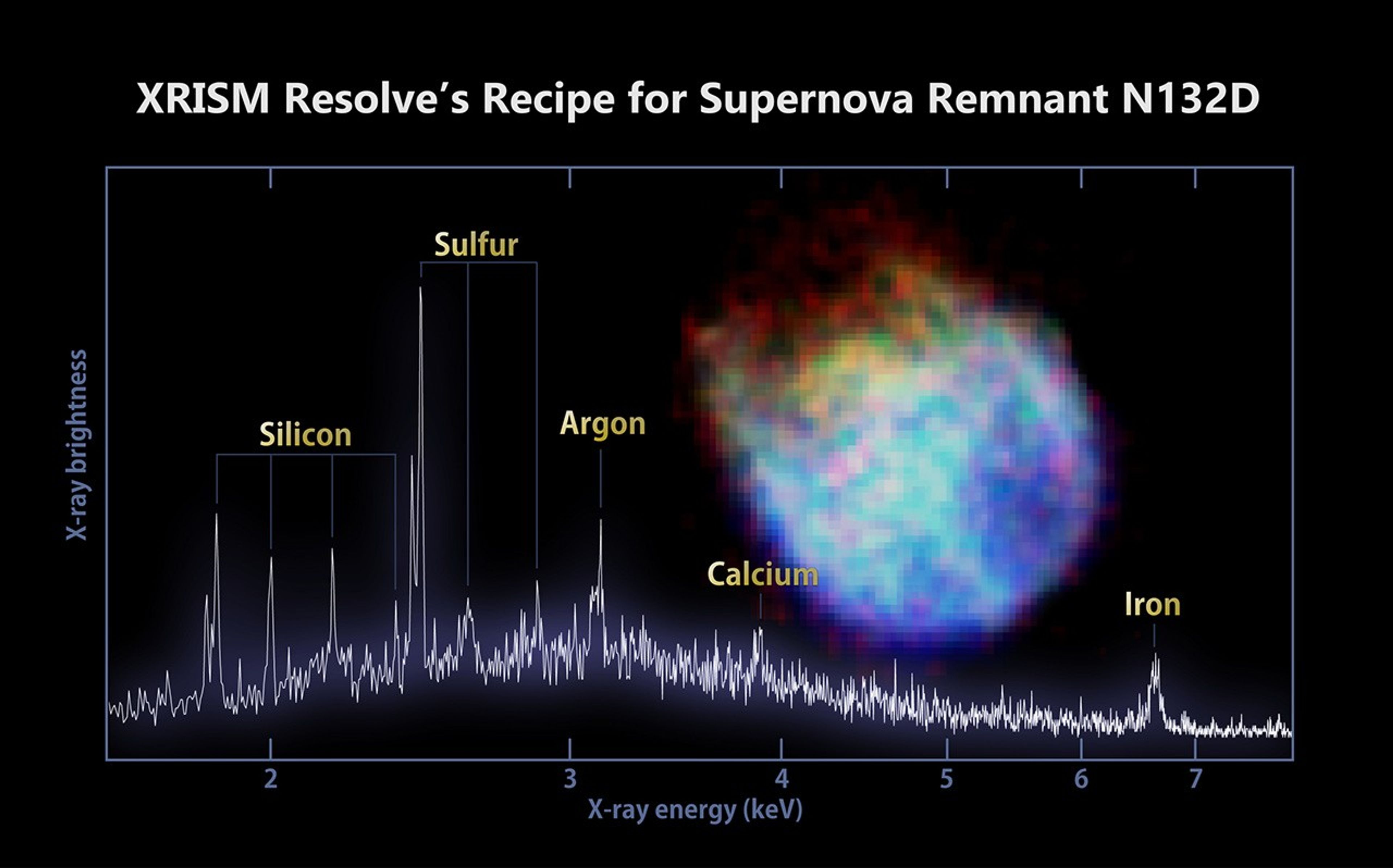
By collecting thousands or even millions of X-rays from a cosmic source, Resolve obtains high-resolution spectra of the object. Spectra are measurements of light’s intensity over a range of energies — the equivalent to colors of visible light. Astronomers use spectra to learn about the physical states, motions, and compositions of cosmic objects. Resolve performs spectroscopy for X-rays with energies ranging from 1,700 to 12,000 electron volts by measuring the energies of individual X-rays. (For comparison, visible light energies range from about 2 to 3 electron volts.)
NASA’s Goddard Space Flight Center
Xtend
XRISM’s second instrument, called Xtend, was developed by JAXA and Japanese universities. Xtend is an X-ray imager that performs simultaneous observations with Resolve.
Xtend uses X-ray charge-coupled devices to detect incoming light and gives XRISM one of the largest fields of view of any X-ray imaging satellite flown to date, observing an area about 60% larger than the apparent size of a full moon.
X-ray Mirror Assembly
XRISM carries two identical XMAs developed by NASA. Each XMA collects X-rays from celestial objects and focuses them onto the detectors of one of XRISM’s instruments.
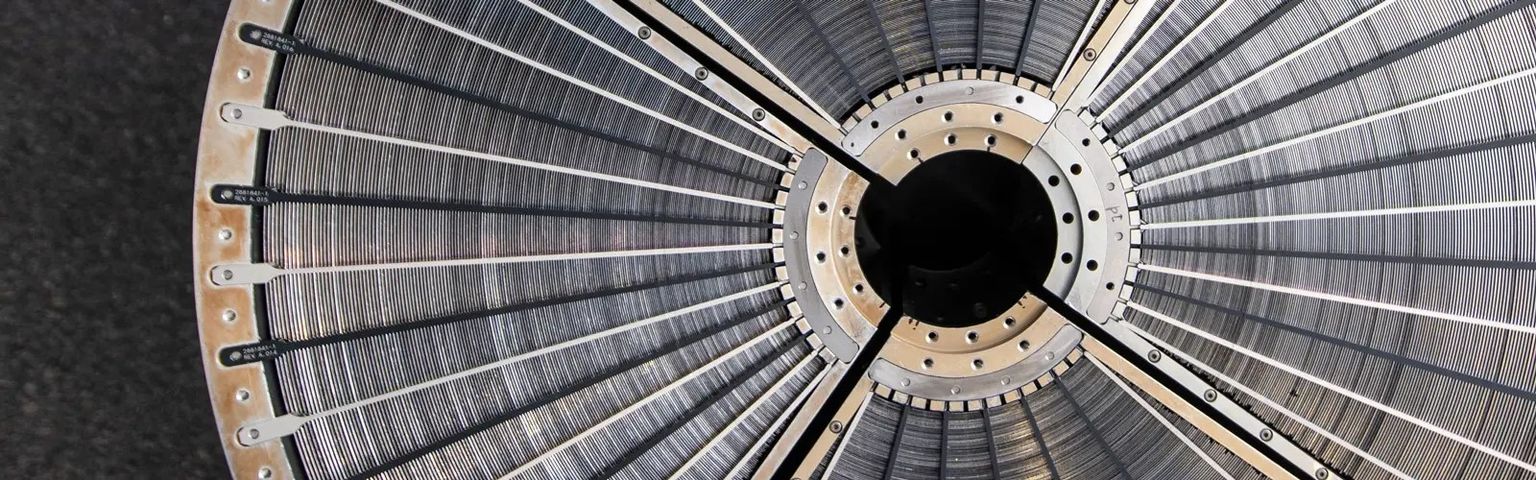
Each XMA includes both a primary and a secondary mirror. Each mirror has four quadrants that contain 203 nested aluminum mirror segments, for a total of 1,624 segments in each XMA. These mirror segments reflect X-rays that strike them at low angles, almost parallel to the segment edges, like skipping a stone off the surface of a pond.