










Webb-Images: Infographic
Filters
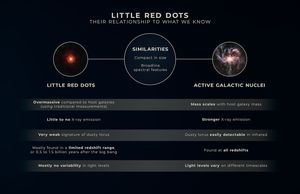
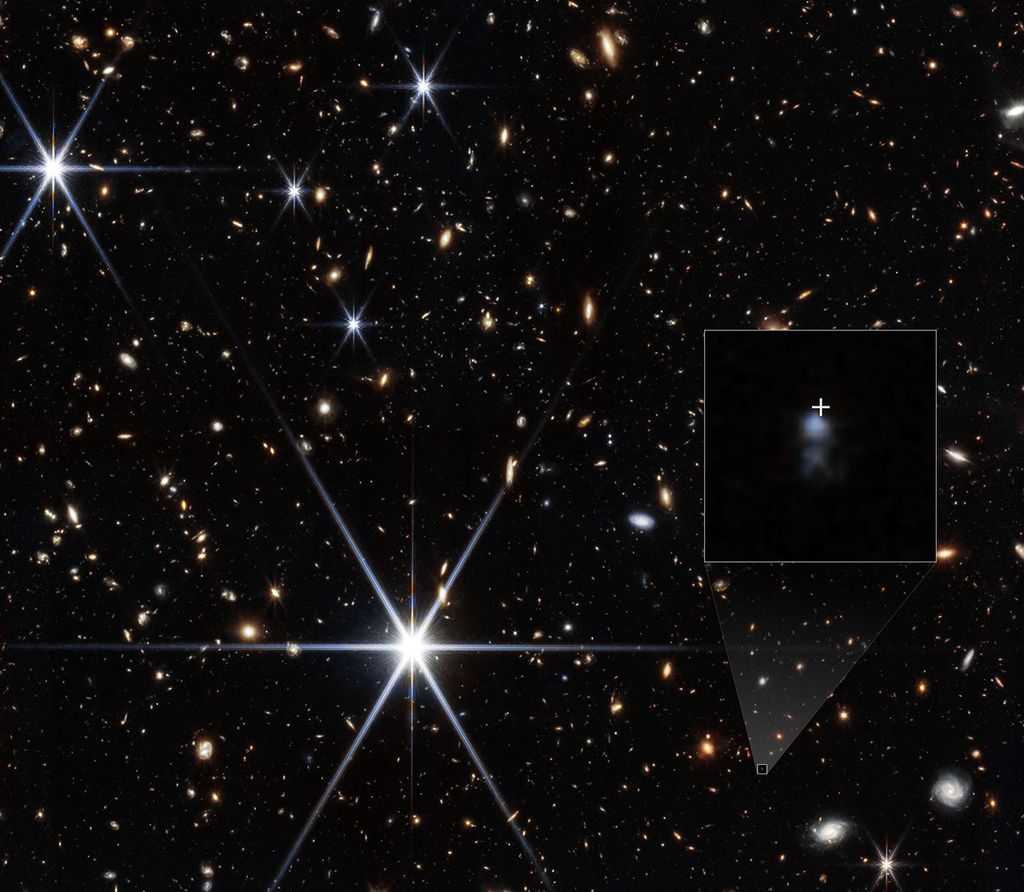
Astronomers theorize that little red dots, which are mostly present in the early universe, are active supermassive black holes. But,…
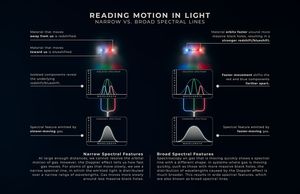
At large distances, astronomers use Webb to tell how fast gas moves. Slower gas produces a narrow distribution of wavelengths,…
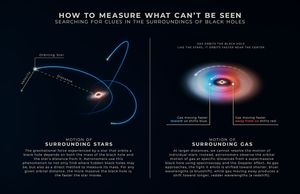
Although black holes themselves can’t be seen, astronomers can employ several techniques to infer their masses. For nearby black holes,…
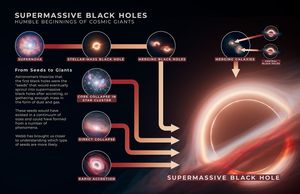
Through studying the early universe, NASA’s James Webb Space Telescope has brought us closer to understanding one of the most…

These graphs lay out the significant difference in composition between the interstellar comet 3I/ATLAS and comets originating in our solar…

NASA’s James Webb Space Telescope captured the deepest spectrum to date of a little red dot. More than 40 spectral…
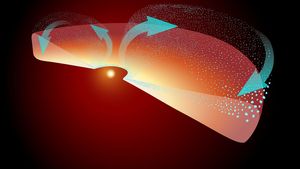
This illustration represents half the disk of gas and dust surrounding the protostar EC 53. Stellar outbursts periodically form crystalline…
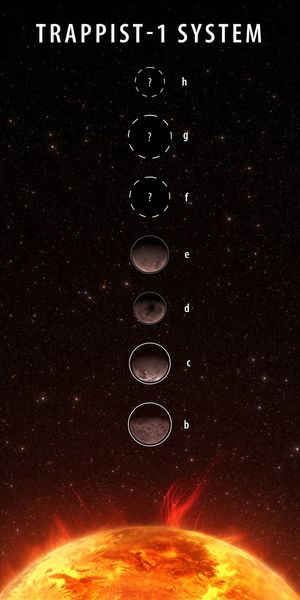
Scientists have found little atmospheric evidence for TRAPPIST-1 b and TRAPPIST-1 c. TRAPPIST-1 d and TRAPPIST-1 data is still under…
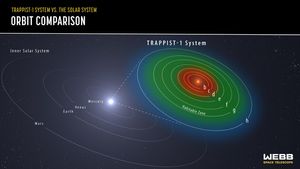
An orbit comparison of the seven TRAPPIST-1 planets (labeled from b to h) around their star to the orbits of…