







Explore:
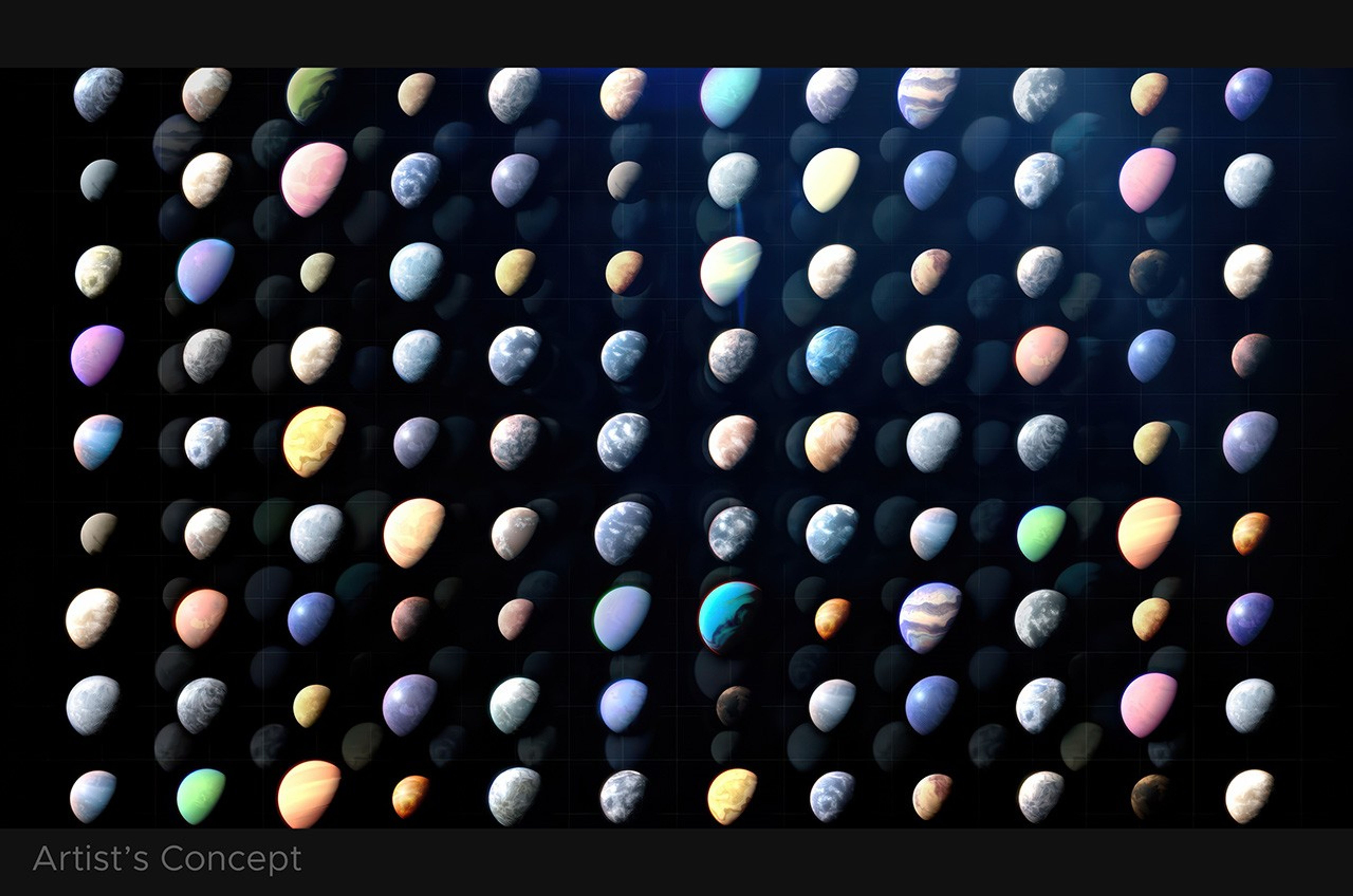
Exoplanets
Worlds beyond our solar system.
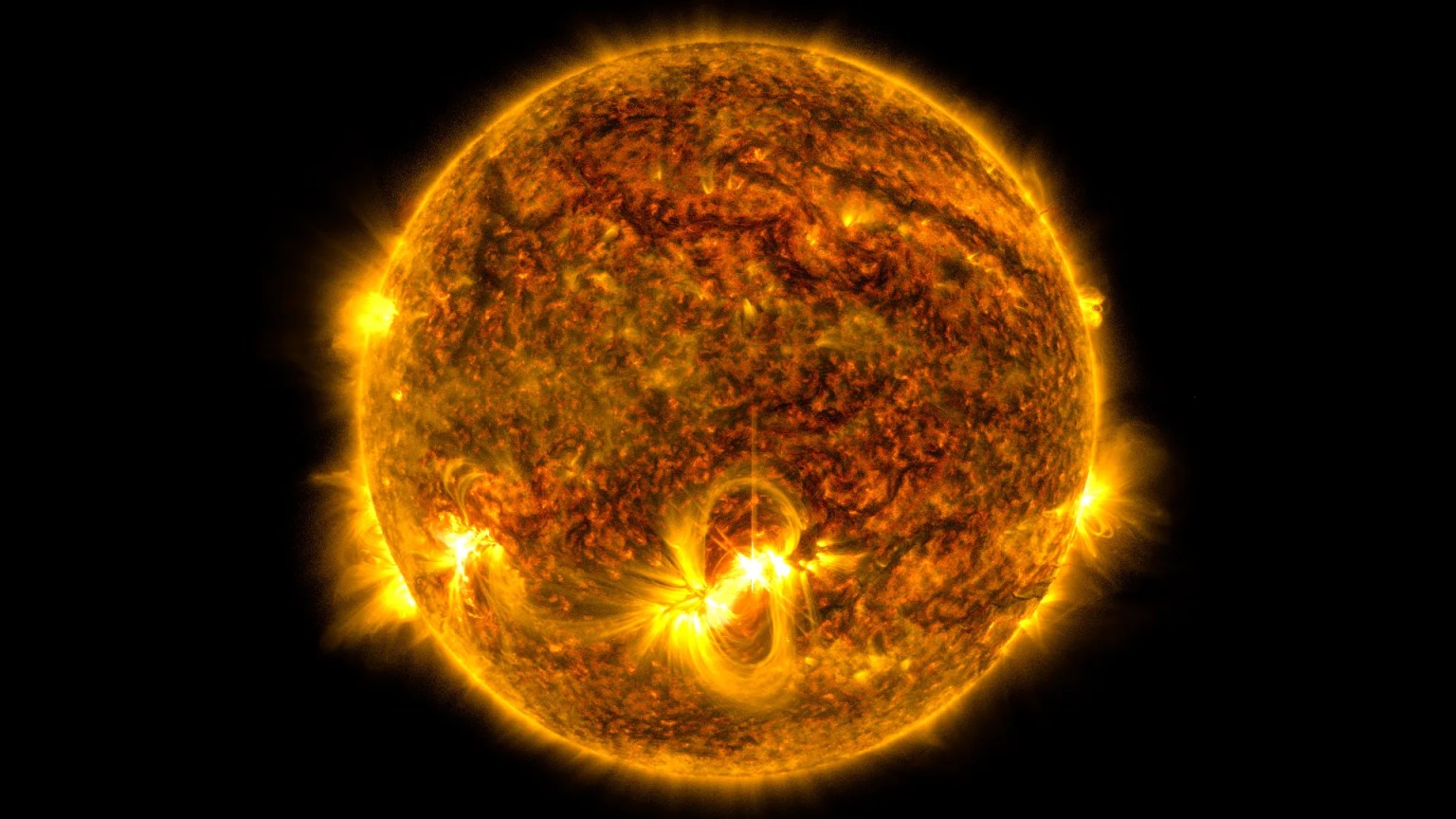
Stars
Giant balls of hot gas that burn for millions to billions of years.
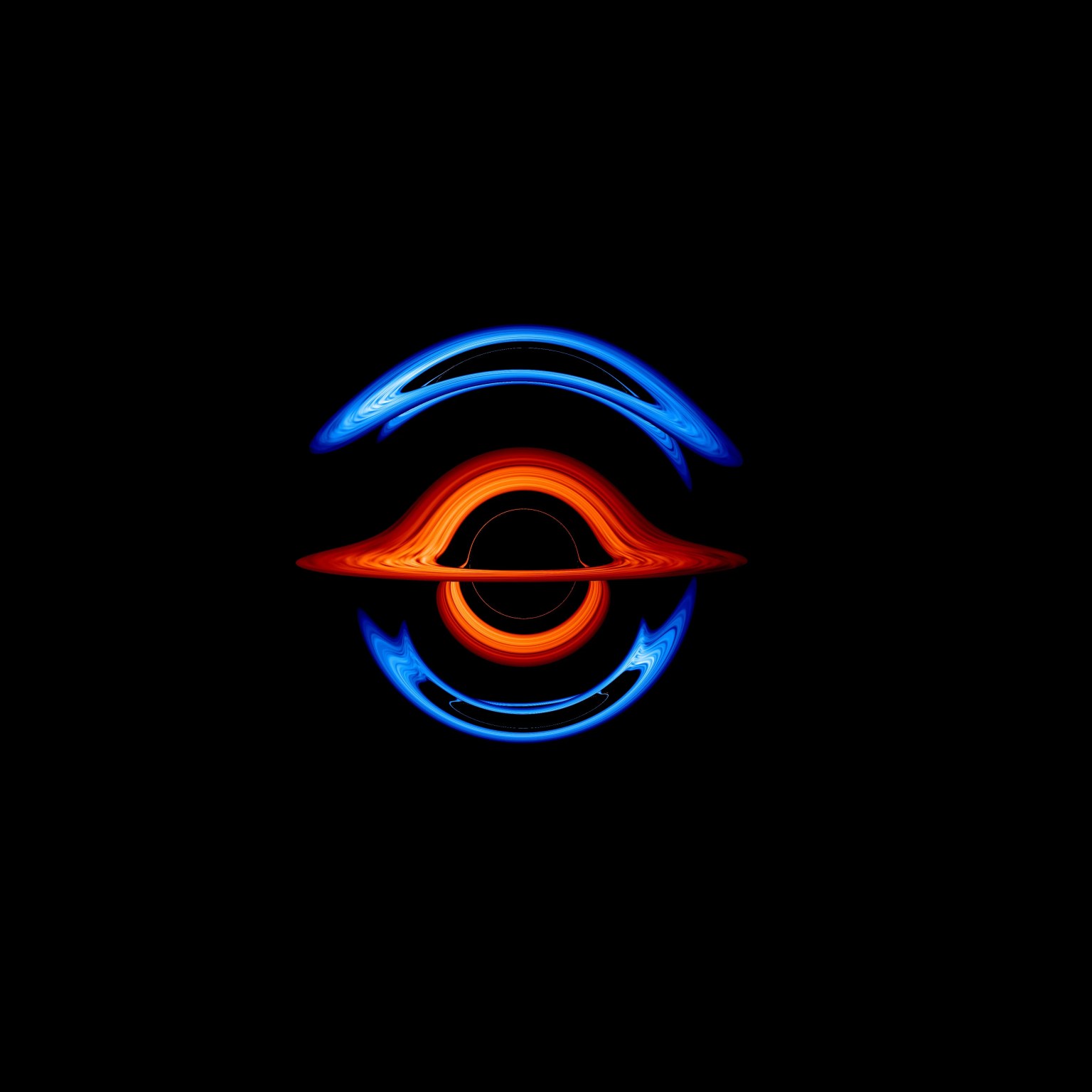
Black Holes
Concentrations of matter with gravity so powerful not even light can escape.
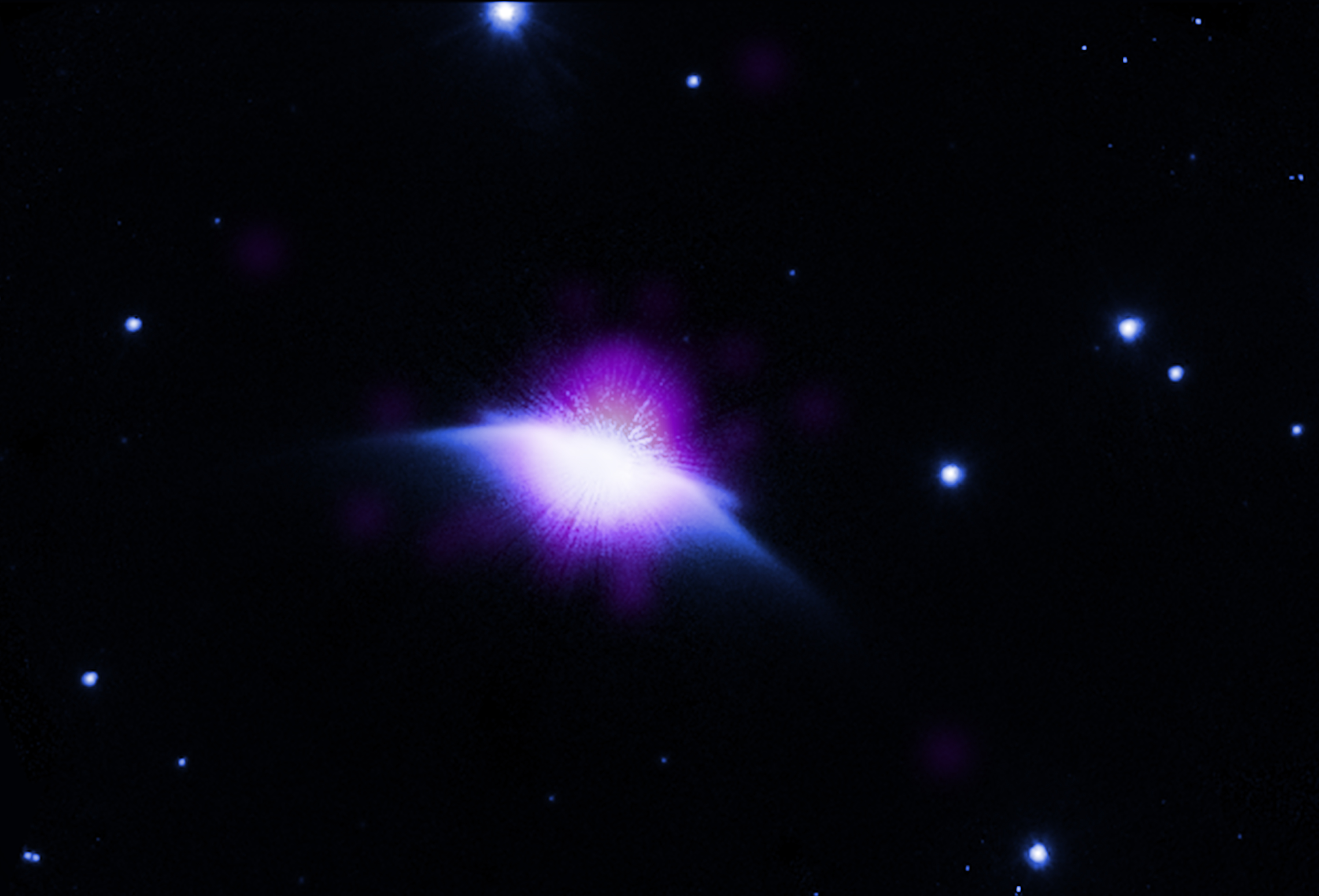
Galaxies
Collections of stars, planets, and vast clouds of gas and dust bound together by gravity.
Roman’s Eye on the Universe: Mapping the Dark Side of the Cosmos
NASA’s Nancy Grace Roman Telescope will deliver an ambitious sky survey that will reveal hundreds of millions of galaxies, helping us understand what we can’t see — dark matter and dark energy. By mapping frozen echoes of ancient sound waves from the early universe, the wide-area survey will assist scientists in unraveling one of physics’ biggest mysteries. Will the expansion of the universe continue forever?
Learn More
How Big is Space?
Amber Straughn, deputy project scientist for communications for NASA’s James Webb Space Telescope, explains what we know — and don’t know — about the size of the cosmos.
Learn More

Einstein Called It: The Universe Hums
September 2025 marked ten years since the first detection of gravitational waves, or ripples in the fabric of space-time. Albert Einstein predicted these waves in his 1916 theory of general relativity. In this illustration, two black holes merge and create waves in the process.
Though any accelerating physical object can produce gravitational waves, to find the big ones, we must look beyond our solar system. The motion of massive objects, like smaller black holes, can generate waves that we can detect now with ground-based observatories. These waves travel through the universe, carrying information about their origins, including mergers of neutron stars, explosions of stars, and possibly the birth of the universe. But what about ripples from even larger, more massive objects?