
























Summer south of the equator is proving to be a scorcher. In mid-January 2022, sweltering heat gripped central South America and temperatures soared to more than 40°C (104°F). At the time, it was the hottest place on the planet. That title soon shifted to Western Australia, where temperatures climbed to more than 50°C (122°F) and a town north of Perth tied for the hottest temperature ever measured in the Southern Hemisphere (preliminary data).
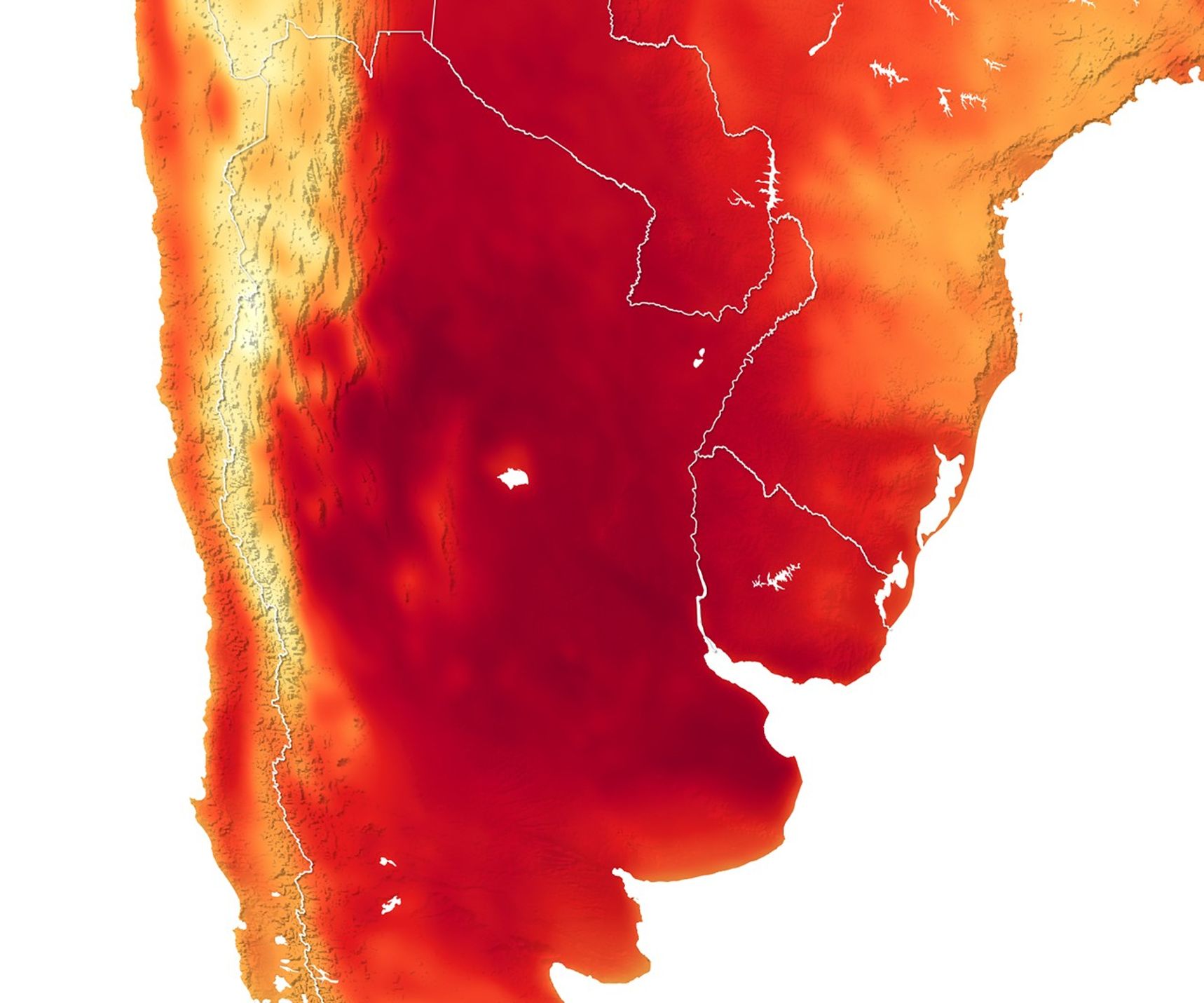
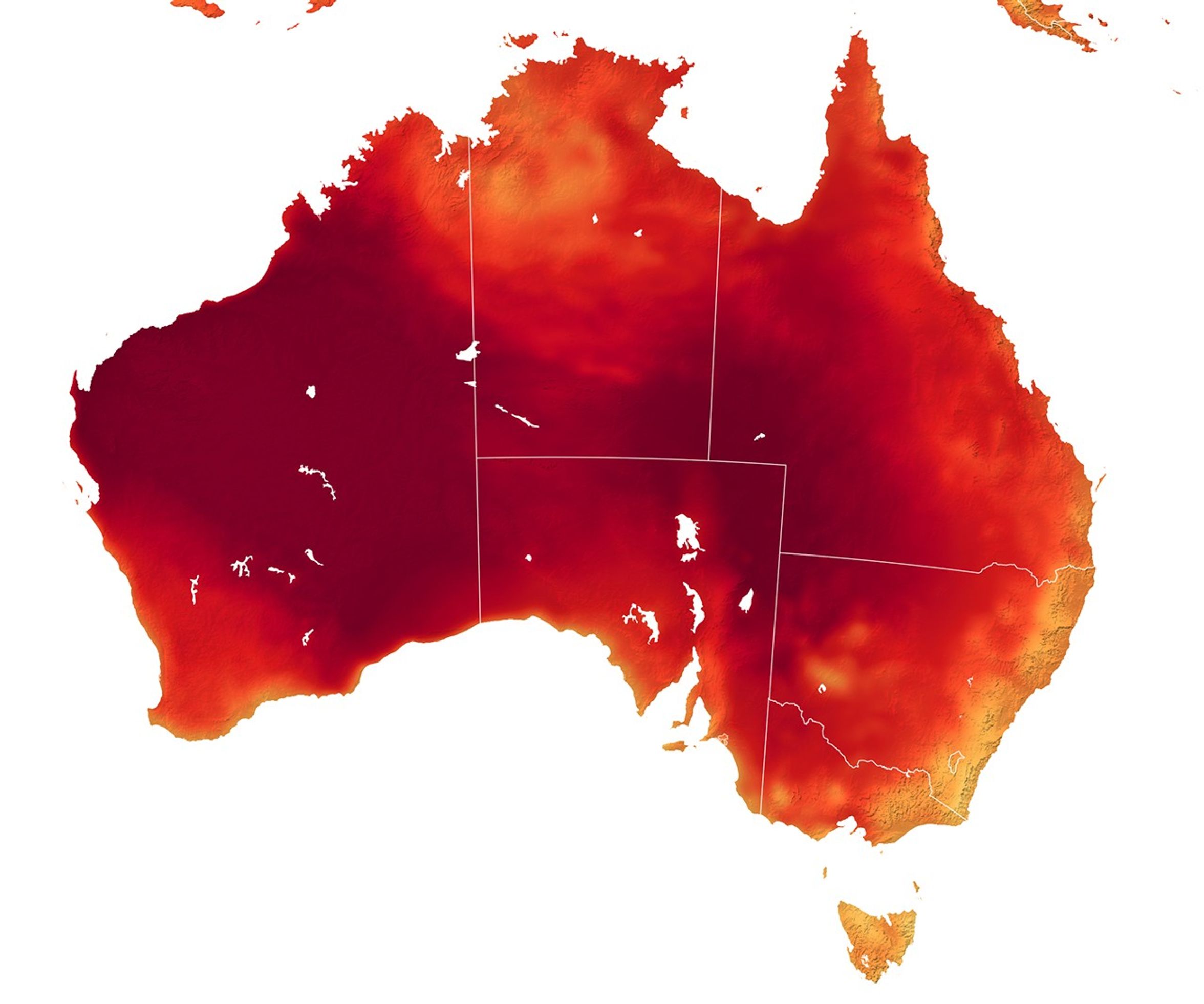
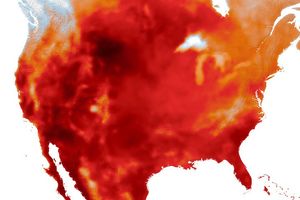
The searing heat is apparent on these maps, derived from the Goddard Earth Observing System (GEOS) model. The maps depict air temperatures at 2 meters (about 6.5 feet) above the ground. The darkest reds indicate where temperatures were highest on January 11 in Argentina (above) and on January 13 in Australia (below).
According to Argentina’s National Meteorological Service (SMN), ground stations in Buenos Aires recorded a temperature of 41.1°C (106°F) on January 11. That’s the city’s second-hottest day on record. Elsewhere in Argentina, temperatures in Córdoba and Punta Indio climbed above 41°C. The extreme heat extended west toward the Andes Mountains, as well as north into Paraguay and Uruguay.
The heat took a toll on Argentina’s power grid, leaving more than 700,000 customers without power. The high temperatures were also expected to scorch crops, such as soy and corn, that have already suffered from extended drought.
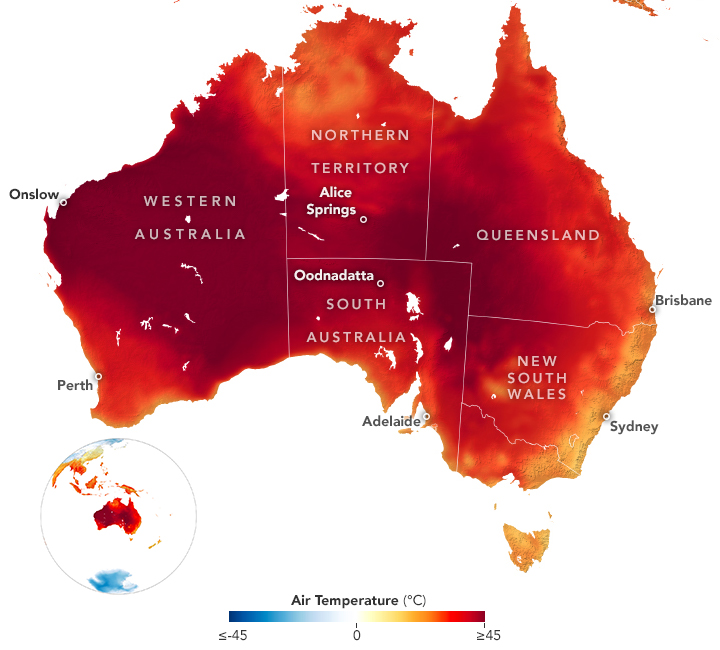
Meanwhile on the other side of the planet, a heatwave was spreading across Western Australia. On January 13, ground stations in Onslow showed the temperature peaking at 50.7°C (123.3°F). If confirmed by Australia’s Bureau of Meteorology, the temperature will equal the hottest day on record for the southern hemisphere. The previous record was measured in Oodnadatta, South Australia, in 1960. Near Onslow, the towns of Mardie and Roebourne also saw temperatures climb above 50°C.
According to The Washington Post, the events in Argentina and Western Australia both resulted from heat domes that set up over each area. The phenomenon occurs when high pressure in the mid- to upper-atmosphere acts as a cap, trapping warm air as it rises and pushing it back down to warm the surface even more.
References & Resources
- DAILY KOS (2022, January 10) Argentina heatwave, comparable to temperatures in Death Valley, will scorch the nationâs crops. Accessed January 14, 2022.
- Reuters (2022, January 13) âThe sun is fierceâ: Argentina drought scorches corn and soy crops. Accessed January 14, 2022.
- Reuters (2022, January 11) Argentina capital hit by major power outage amid heat wave. Accessed January 14, 2022.
- Twitter (2022, January 12) Bureau of Meteorology, Western Australia. Accessed January 14, 2022.
- Twitter (2022, January 12) SMN Argentina. Accessed January 14, 2022.
- UPI (2022, January 12) Historic heat wave hits Buenos Aires, Argentina. Accessed January 14, 2022.
- The Washington Post (2022, January 13) Australia hits 123 degrees, tying highest temperature on record in Southern Hemisphere. Accessed January 14, 2022.
- The Washington Post (2022, January 12) Buenos Aires hits 106 degrees amid severe South American heat wave. Accessed January 14, 2022.
NASA Earth Observatory images by Lauren Dauphin, using GEOS-5 data from the Global Modeling and Assimilation Office at NASA GSFC. Story by Kathryn Hansen .