
























February 22, 2022
Storm-Ravaged Madagascar Faces Another Storm
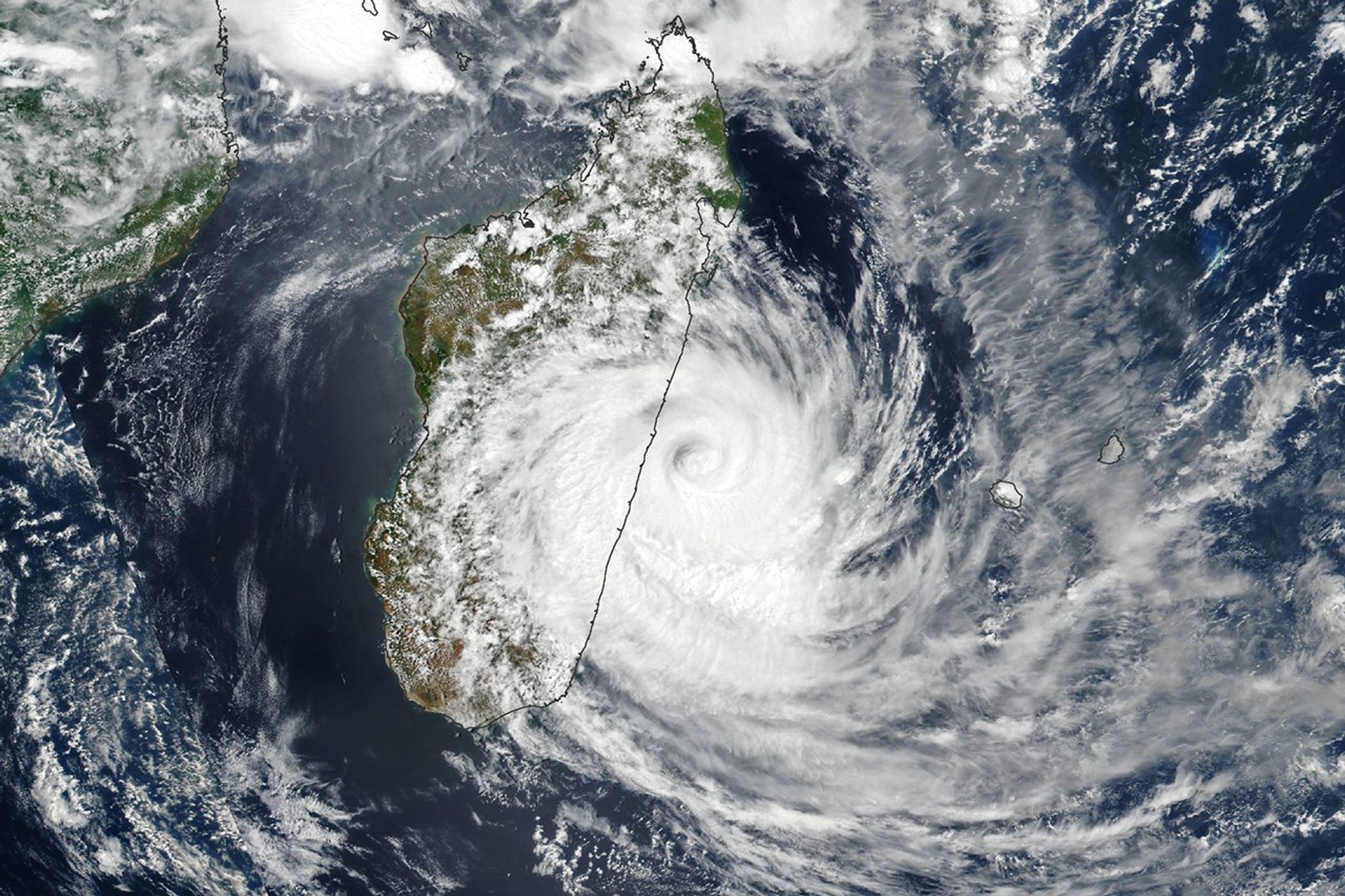
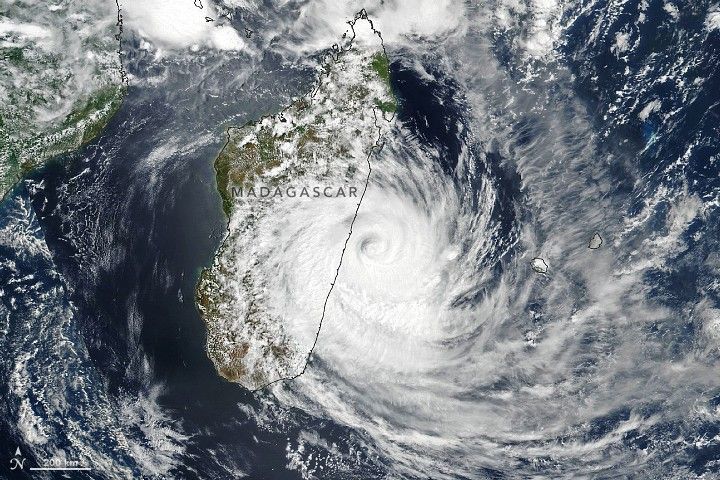
For the fifth time in six weeks, heavy rain and destructive wind are blowing into Madagascar from the Indian Ocean. Tropical Cyclone Emnati is expected to make landfall along the eastern coast between the cities of Mananjary and Manakara late on February 22, 2022.
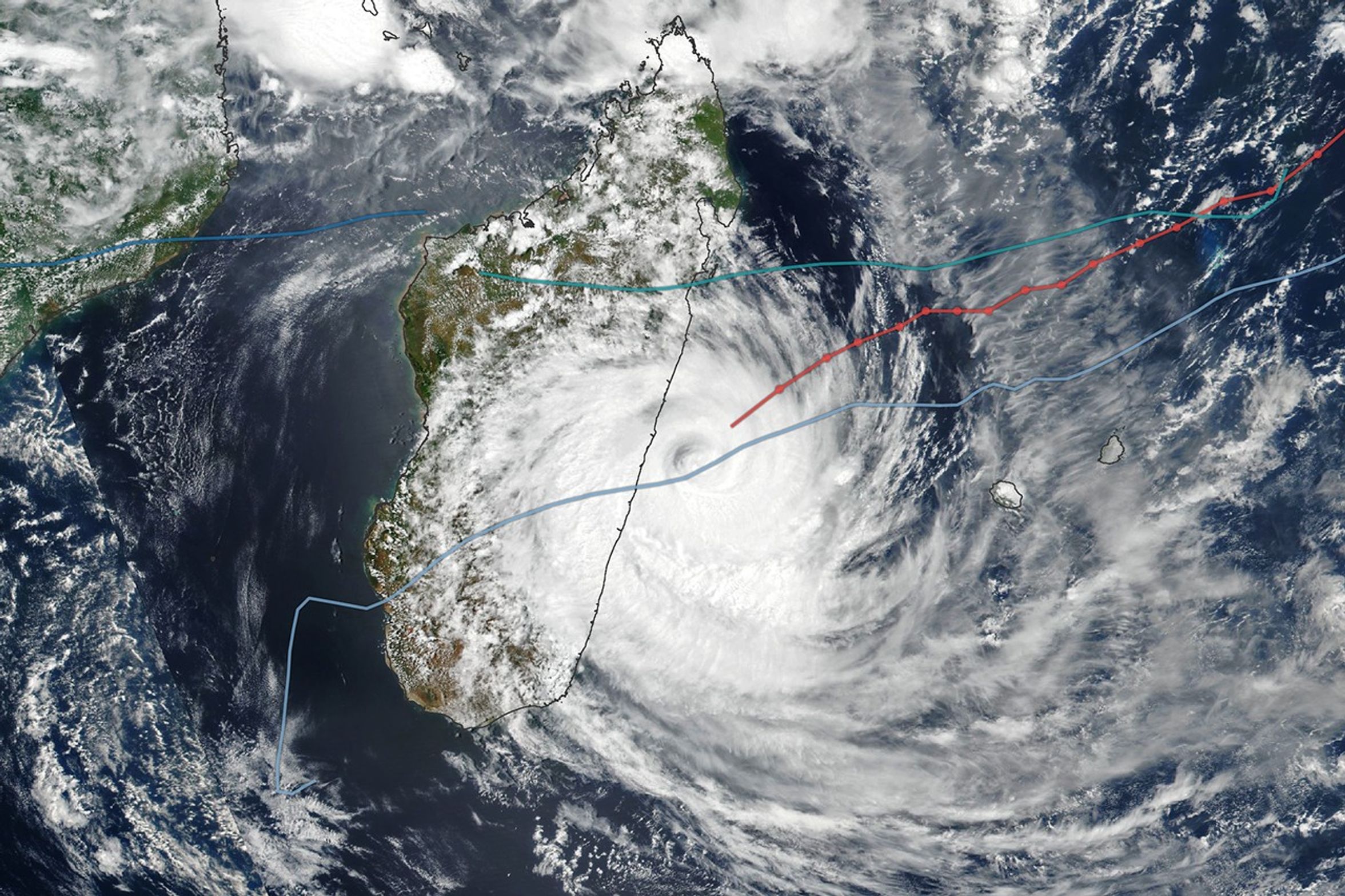
In January 2022, a series of torrential tropical rainstorms was followed by tropical depression and storm Ana. February brought Cyclones Batsirai and Dumako. Now Cyclone Emnati is headed for landfall in the same region where Batsirai flooded and displaced thousands of people.
The Visible Infrared Imaging Radiometer Suite (VIIRS) on the NOAA-NASA Suomi NPP satellite acquired this natural-color image after midday on February 22, 2022. (Use the slider to overlay the paths of the other recent storms.) Around that time, Emnati had sustained winds of 140 kilometers (85 miles) per hour. Winds peaked at 200 kilometers (125 miles) per hour on February 20.
Forecasters were expecting widespread rainfall totals of 10 to 20 centimeters (4 to 8 inches) in regions that were just soaked by 20+ centimeters at the beginning of February. New flooding is possible in areas where more than 20,000 people are still displaced two weeks after Batsirai made landfall. However, the storm could bring needed rain to drought-stricken southern parts of Madagascar.
References & Resources
- Joint Typhoon Warning Center (2022) Tropical Cyclone 13S (Batsirai). Accessed February 22, 2022.
- ReliefWeb (2022, February 22) Southern Africa: Cyclone Season Flash Update No. 8. Accessed February 22, 2022.
- ReliefWeb (2022, February 22) Tropical Cyclone Emnati. Accessed February 22, 2022.
- UN World Food Programme (2022, February 21) Cyclone Response Update. Accessed February 22, 2022.
- Weather Underground (2022) Tropical Cyclone Emnati. Accessed February 4, 2022.
- Yale Climate Connections (2022, February 21) Category 3 Tropical Cyclone Emnati headed for vulnerable Madagascar. Accessed February 22, 2022.
NASA Earth Observatory image by Lauren Dauphin, using VIIRS data from NASA EOSDIS LANCE , GIBS/Worldview , and the Suomi National Polar-orbiting Partnership and storm track data from NOAA's International Best Track Archive for Climate Stewardship . Story by Michael Carlowicz .