



















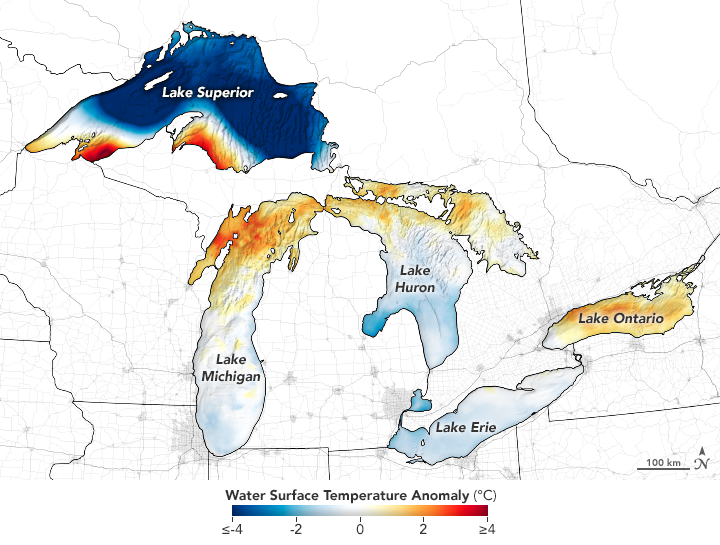
With heatwaves and triple-digit air temperatures afflicting much of the United States, there is at least one place that is colder than normal: Lake Superior.
The deepest of the Great Lakes is famously known for its cold depths. But the water on the lake surface usually warms in the summer, sometimes becoming much warmer than normal.
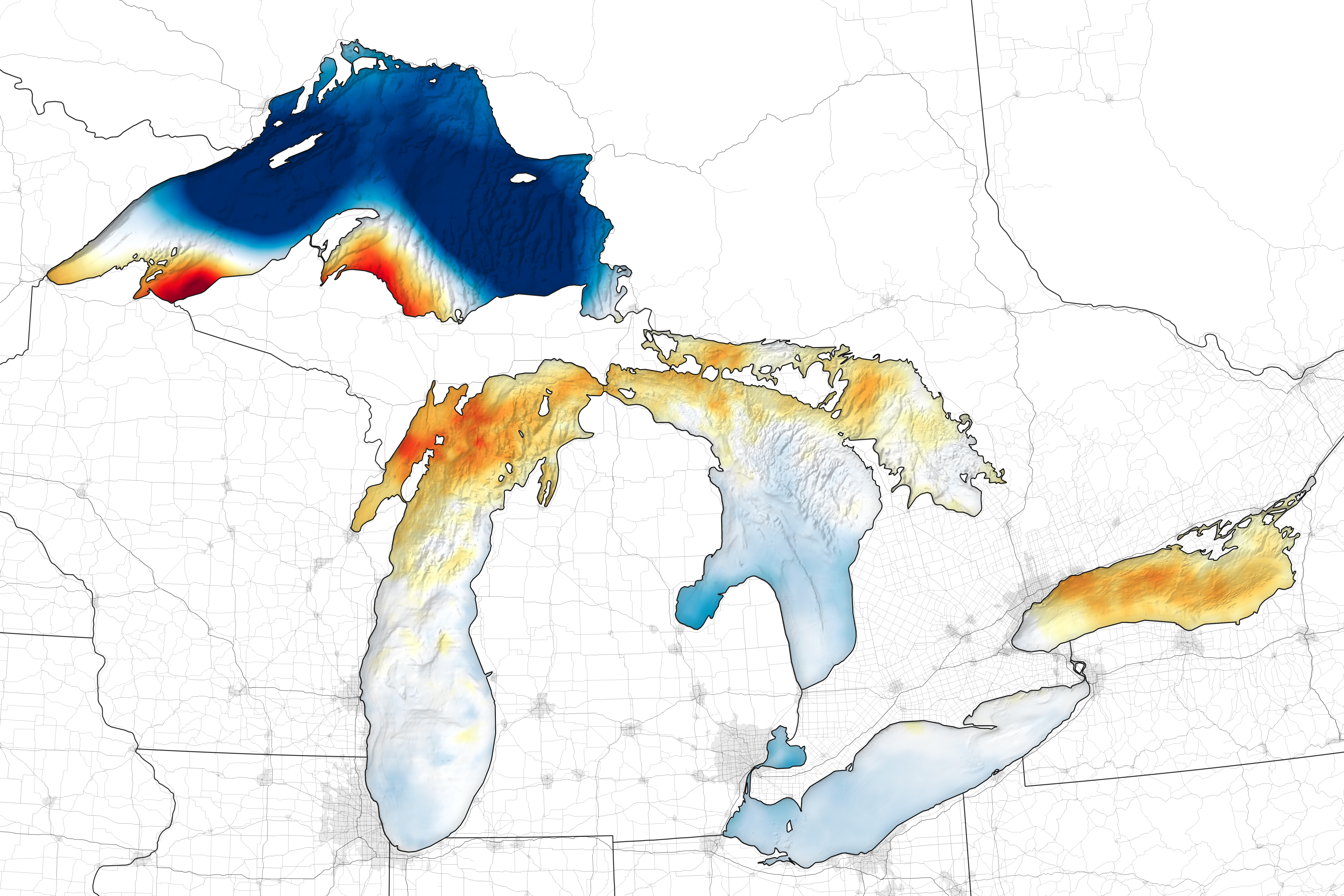
However, in this year of exceptional summer warmth on land—including 90 degree air temperatures across the Upper Midwest—Lake Superior’s water temperatures are running more than 7°F (4°C) below average for this time of year. Such low water temperatures have only occurred twice since 1995.
The map above shows water surface temperature anomalies for July 18, 2022; that is, how much the surface layer of each lake was above or below the long-term average temperature (2003–2014) for this time of year. The data come from the Multiscale Ultrahigh Resolution Sea Surface Temperature (MUR SST) project, based at NASA’s Jet Propulsion Laboratory. MUR SST blends measurements of sea surface temperatures from multiple NASA, NOAA, and international satellites, as well as ship and buoy observations.
Lake temperatures are largely driven by interactions with the atmosphere, so colder air temperatures lead to colder lake temperatures, according to the NOAA Great Lakes Environmental Research Laboratory (GLERL). This year, colder-than-normal air temperatures set in over Lake Superior in January and chilled the lake surface. According to regional climate reports, January air temperatures were as much as 9°F (5°C) colder than normal in the Great Lakes region. By February, air temperatures in the western Superior basin were 11°F (6°C) colder than normal.
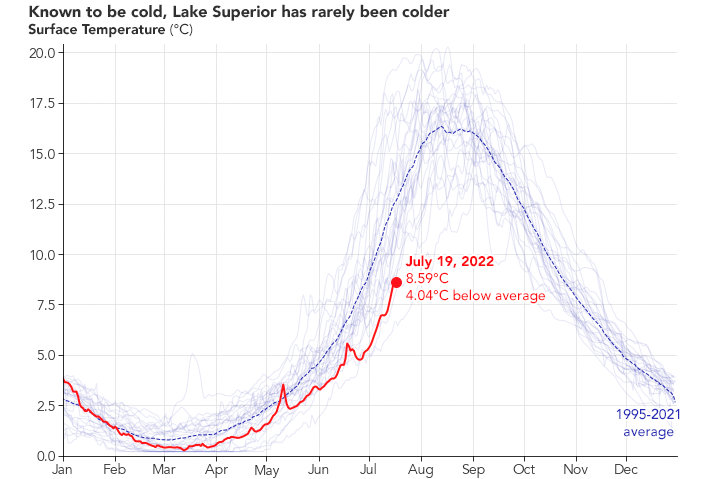
Colder water temperatures soon followed. The graph above shows the lake’s average daily temperature for each year compared to the average from 1995â2021. This year’s colder than usual temperatures started to emerge in February 2022. On July 19, 2022, the average surface temperature was 47.5°F (8.5°C). Only 1996 and 2014 exhibited colder temperatures on that date.
The other four Great Lakes had closer to normal air temperatures this winter, and are now experiencing closer to average surface water temperatures as well, according to GLERL. Long-term NOAA data show that the Great Lakes usually reach their peak temperatures in August.
References & Resources
- NASA Earth Observatory (2020, July 16) Great, Warm Lakes.
- NOAA (2022, March) March 2022 Great Lakes Quarterly Regional Climate Report. Accessed July 20, 2022.
- NOAA (2022, July 14) June 2022 was Earthâs 6th-warmest on record: Antarctic sea ice shrank to a record low for the month. Accessed July 20, 2022.
- Upper Michigan Source (2022, July 13) Lake Superior average surface temperatures coldest in 25 years. Accessed July 20, 2022.
NASA Earth Observatory images by Joshua Stevens , using data from the Multiscale Ultrahigh Resolution (MUR) project and data from the Great Lakes Environmental Research Laboratory (GERL). Story by Sara E. Pratt .