


















In November 2022, several months into Argentina’s fire season, burning was evident in the country’s northwest.
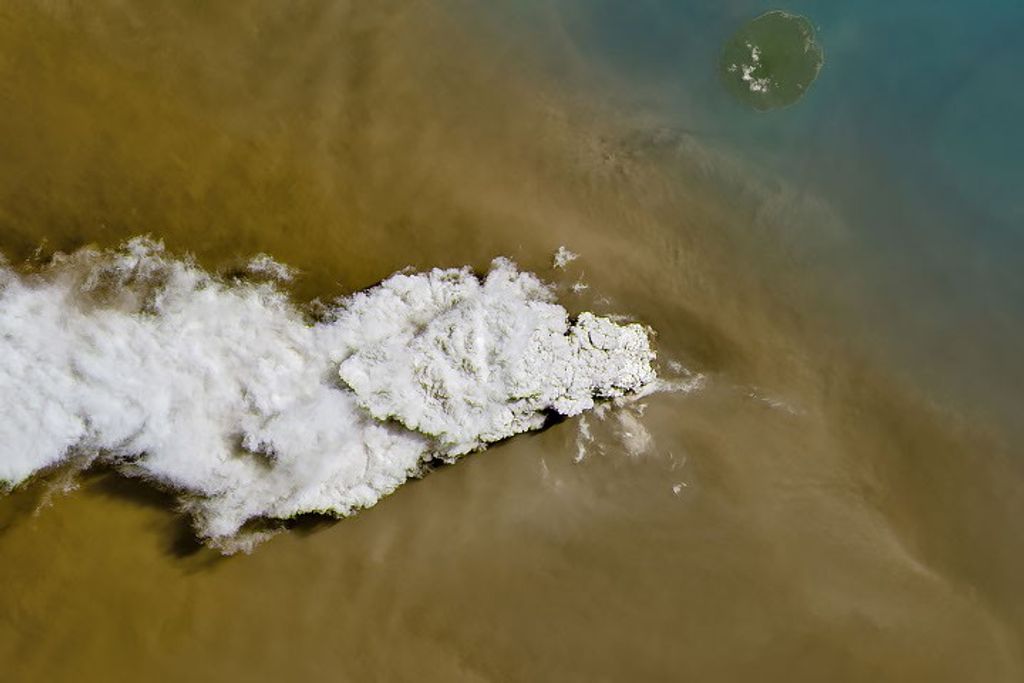
Smoke from the wildland fires is visible in this natural-color image, acquired on the morning of November 27, 2022, with the Moderate Resolution Imaging Spectroradiometer (MODIS) on NASA’s Terra satellite. Red dots indicate the locations of active fire detections observed by the Visible Infrared Imaging Radiometer Suite (VIIRS) on the NASA-NOAA Suomi NPP satellite later that afternoon.
Most of the fires shown here are burning in Argentina’s Salta province, with some showing up to the south in Jujuy province and to the north in Bolivia. According to Flavio Speranza, a forestry engineer at Argentina’s National Institute of Agricultural Technology (INTA), the fires were burning across several forested ecosystems: subtropical forests at low and middle altitudes, and premontane and montane forests on mountain slopes.
Almost all wildland fires in the region are caused by human activity, Speranza noted. People routinely start fires to maintain pastures and roads, dispose of yard waste and household trash, and to cook during hunting and fishing trips. Fire was responsible for 535,000 hectares (2,070 square miles) of tree cover loss across Argentina between 2001 and 2021, according to Global Forest Watch. That equates to 8.5 percent of total tree cover loss during that period.
Speranza noted that so far in 2022, Argentina has seen a notable increase in fire activity due to a prolonged period of unusually warm, dry weather. One likely reason is La Niña, which has made an appearance for the third year in a row. During La Niña events, clouds and rainfall become more sporadic over the central and eastern Pacific Ocean, which can lead to dry conditions in Argentina and other parts of South America.
The fire season, which began in August, typically ends by January. But the exact end date, Speranza said, “depends on the frequency and amount of rain.” During the 2021–2022 season, also a La Niña year, Argentina saw the greatest number of fires in the first two months of the year.
References & Resources
- Argentina.gob.ar (2022) National Fire Management Service. Accessed December 1, 2022.
- Global Forest Watch (2022, November) Argentina. Accessed December 1, 2022.
- NASA Earth Observatory (2013, September 14) Fire, Dust Sweeps Across Northern Argentina.
- Pagina12 (2022, November 19) Se reactivó el fuego en el bosque de Salta y Jujuy. Accessed December 1, 2022.
- Pagina12 (2022, October 31) Incendios forestales jaquean nuevamente la Biósfera de Yungas. Accessed December 1, 2022.
NASA Earth Observatory image by Lauren Dauphin, using VIIRS data from NASA EOSDIS LANCE , GIBS/Worldview , and the Suomi National Polar-orbiting Partnership and MODIS data from NASA EOSDIS LANCE and GIBS/Worldview . Story by Kathryn Hansen .