



















Moons in our Solar System
Moons: Facts
There are hundreds moons in our solar system.
Introduction
Moons that orbit planets, like Earth's Moon, come in many shapes, sizes and types. Moons are generally solid bodies, and few have atmospheres. Most planetary moons, which are also called satellites, probably formed out the discs of gas and dust circulating around the planets in the early solar system.
Moons also orbit dwarf planets and asteroids.
As of October 2026 there were 461 officially recognized moons orbiting planets, including dwarf planet Pluto, which has five moons.
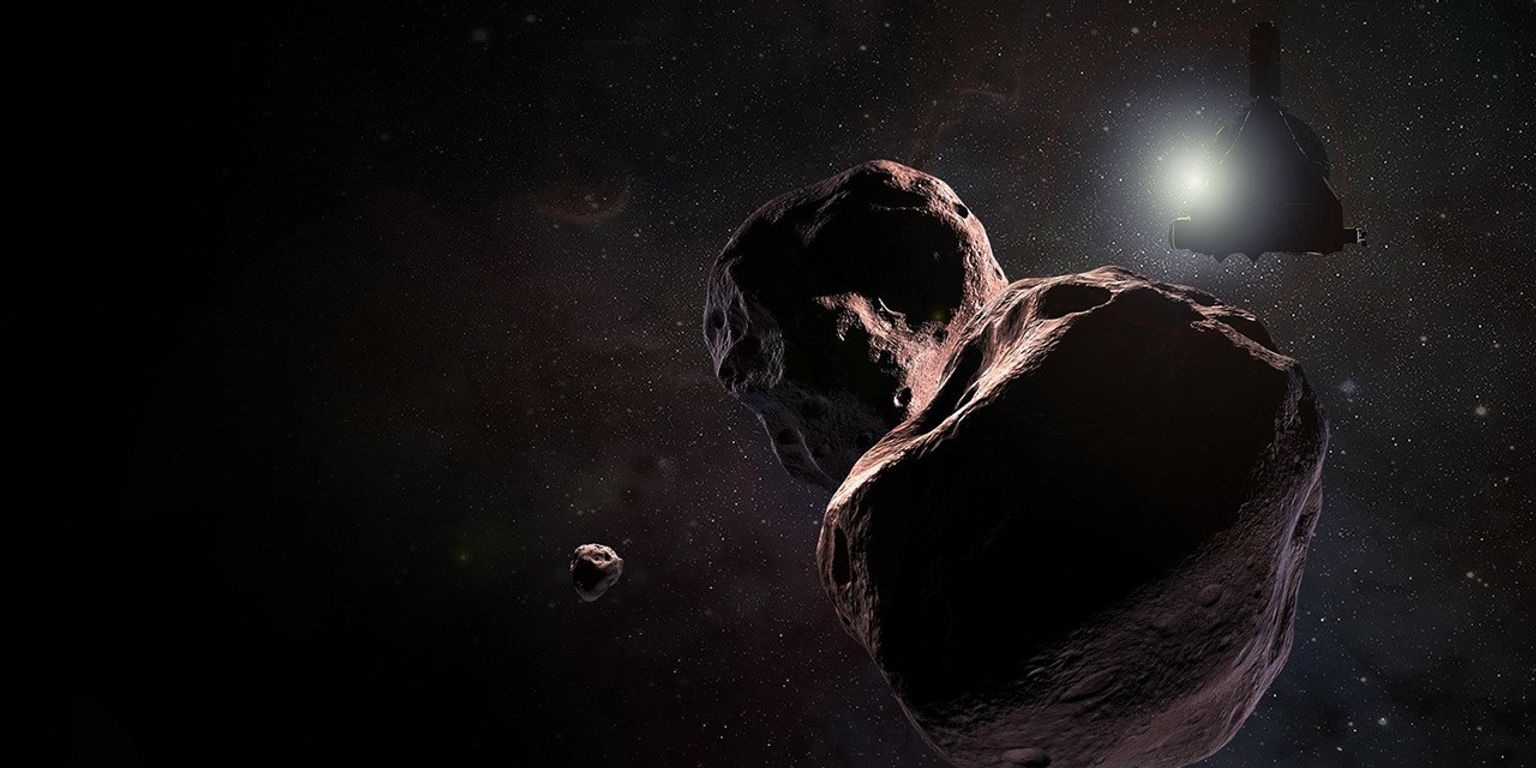
Hundreds of other moons have been confirmed orbiting small bodies including three of the other four dwarf planets. Moons also have been confirmed orbiting asteroids and trans-Neptunian objects (objects in the solar system that have an orbit beyond Neptune).
How Moons Get Their Names
Every moon discovered in the modern era gets a number first. The most significant moons get an official name. Most moons in our solar system are named for mythological characters from a wide variety of cultures. Newer moons discovered at Saturn, for example, are named for Norse mythology such as Bergelmir, a giant. Uranus is the exception. Uranus' moons are named for characters in William Shakespeare's plays including Ophelia and Puck. Other Uranian moon names were chosen from Alexander Pope's poetry (Belinda and Ariel).
Moons in the Inner Solar System
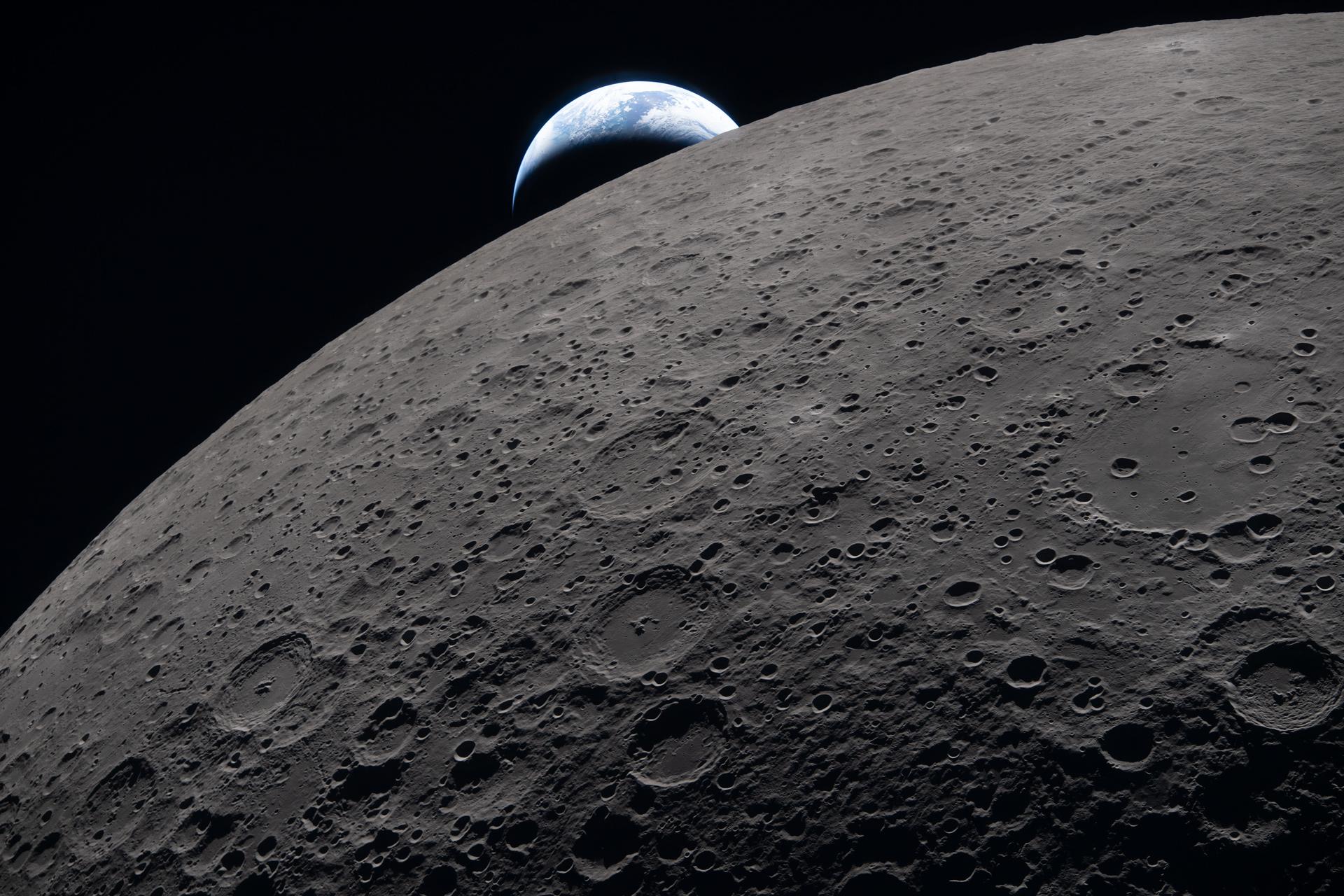
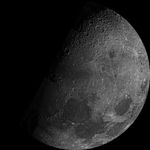
Earth's Moon probably formed when a large body about the size of Mars collided with Earth, tossing a lot of material from our planet into orbit. Debris from early Earth and the impacting body accumulated to form the Moon approximately 4.5 billion years ago (the age of the oldest collected lunar rocks). Twelve American astronauts walked on the Moon during NASA's Apollo program from 1969 to 1972, studying the Moon and bringing back rock samples.
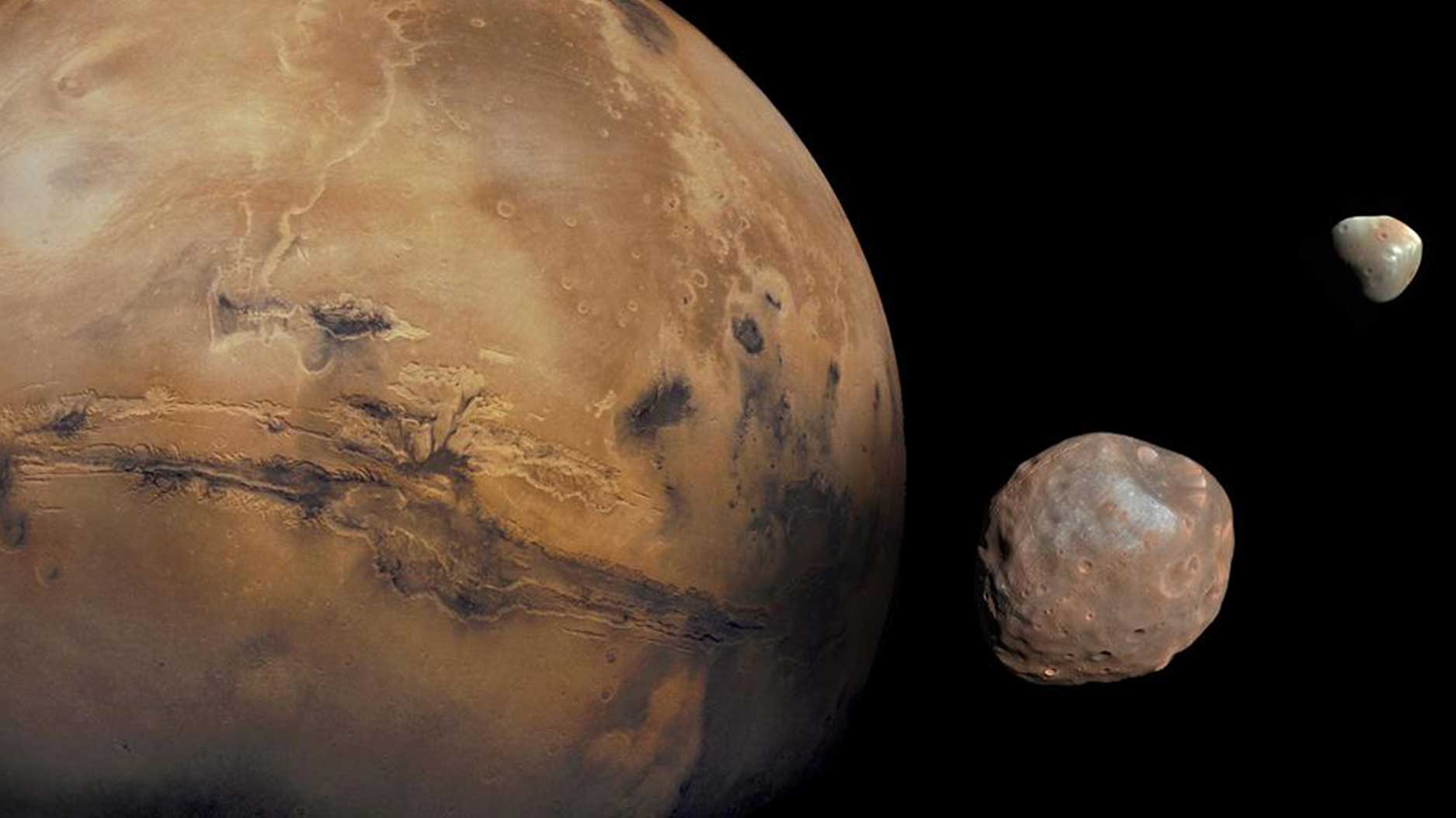
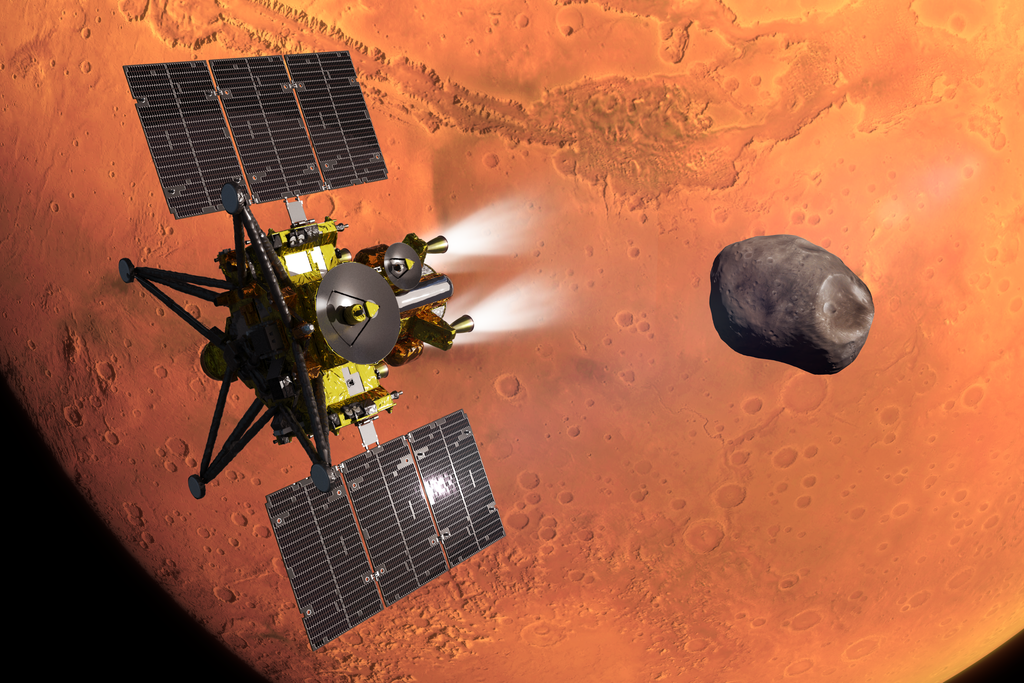
Usually the term moon brings to mind a spherical object, like our Moon. The two moons of Mars — Phobos and Deimos — are different. While both have nearly circular orbits and travel close to the plane of the planet's equator, they are lumpy and dark. Phobos is slowly drawing closer to Mars and could crash into the planet in 40 or 50 million years. Or the planet's gravity might break Phobos apart, creating a thin ring around Mars.
Moons of the Giant Planets
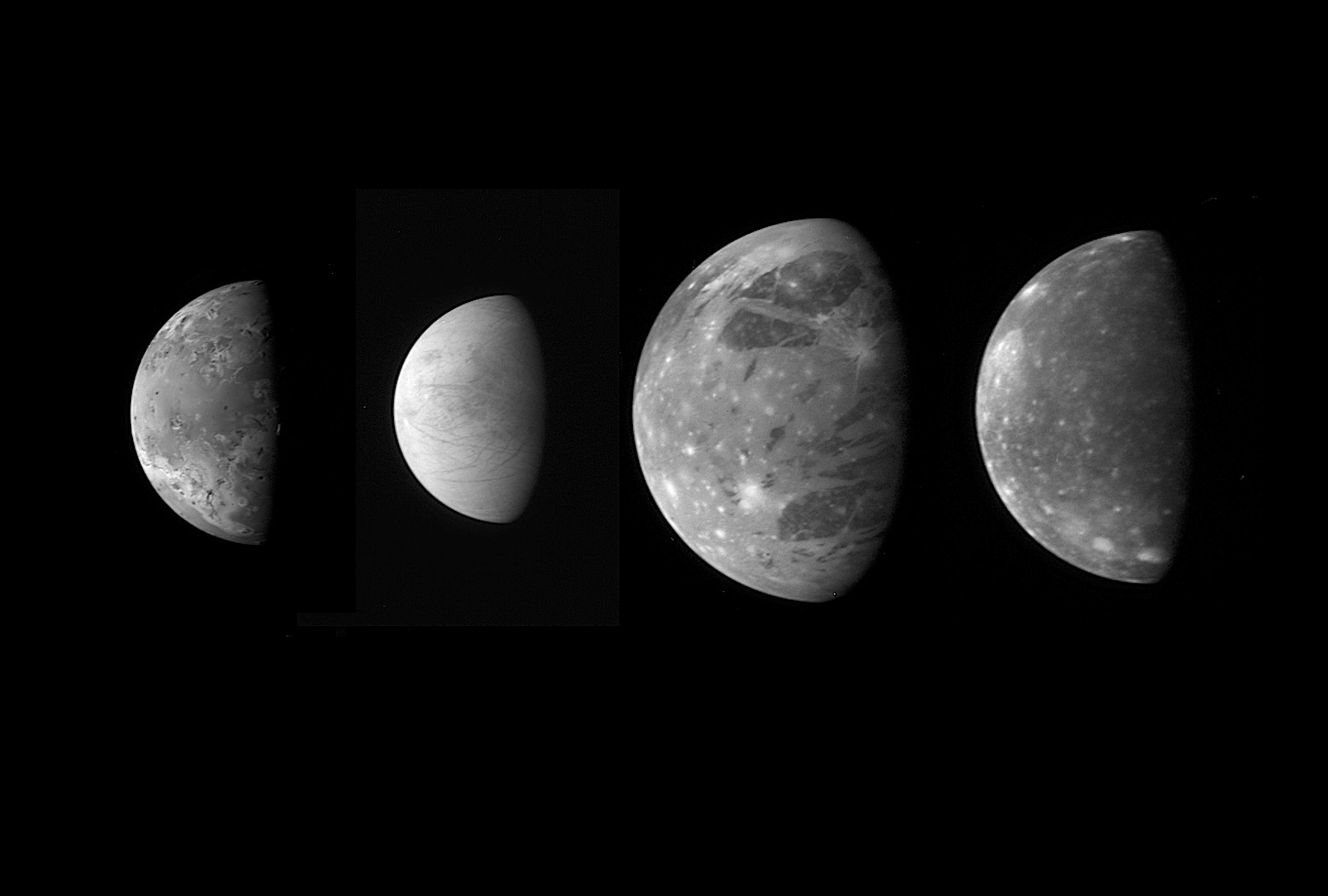
Jupiter's four largest moons were the first moons discovered beyond Earth. This includes the largest moon in the solar system — Ganymede. Jupiter also has an ocean moon — Europa, which will be explored by NASA's Europa Clipper spacecraft. Jupiter's other two large moons are Io, a volcanic moon, and Callisto. Many of Jupiter's outer moons have highly elliptical orbits and orbit backwards (opposite to the spin of the planet). Saturn, Uranus and Neptune also have some irregular moons, which orbit far from their respective planets.
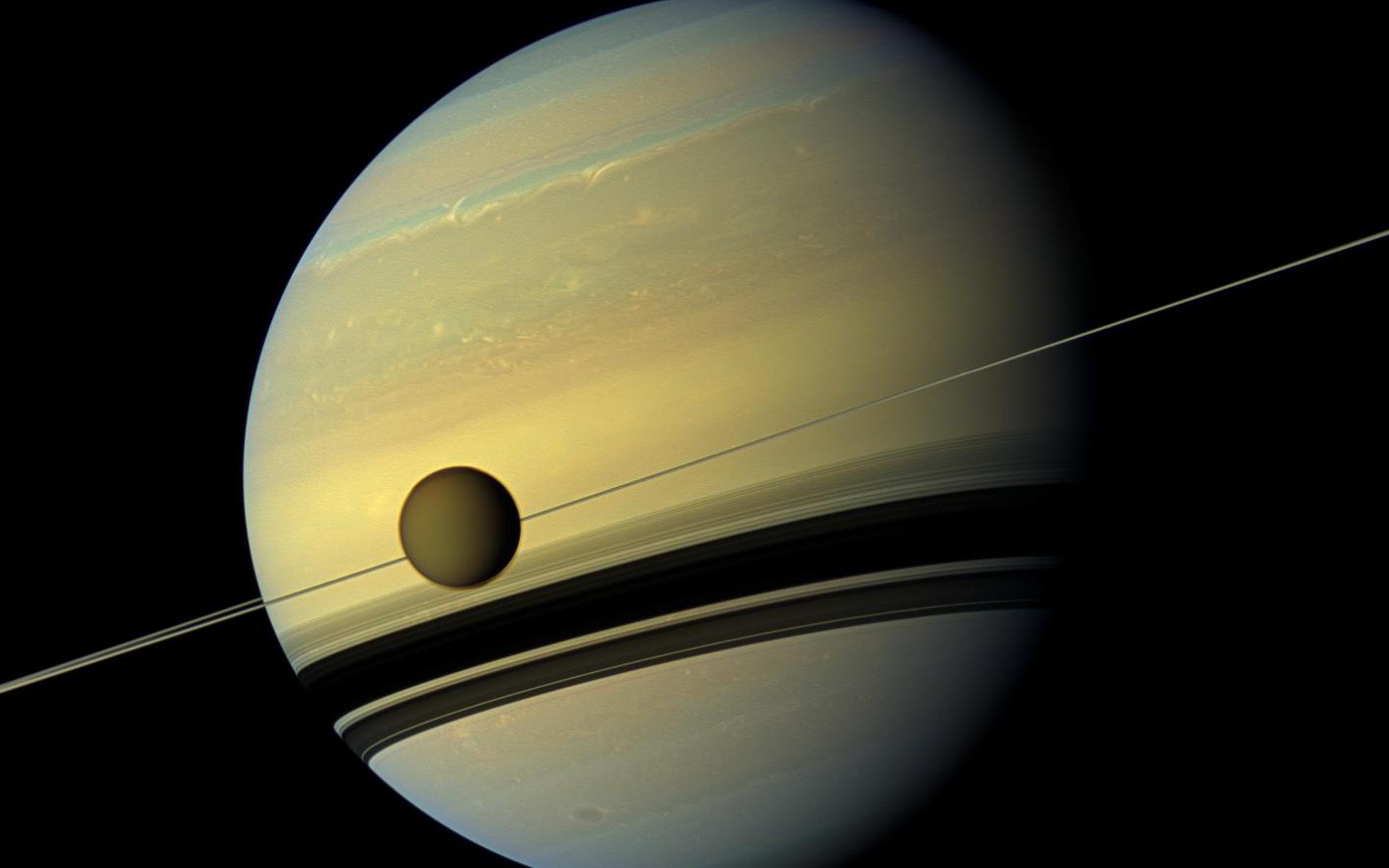
Saturn has two ocean moons – Enceladus and Titan. Both have subsurface oceans and Titan also has surface seas of lakes of ethane and methane. The chunks of ice and rock in Saturn's rings (and the particles in the rings of the other outer planets) are not considered moons, yet embedded in Saturn's rings are distinct moons or moonlets. These shepherd moons help keep the rings in line. Titan, the second largest in the solar system, is the only moon with a thick atmosphere.
In the realm of the ice giants, Uranus's inner moons appear to be about half water ice and half rock. Miranda is the most unusual; its chopped-up appearance shows the scars of impacts of large rocky bodies.
Neptune's moon Triton is as big as Pluto and orbits backwards compared with Neptune's direction of rotation.
Moons of Dwarf Planets
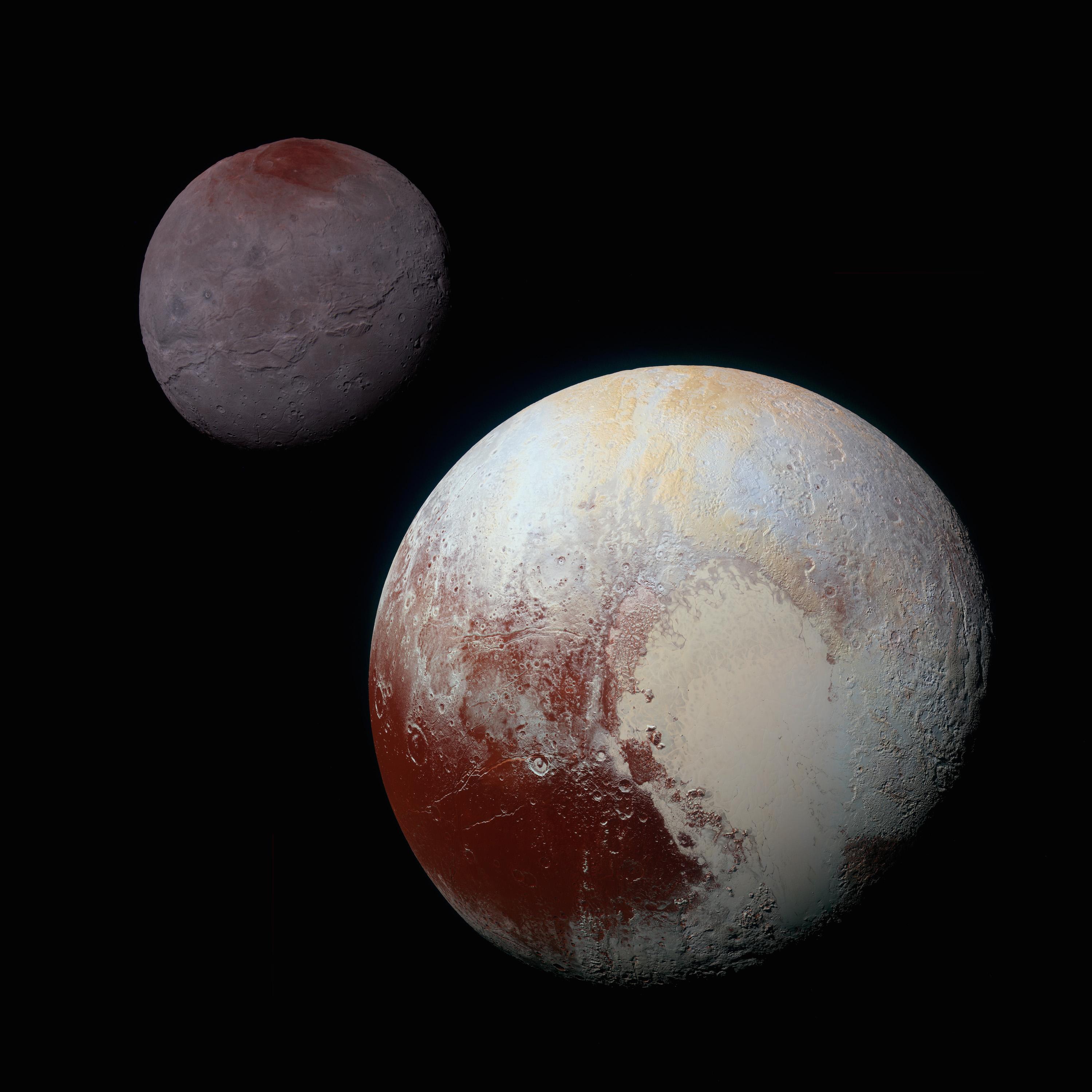
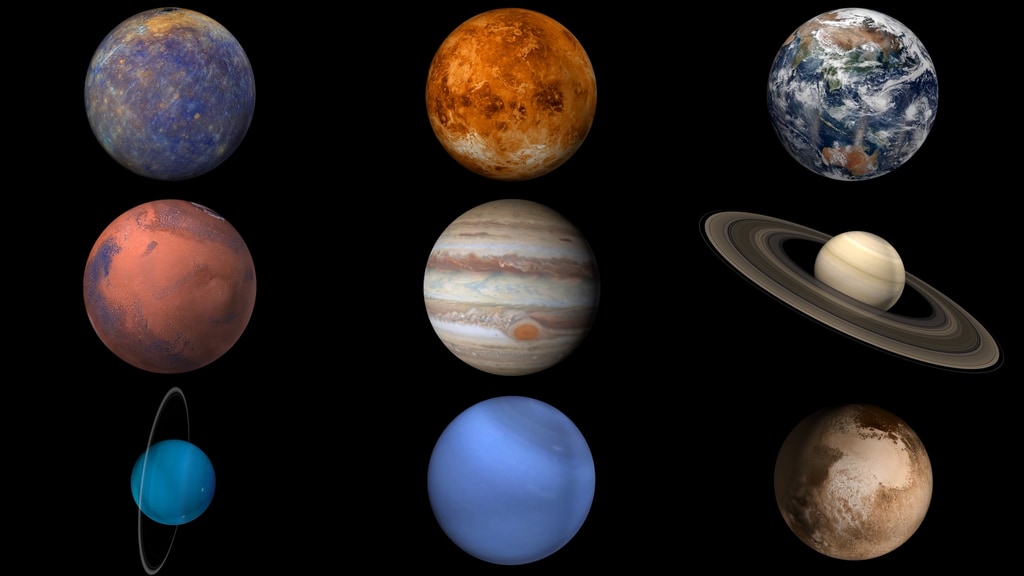
Our solar system has five officially recognized dwarf planets. In order of distance from the Sun they are: Ceres, Pluto, Haumea, Makemake, and Eris.
Ceres, located between Mars and Jupiter, is the only dwarf planet in the inner solar system. It has no moons.
Pluto has five moons. It's largest moon, Charon, is about half the size of Pluto. Like Earth's Moon, Charon may have formed from debris resulting from an early collision of an impactor with Pluto. Scientists using the Hubble Space Telescope to study Pluto found four more small moons: Nix, Hydra, Kerberos, and Styx.
Dwarf planet Haumea has two satellites, Hi'iaka and Namaka.
Makemake has one provisional moon, S/2015 (136472) 1, and it's nicknamed MK 2.
Eris has a small moon named Dysnomia.
More Moons
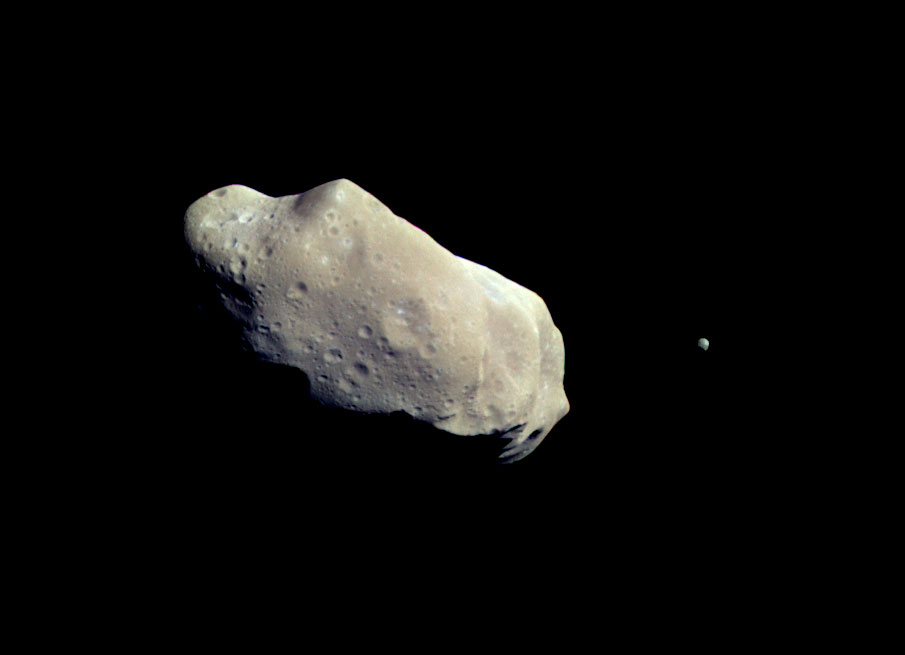
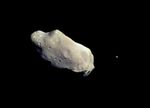
Scientists weren't sure if asteroids could hold moons in their orbits until the Galileo spacecraft flew past asteroid Ida in 1993. Images revealed a tiny moon, later named Dactyl. Astronomers have since confirmed hundreds of moons orbiting asteroids and trans-Neptunian objects.